TEKS ELAR 5.1.A
The Standard
listen actively to interpret verbal and non-verbal messages, ask relevant questions, and make pertinent comments
Texas Essential Knowledge and Skills for English Language Arts and Reading
Teacher's field guide
What This Standard Means
What Students Need to Do
- Students pay close attention to a speaker’s words, tone, facial expressions, and gestures. They use those clues to explain the message, then ask focused questions and add useful comments.
What Mastery Looks Like
- A student can accurately summarize what a speaker meant and name a verbal or nonverbal clue. The student asks a focused follow-up question and adds a comment connected to the speaker’s idea.
Common Misconceptions
- Students may think quiet behavior alone shows good listening. They may focus only on words, miss tone or gestures, ask unrelated questions, or repeat ideas instead of adding to them.
How to Assess It
- Read a 30-second statement aloud while using a clear tone and gesture. On an exit ticket, students state the message, name one clue, and add one relevant question or comment.
Lesson moves
Ways to Teach It
In pairs, students build a block figure from a partner’s spoken directions, then identify which words and gestures made the directions clear.
After a short read-aloud, ask: “What did the speaker mean, which clue helped you, and what would you ask next?”
Play Follow-Up Question Toss: after each classmate shares, the catcher asks one question that connects directly to the previous idea.
Watch a brief school announcement, then have students identify the message, the speaker’s nonverbal cues, and one useful response.
Free download
Printable 5.1.A Worksheet
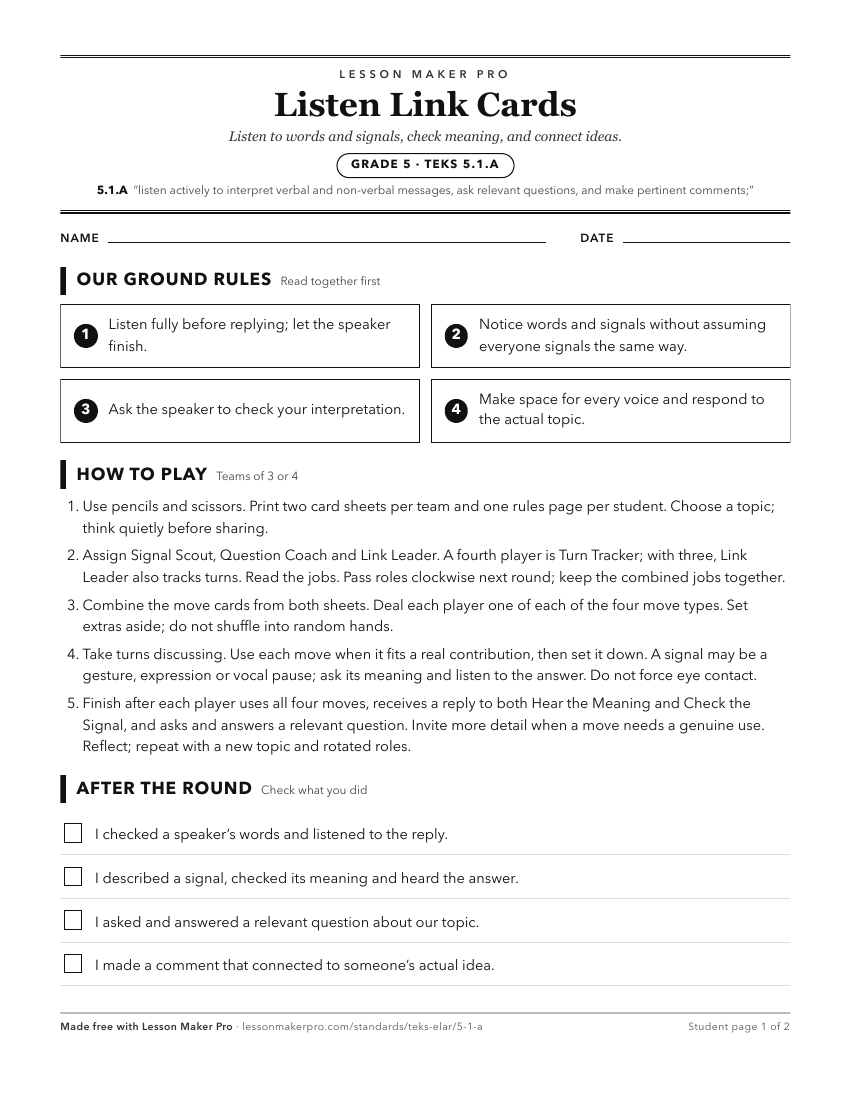
A ready-to-print activity worksheet aligned to 5.1.A, with an answer key for the teacher on its own page. No account needed.
PDF, US Letter, prints cleanly in black and white.
Download the worksheetKeep exploring
Related Standards
- 6.1.A
listen actively to interpret a message, ask clarifying questions, and respond appropriately;
- 3.1.A
listen actively, ask relevant questions to clarify information, and make pertinent comments;
- 8.1.A
listen actively to interpret a message by summarizing, asking questions, and making comments;
- 4.1.A
listen actively, ask relevant questions to clarify information, and make pertinent comments;
Turn this exact standard into a lesson
Grade, subject, topic, and the complete standard are prefilled. Create one free, no account needed.
Also for this standard:Make a WorksheetMake a QuizMake a Sub Lesson