TEKS ELAR 4.9.B
The Standard
explain figurative language such as simile, metaphor, and personification that the poet uses to create images
Texas Essential Knowledge and Skills for English Language Arts and Reading
Teacher's field guide
What This Standard Means
What Students Need to Do
- Students identify similes, metaphors, and personification in poems. They explain the mental picture each example creates and how the poet’s wording shapes that image.
What Mastery Looks Like
- A student can name the device, cite the exact words, and describe the image in specific language. The student explains why the comparison or human action is more effective than a literal statement.
Common Misconceptions
- Students may call every comparison a simile, even when it does not use like or as. They may confuse personification with any description of an object, or identify a device without explaining the image it creates.
How to Assess It
- Exit ticket: Read, “The wind clawed at the windows like an angry cat.” Name the two devices and explain the picture created in two sentences.
Lesson moves
Ways to Teach It
Give pairs printed poem lines and picture cards. Students match each line to an image, then label the simile, metaphor, or personification.
Ask, “What picture does ‘the moon winked’ create, and why did the poet give the moon a human action?”
Play Figurative Language Sort with line cards. Teams name the type and earn a point only after explaining the image created.
Have students find figurative language in a song lyric or advertisement and sketch the image the words create.
Free download
Printable 4.9.B Worksheet
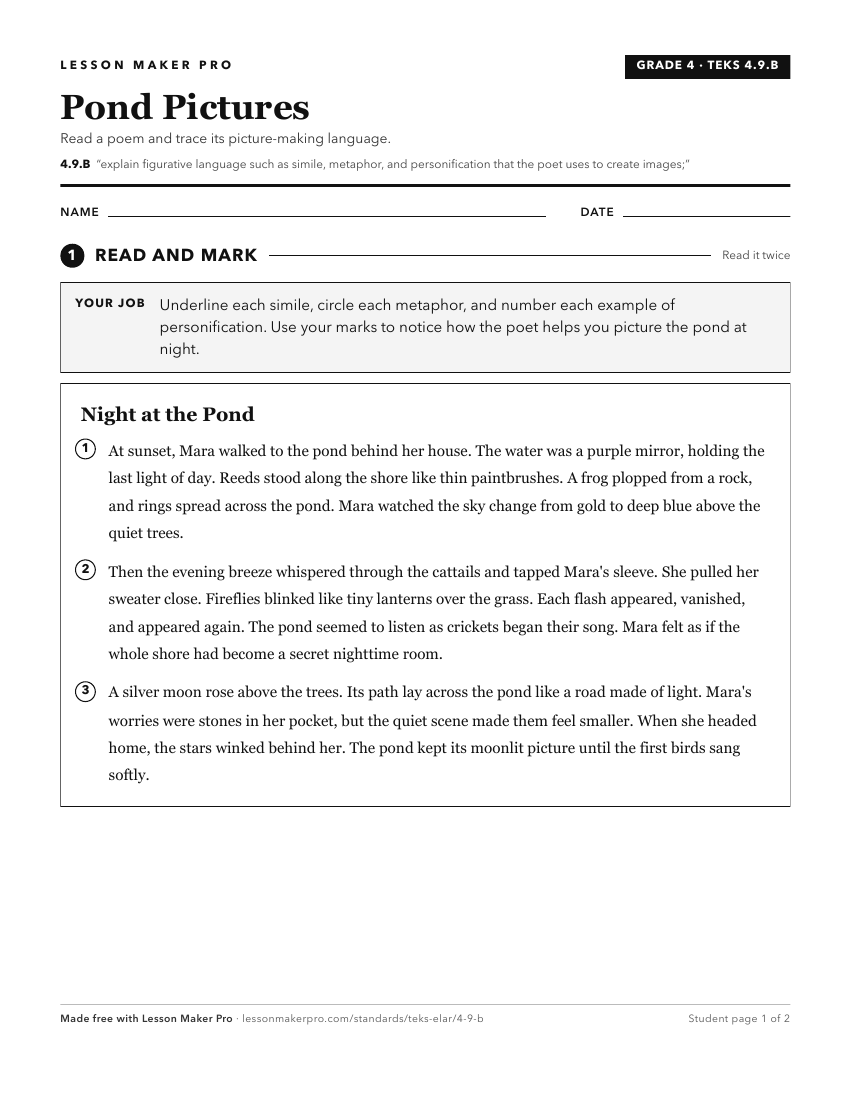
A ready-to-print activity worksheet aligned to 4.9.B, with an answer key for the teacher on its own page. No account needed.
PDF, US Letter, prints cleanly in black and white.
Download the worksheetKeep exploring
Related Standards
- 5.10.D
describe how the author's use of imagery, literal and figurative language such as simile and metaphor, and sound devices achieves specific purposes;
- 7.9.D
describe how the author's use of figurative language such as metaphor and personification achieves specific purposes
- 4.10.D
describe how the author's use of imagery, literal and figurative language such as simile and metaphor, and sound devices such as alliteration and assonance achi...
- 6.9.D
describe how the author's use of figurative language such as metaphor and personification achieves specific purposes;
Turn this exact standard into a lesson
Grade, subject, topic, and the complete standard are prefilled. Create one free, no account needed.
Also for this standard:Make a WorksheetMake a QuizMake a Sub Lesson