TEKS ELAR 4.3.B
The Standard
use context within and beyond a sentence to determine the relevant meaning of unfamiliar words or multiple-meaning words
Texas Essential Knowledge and Skills for English Language Arts and Reading
Teacher's field guide
What This Standard Means
What Students Need to Do
- Students figure out an unfamiliar word’s meaning by using clues in its sentence and nearby sentences. When a word has several meanings, they select the one that fits the passage.
What Mastery Looks Like
- Students choose a meaning that makes sense in the whole passage. They point to specific words or details that support their choice. They can explain why another possible meaning does not fit.
Common Misconceptions
- Students may choose the first dictionary definition, even when it does not fit the passage. They may rely on one nearby word and ignore clues in surrounding sentences. They may also mistake a familiar-looking word for a related word with a different meaning.
How to Assess It
- Give students this prompt: “Maya stepped from the canoe onto the muddy bank. Reeds grew beside her, and the river flowed quietly.” Define “bank” and name two clues that support your answer.
Lesson moves
Ways to Teach It
Give pairs context-clue sentence strips, definition cards, and highlighters to match meanings and mark the evidence supporting each match.
Ask students to explain in writing which meaning of “bright” fits a short paragraph and which details rule out other meanings.
Play Context Clue Match, where teams pair unfamiliar words with meanings and earn points by citing clues from two sentences.
Have students examine a menu, advertisement, or weather report and explain the intended meaning of one word with several dictionary meanings.
Free download
Printable 4.3.B Worksheet
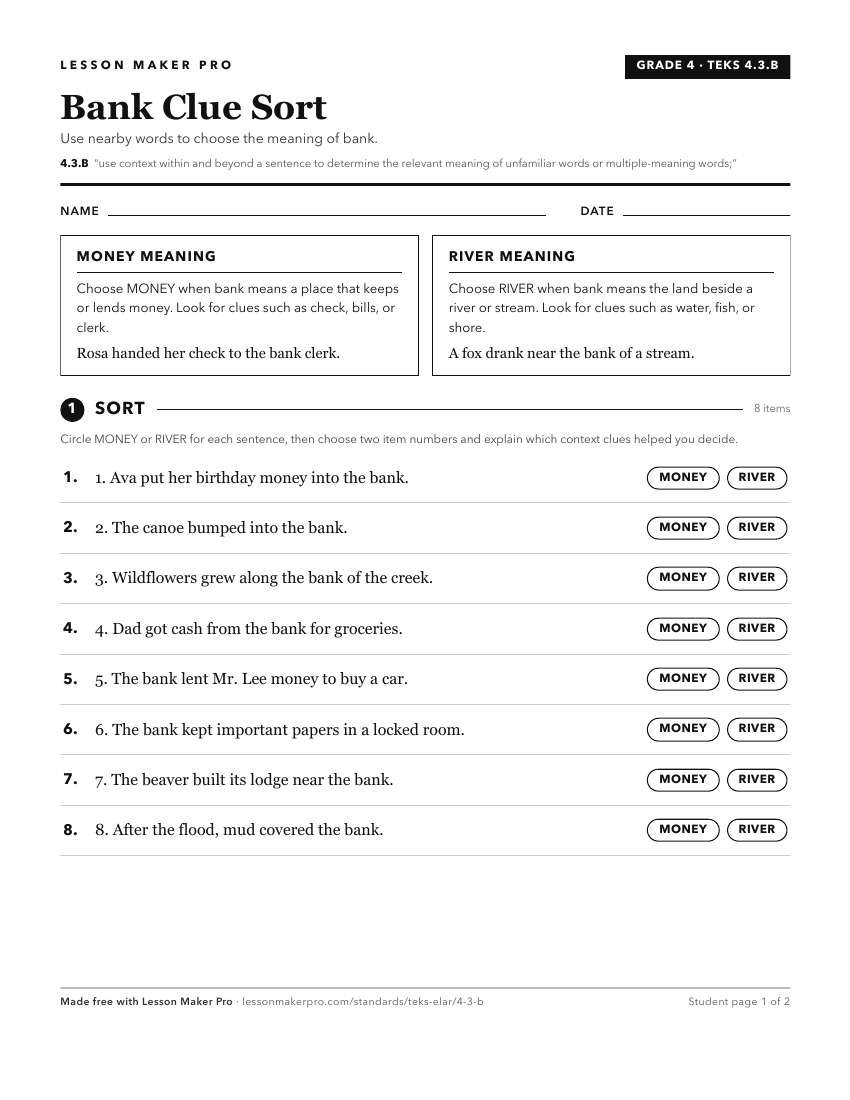
A ready-to-print activity worksheet aligned to 4.3.B, with an answer key for the teacher on its own page. No account needed.
PDF, US Letter, prints cleanly in black and white.
Download the worksheetKeep exploring
Related Standards
- 8.2.B
use context within or beyond a paragraph to clarify the meaning of unfamiliar or ambiguous words; and
- 5.3.B
The 5th Grade version of this standard.
- 2.3.B
use context within and beyond a sentence to determine the meaning of unfamiliar words;
- 3.3.B
use context within and beyond a sentence to determine the meaning of unfamiliar words and multiple-meaning words;
Turn this exact standard into a lesson
Grade, subject, topic, and the complete standard are prefilled. Create one free, no account needed.
Also for this standard:Make a WorksheetMake a QuizMake a Sub Lesson