TEKS ELAR 3.3.B
The Standard
use context within and beyond a sentence to determine the meaning of unfamiliar words and multiple-meaning words
Texas Essential Knowledge and Skills for English Language Arts and Reading
Teacher's field guide
What This Standard Means
What Students Need to Do
- Students use clues from a sentence and the surrounding passage to infer an unfamiliar word’s meaning. They also decide which meaning of a familiar word fits the context.
What Mastery Looks Like
- Students explain a word’s likely meaning and point to clues in the sentence or nearby sentences. They choose the correct meaning of a multiple-meaning word for the passage.
Common Misconceptions
- Students may guess from one nearby word instead of using the whole passage. They may also assume a familiar word has only one meaning.
How to Assess It
- Give students a short paragraph with one bold word. Ask them to write its meaning and underline two context clues that support their answer.
Lesson moves
Ways to Teach It
Place clue cards around an unfamiliar word card, then have pairs arrange the clues and write a supported definition.
Ask students, “Which words helped you infer the meaning, and how did each clue help?”
Play Context Clue Detective with short passages, clue highlighting, and points for definitions supported by two details.
Examine multiple-meaning words in menus, signs, or sports headlines, then discuss which meaning fits each example.
Free download
Printable 3.3.B Worksheet
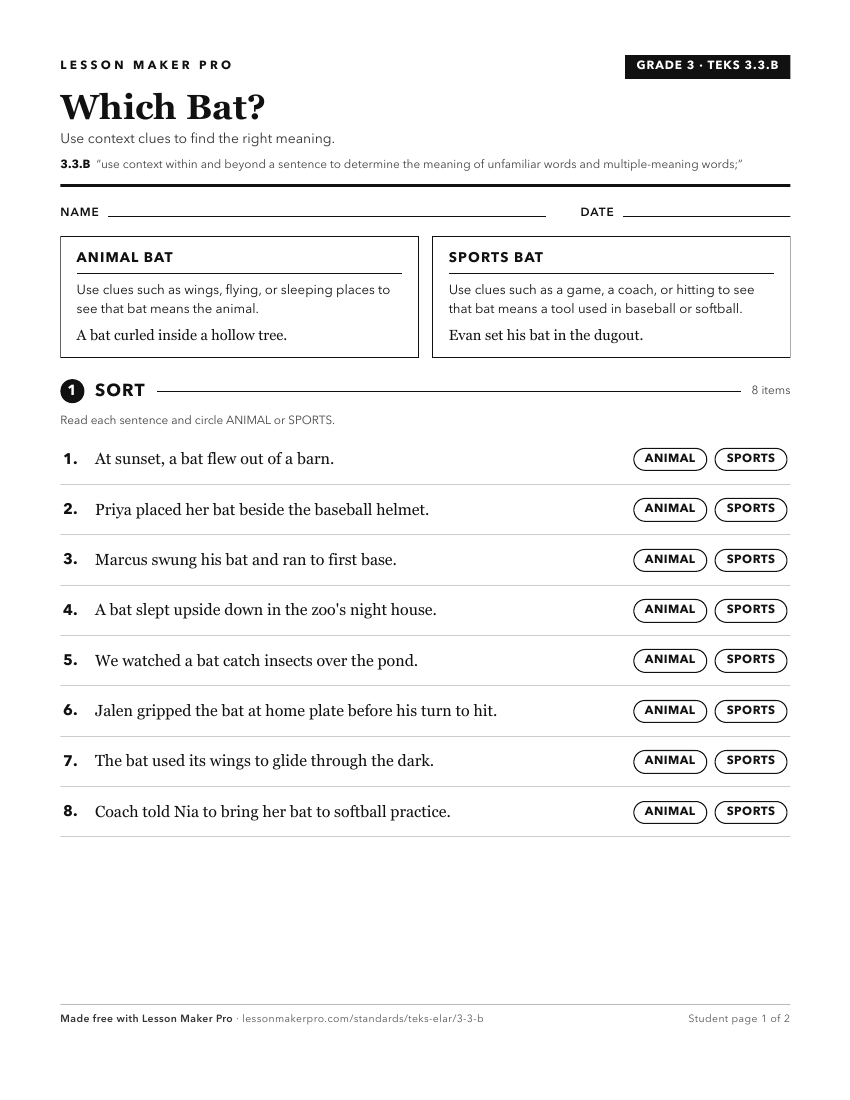
A ready-to-print activity worksheet aligned to 3.3.B, with an answer key for the teacher on its own page. No account needed.
PDF, US Letter, prints cleanly in black and white.
Download the worksheetKeep exploring
Related Standards
- 8.2.B
use context within or beyond a paragraph to clarify the meaning of unfamiliar or ambiguous words; and
- 4.3.B
use context within and beyond a sentence to determine the relevant meaning of unfamiliar words or multiple-meaning words;
- 5.3.B
use context within and beyond a sentence to determine the relevant meaning of unfamiliar words or multiple-meaning words;
- 2.3.B
use context within and beyond a sentence to determine the meaning of unfamiliar words;
Turn this exact standard into a lesson
Grade, subject, topic, and the complete standard are prefilled. Create one free, no account needed.
Also for this standard:Make a WorksheetMake a QuizMake a Sub Lesson