TEKS ELAR 3.2.A.vii
The Standard
identifying and reading high-frequency words from a research-based list
Texas Essential Knowledge and Skills for English Language Arts and Reading · The student develops word structure knowledge through phonological awareness, print concepts, phonics, and morphology to communicate, decode, and spell.
Teacher's field guide
What This Standard Means
What Students Need to Do
- Students recognize common words quickly in isolation and in connected text. They read each word accurately without relying on pictures or stopping to sound out every part.
What Mastery Looks Like
- A student reads the taught word set correctly and smoothly from shuffled cards. The student recognizes the same words in sentences without relying on pictures or teacher help.
Common Misconceptions
- Students may guess from the first letter or sentence context instead of checking the whole word. They may confuse similar words, such as were and where, or sound out irregular words letter by letter.
How to Assess It
- Show 10 shuffled word cards from the current class list, then place five of those words in short sentences. Record accuracy and whether each word is read within three seconds.
Lesson moves
Ways to Teach It
Give pairs word cards and sentence strips, then have them clip each target word over its matching word in a sentence.
Ask students to explain how they remember one tricky word, then write a sentence using it and circle the word.
Play Word Grid: students cover a square only after reading the word aloud correctly from a shuffled card.
Have students scan a lunch menu, class notice, or library sign and highlight taught words they can read quickly.
Free download
Printable 3.2.A.vii Worksheet
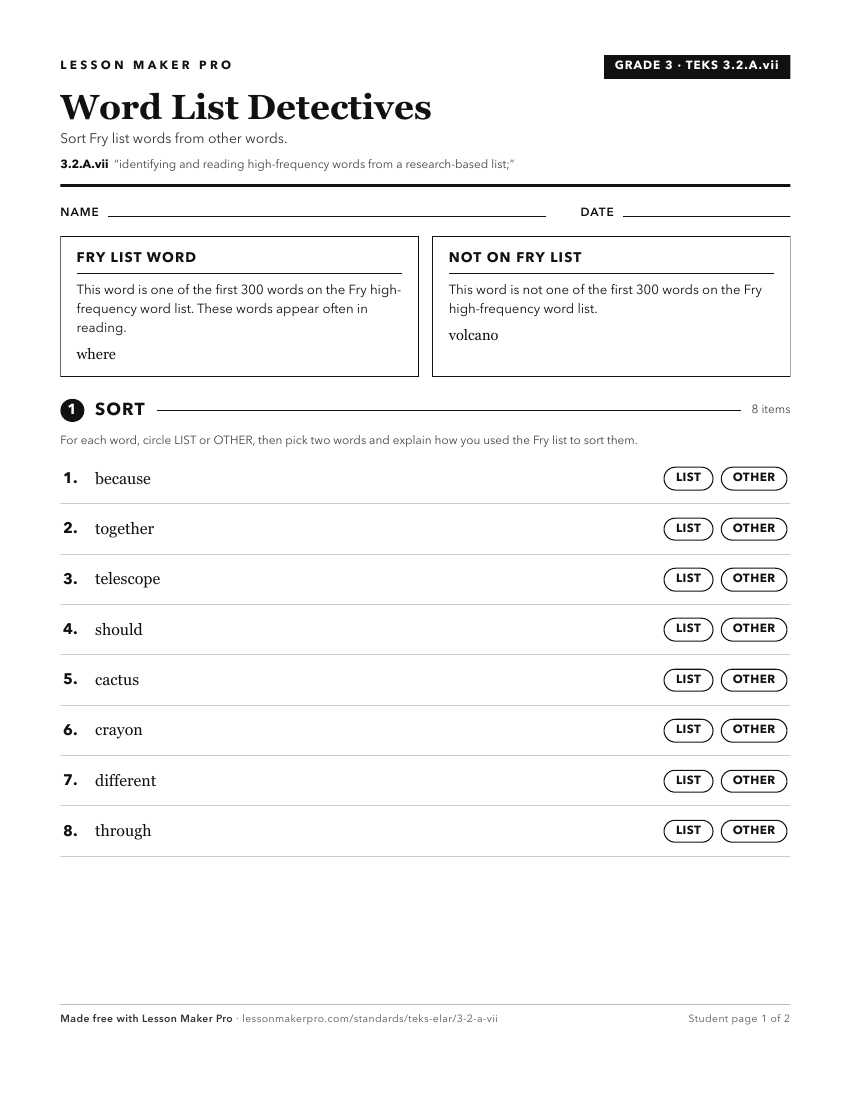
A ready-to-print activity worksheet aligned to 3.2.A.vii, with an answer key for the teacher on its own page. No account needed.
PDF, US Letter, prints cleanly in black and white.
Download the worksheetKeep exploring
Related Standards
Turn this exact standard into a lesson
Grade, subject, topic, and the complete standard are prefilled. Create one free, no account needed.
Also for this standard:Make a WorksheetMake a QuizMake a Sub Lesson