TEKS ELAR 3.12.D
The Standard
compose correspondence such as thank you notes or letters.
Texas Essential Knowledge and Skills for English Language Arts and Reading
Teacher's field guide
What This Standard Means
What Students Need to Do
- Students write a note or letter for a clear recipient and purpose. They include a greeting, focused message, specific details, closing, and signature.
What Mastery Looks Like
- A student writes a complete note or letter with an identifiable recipient and purpose. The message includes specific details, an appropriate tone, and correct letter parts.
Common Misconceptions
- Students may leave out the greeting, closing, or signature. They may write a vague message, forget the recipient, or use a tone that does not fit the purpose.
How to Assess It
- Give students this exit ticket: Write a short note thanking the custodian for helping the school. Include all parts of a complete note.
Lesson moves
Ways to Teach It
Have students arrange cut-apart parts of a model letter, then label the greeting, body, closing, and signature.
Read two thank you notes and discuss which sounds more sincere, then write one sentence explaining why.
Students draw recipient and purpose cards, then race to draft a complete four-sentence letter that matches both cards.
Write, revise, and deliver a thank you note to a librarian, coach, cafeteria worker, or another school staff member.
Free download
Printable 3.12.D Worksheet
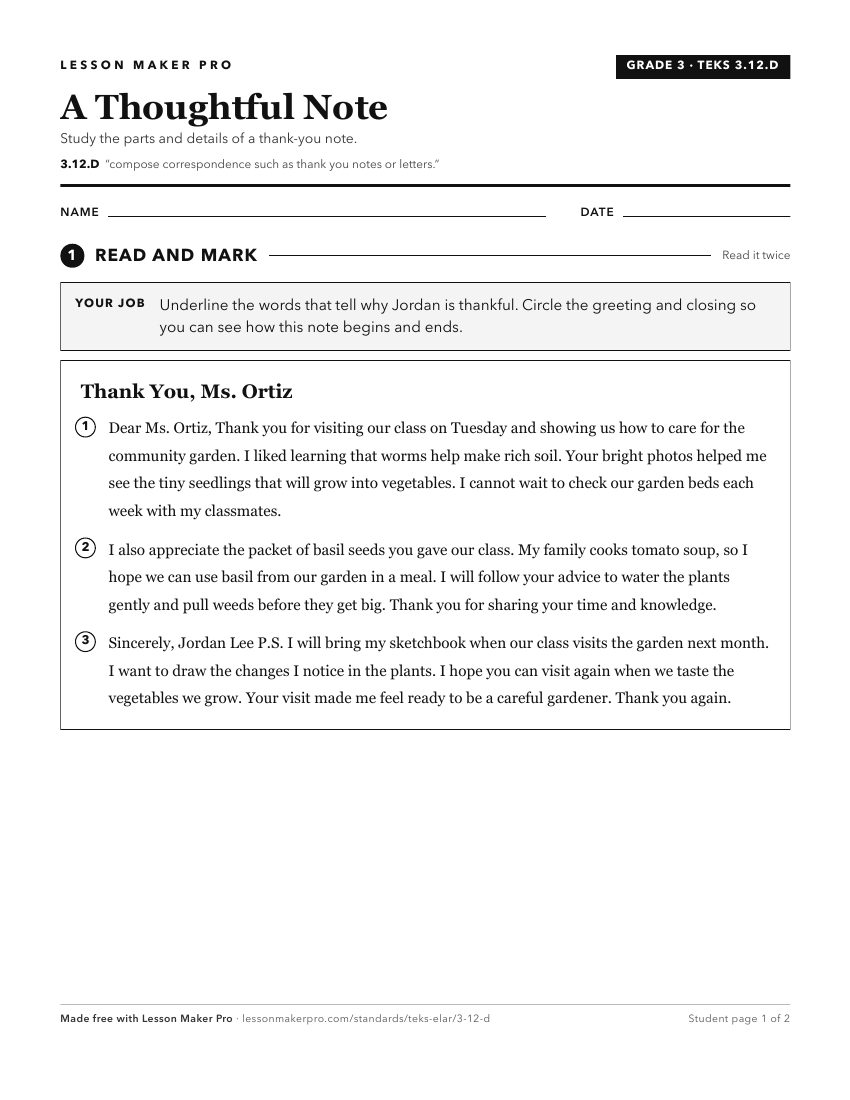
A ready-to-print activity worksheet aligned to 3.12.D, with an answer key for the teacher on its own page. No account needed.
PDF, US Letter, prints cleanly in black and white.
Download the worksheetKeep exploring
Related Standards
Turn this exact standard into a lesson
Grade, subject, topic, and the complete standard are prefilled. Create one free, no account needed.
Also for this standard:Make a WorksheetMake a QuizMake a Sub Lesson