TEKS ELAR 1.6.H
The Standard
synthesize information to create new understanding with adult assistance
Texas Essential Knowledge and Skills for English Language Arts and Reading
Teacher's field guide
What This Standard Means
What Students Need to Do
- Students combine details from different parts of a text with what they already know. With teacher support, they explain an idea or conclusion formed from those details.
What Mastery Looks Like
- After a read-aloud, students identify two related details and explain what those details show together. They can use a sentence frame and teacher questions.
Common Misconceptions
- Students may retell events instead of combining details. They may offer a guess or personal opinion without pointing to evidence from the text.
How to Assess It
- After a short read-aloud, ask, “What two details fit together, and what conclusion can you make from them?” Students may answer orally or draw and label.
Lesson moves
Ways to Teach It
Give pairs illustrated detail cards from a read-aloud, then have them match related cards and state what the pair shows.
Ask, “What did you learn when you put these two details together?” Students draw and complete, “Now I think...”
Play Detail Detective by having students choose two related detail cards and explain the conclusion they can make.
Show a weather forecast and look outside, then ask students to combine both sources to choose suitable recess clothing.
Free download
Printable 1.6.H Worksheet
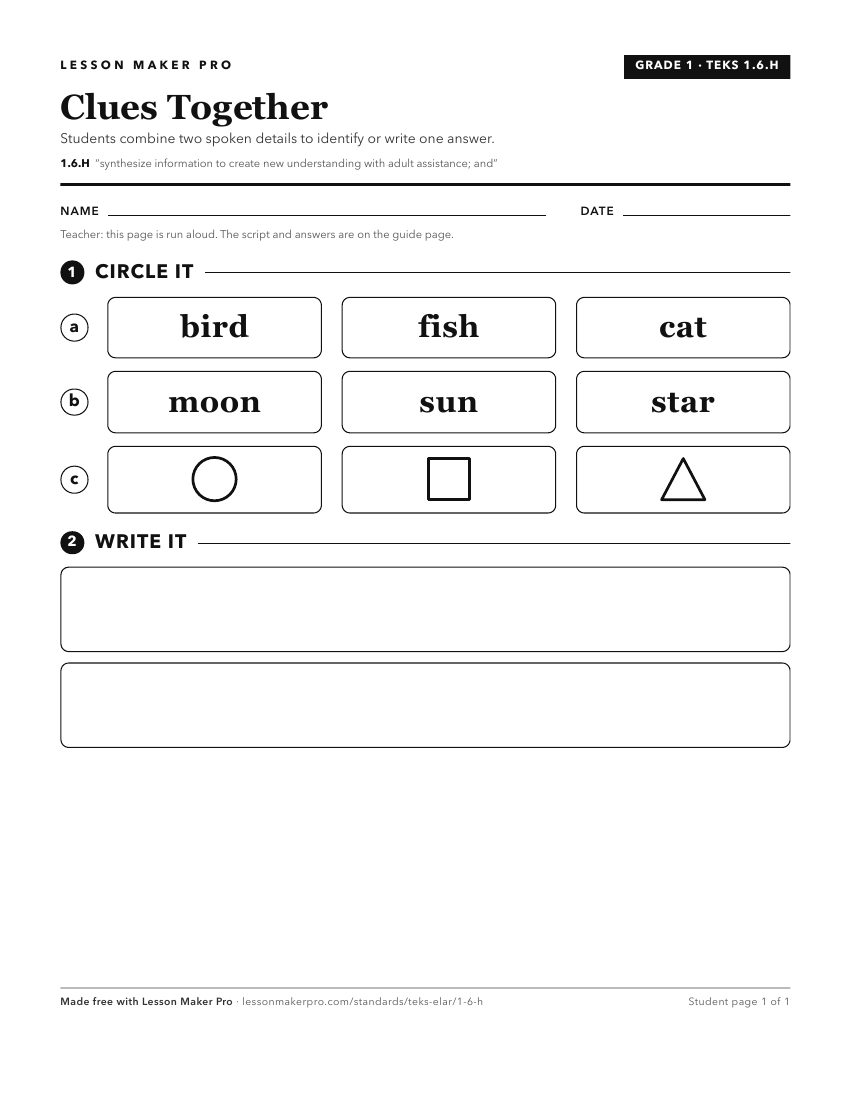
A ready-to-print activity worksheet aligned to 1.6.H, with an answer key for the teacher on its own page. No account needed.
PDF, US Letter, prints cleanly in black and white.
Download the worksheetKeep exploring
Related Standards
Turn this exact standard into a lesson
Grade, subject, topic, and the complete standard are prefilled. Create one free, no account needed.
Also for this standard:Make a WorksheetMake a QuizMake a Sub Lesson