South Dakota Science 2-ESS2-3
The Standard
Obtain information to identify where water is found on Earth and that it can be solid, liquid, or gas. (SEP: 8; DCI: ESS2.C; CCC: Patterns)
South Dakota Science Standards (2024) · Earth’s Systems
Teacher's field guide
What This Standard Means
What Students Need to Do
- Students use pictures, maps, or short readings to find water in places such as rivers, ice, and air. They identify water as solid, liquid, or gas in each example.
What Mastery Looks Like
- A student can point to a lake and a glacier and name the water in each as liquid or solid. They can explain that water vapor is an invisible gas in the air.
Common Misconceptions
- Students may think snow is not water, or that water is found only in lakes and oceans. They may call clouds water vapor, but clouds are made of tiny water drops or ice crystals.
How to Assess It
- Show pictures of a river, a snowbank, and a wet shirt drying. Ask students to name the form of water in each and explain where the shirt's water goes.
Lesson moves
Ways to Teach It
Let students handle an ice cube and a cup of water, then label each form and name an outdoor place to find it.
Show a picture of a wet towel drying and ask, 'Where does the water go?' Have students explain using the words water vapor.
Give pairs cards showing oceans, rivers, snow, ice, and air; have them sort the cards by water's form.
Check today's humidity on a local weather report, then explain that it describes invisible water vapor in the air.
Free download
Printable 2-ESS2-3 Worksheet
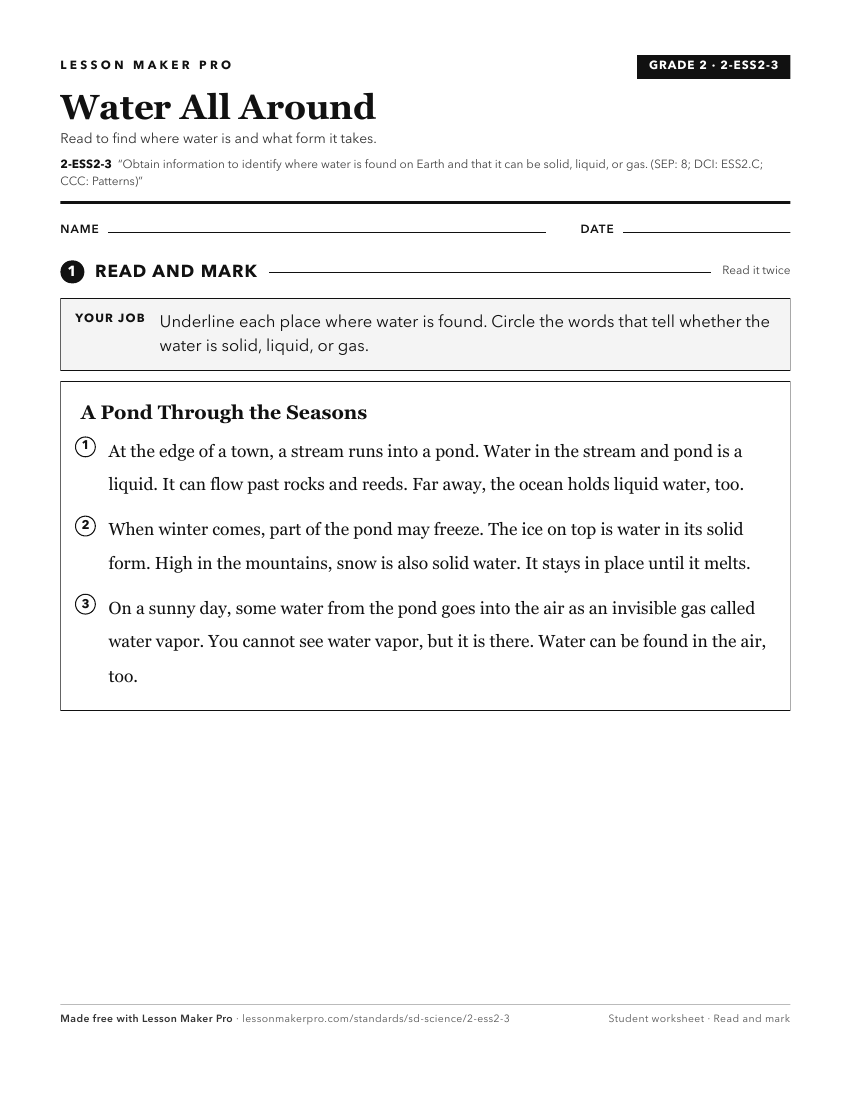
A ready-to-print activity worksheet aligned to 2-ESS2-3, with an answer key for the teacher on its own page. No account needed.
PDF, US Letter, prints cleanly in black and white.
Download the worksheetKeep exploring
Related Standards
Turn this exact standard into a lesson
Grade, subject, topic, and the complete standard are prefilled. Create one free, no account needed.
Also for this standard:Make a WorksheetMake a QuizMake a Sub Lesson