Oklahoma Social Studies USH.C.8.4.B
The Standard
- USH.C.8
- Analyze the rationale and impact of foreign and domestic policies of the late 20th century.
- USH.C.8.4
- Evaluate the major domestic and foreign policies of the William J. Clinton administration.
Explain how President Clinton’s economic policies of taxation, limits on discretionary spending, and economic conditions contributed to a balanced budget.
Oklahoma Academic Standards for Social Studies (2026) · USH.C.8.4
Teacher's field guide
What This Standard Means
What Students Need to Do
- Students explain how higher taxes on top earners and limits on discretionary spending helped narrow the federal deficit. They also explain how a growing economy brought in more tax revenue.
What Mastery Looks Like
- A student can trace how each factor changed federal revenue or spending. They can explain why the budget moved from a deficit to a surplus without claiming the national debt disappeared.
Common Misconceptions
- Students may think a balanced budget means the national debt was paid off. They may also credit the surplus only to spending limits and miss the tax revenue brought in by a growing economy.
How to Assess It
- Exit ticket: Explain how higher taxes on top earners, spending limits, and job growth each helped move the federal budget toward balance. Label each factor as affecting revenue or spending.
Lesson moves
Ways to Teach It
Give groups paper revenue and spending strips; have them add tax and job-growth revenue while holding discretionary spending to a set limit.
Ask students to write: Which factor depended most on the economy staying strong, and why?
Play a card sort: match higher top tax rates, capped agency spending, and more workers paying taxes to their budget effects.
Compare federal receipts and outlays on a printed 1993 to 1998 chart; circle the first year receipts exceeded outlays.
Free download
Printable USH.C.8.4.B Worksheet
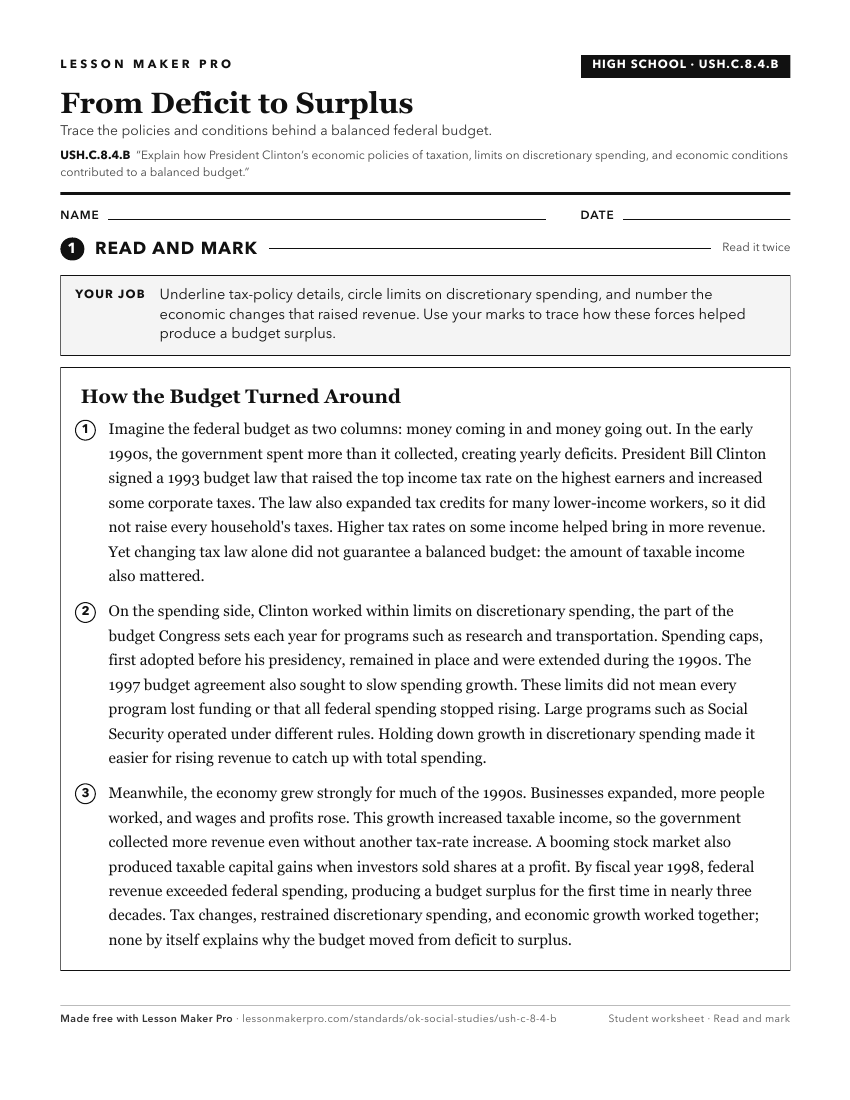
A ready-to-print activity worksheet aligned to USH.C.8.4.B, with an answer key for the teacher on its own page. No account needed.
PDF, US Letter, prints cleanly in black and white.
Download the worksheetKeep exploring
Related Standards
- USH.C.8.4
Evaluate the major domestic and foreign policies of the William J. Clinton administration.
- E.C.10.2
Explain how changes in federal spending and taxation can affect budget deficits, surpluses, and the national debt, and describe how different tax structures (pr...
- USH.C.4.3.B
Describe how national policies, based upon John Maynard Keynes’ theory of deficit spending, addressed the economic crisis, and evaluate the critiques of central...
- USG.C.7.1.B
Trace the budget process, including the impact of government shutdowns and risks from the national debt, explaining how economic trade-offs occur when addressin...
Turn this exact standard into a lesson
Grade, subject, topic, and the complete standard are prefilled. Create one free, no account needed.
Also for this standard:Make a WorksheetMake a QuizMake a Sub Lesson