Oklahoma Social Studies USH.C.6.3.H
The Standard
- USH.C.6
- Analyze foreign events and policies during the early Cold War Era.
- USH.C.6.3
- Analyze the escalation of international tensions by examining the series of events and their long- term foreign and domestic consequences during the height of the Cold War.
Explain how the Vietnam conflict impacted domestic affairs (e.g., outcome of the presidential election of 1968, university student protests, counterculture movement, expanded televised coverage of the conflict, passage of the War Powers Resolution Act and the 26th Amendment).
Oklahoma Academic Standards for Social Studies (2026) · USH.C.6.3
Teacher's field guide
What This Standard Means
What Students Need to Do
- Explain how the war shaped the 1968 election, campus protests, and youth culture. Describe how TV coverage changed debate at home. Explain why draft-age young people pressed to vote at 18 and why Congress moved to limit presidential war powers.
What Mastery Looks Like
- Students can explain how TV reports fed public debate and how campus protests differed from the wider counterculture. They can describe how divisions over Vietnam shaped the 1968 election. They can link the draft to the voting age change and the war to new limits on presidential power.
Common Misconceptions
- Students may think every antiwar protester was part of the counterculture or that all Americans opposed the war. Some assume Nixon ended the war when he won or that the War Powers Resolution banned presidents from sending troops.
How to Assess It
- Exit ticket: Explain how a TV report from Vietnam might affect a campus protest. Then explain why Congress passed the War Powers Resolution in 1973.
Lesson moves
Ways to Teach It
Hand pairs a 1968 campaign ad, a campus protest flyer, and a War Powers Resolution summary; have them label each domestic response.
Compare a protest flyer with a photo of a counterculture gathering. Ask: Could someone oppose the war without joining the counterculture?
Run a timeline relay: teams place the 1968 election, 1970 Kent State protests, and 1973 War Powers Resolution, then explain Vietnam's role.
Show a sample voter registration form; ask how the Vietnam-era fight over voting at 18 affects eligible high school seniors today.
Free download
Printable USH.C.6.3.H Worksheet
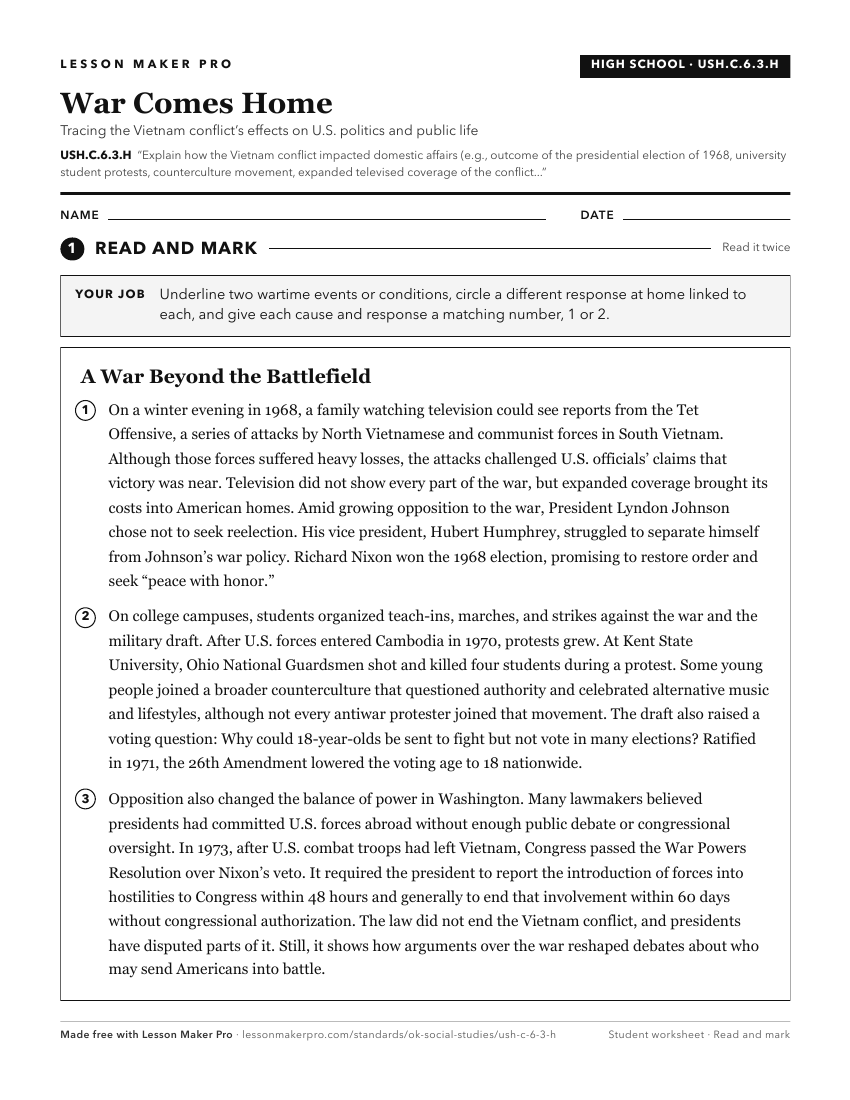
A ready-to-print activity worksheet aligned to USH.C.6.3.H, with an answer key for the teacher on its own page. No account needed.
PDF, US Letter, prints cleanly in black and white.
Download the worksheetKeep exploring
Related Standards
- USH.C.6.3.I
Analyze the political and economic impact of President Nixon’s foreign policies including détente and the opening of China.
- USH.C.6.3.G
Analyze the escalation of events drawing the United States into military involvement in Vietnam (e.g., Domino Theory, Vietnamization, the Gulf of Tonkin Resolut...
- USH.C.7.3.B
Assess the rise of liberalism in the 1960s and the lasting impact of President Lyndon Johnson’s War on Poverty and the Great Society by expanding the role of th...
- USH.C.6.3.C
Evaluate the continuing role of television and other mass media regarding their influence over the 1960 Nixon-Kennedy debates.
Turn this exact standard into a lesson
Grade, subject, topic, and the complete standard are prefilled. Create one free, no account needed.
Also for this standard:Make a WorksheetMake a QuizMake a Sub Lesson