Oklahoma Social Studies USG.C.8.2.C
The Standard
- USG.C.8
- Evaluate the significance of civic participation in order to ensure the preservation of constitutional government.
- USG.C.8.2
- Define civic virtue and explain the individual’s duty and responsibility to participate in civic life.
Explain how civic virtue and a shared American civic identity are achieved through the deliberation about the meaning and application of our Founding documents.
Oklahoma Academic Standards for Social Studies (2026) · USG.C.8.2
Teacher's field guide
What This Standard Means
What Students Need to Do
- Students use passages from the Declaration of Independence, Constitution, and Bill of Rights to discuss who belongs and how rights apply. They consider different readings, give reasons for their own, and identify principles people can share despite disagreement.
What Mastery Looks Like
- A student cites a passage to support a claim about a civic question and states a different reading fairly. They explain how listening and shared rights help people act together without agreeing on every policy.
Common Misconceptions
- Students may think a shared civic identity means having the same background or agreeing on every issue. They may assume founding promises applied equally to everyone from the start, or that respectful debate means dropping objections.
How to Assess It
- Give students a First Amendment excerpt and this dispute: one neighbor wants a park to close early, another wants it open late. Ask students to state both views fairly, cite a right the neighbors share, and suggest how they could discuss the rule.
Lesson moves
Ways to Teach It
Give pairs excerpt cards from the Declaration, Constitution preamble, and Bill of Rights; sort them under freedom, equality, or participation and defend choices.
Ask students who the Constitution's opening words included in 1787, then have them cite the text and restate a classmate's different view fairly.
Give pairs a city rule requiring handheld protest signs; have them argue both sides using the First Amendment, then swap positions.
Show a local city council agenda, then have students draft a one-minute comment about park hours that cites the First Amendment's right to petition.
Free download
Printable USG.C.8.2.C Worksheet
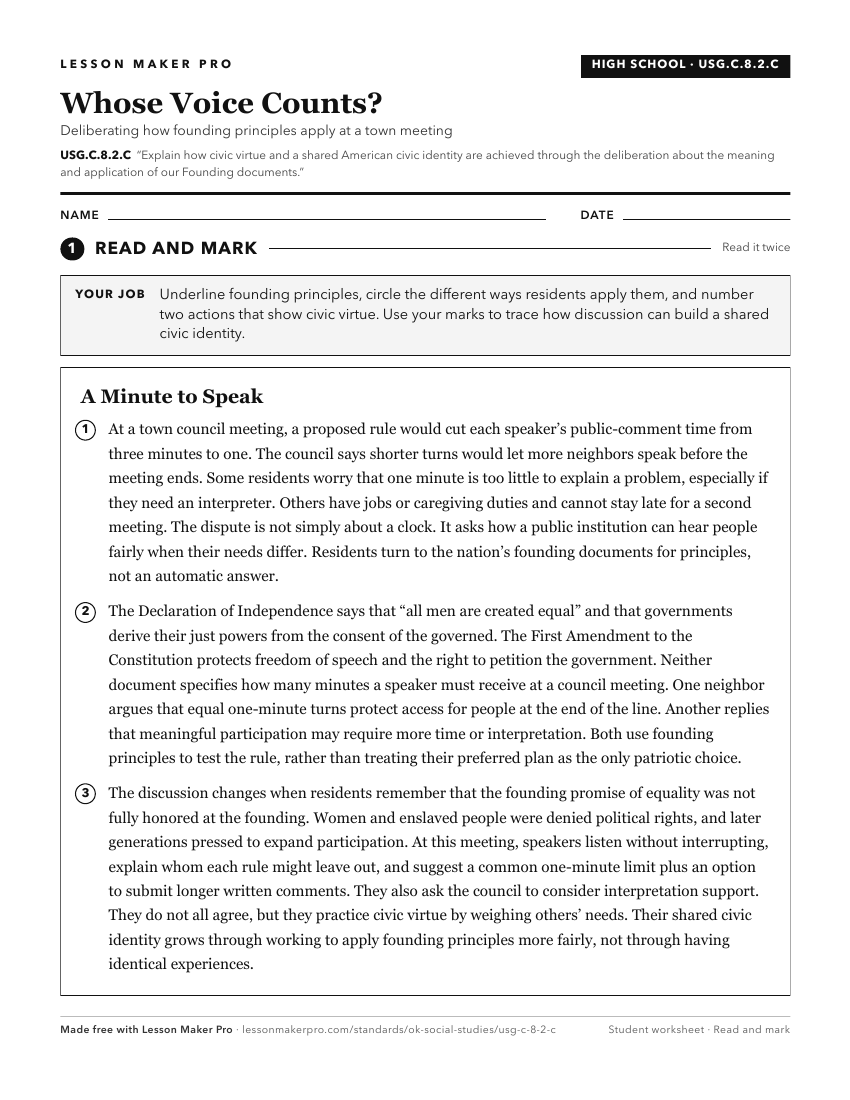
A ready-to-print activity worksheet aligned to USG.C.8.2.C, with an answer key for the teacher on its own page. No account needed.
PDF, US Letter, prints cleanly in black and white.
Download the worksheetKeep exploring
Related Standards
- 2.P.2.1.A
Describe civic virtues and democratic principles such as equality, fairness, and respect for legitimate authority.
- 5.P.2.1.A
Explain democratic principles in historic documents by identifying examples of civic virtues and principles at work in state and national settings.
- 4.P.2.1.A
Explain democratic principles in historic documents by identifying examples of civic virtues and principles at work in state and national settings.
- 3.P.2.1.A
Describe civic virtues and democratic principles such as equality, fairness, and respect for legitimate authority.
Turn this exact standard into a lesson
Grade, subject, topic, and the complete standard are prefilled. Create one free, no account needed.
Also for this standard:Make a WorksheetMake a QuizMake a Sub Lesson