Oklahoma Social Studies PS.7
Standard Cluster
Examine mental disorders and the factors that promote mental and physical health. Examine how psychologists use integrated approaches and evidence-based practices to understand and treat psychological disorders. Describe the symptoms and possible causes of categories of mental disorders, including neurodevelopmental, schizophrenic spectrum, depressive, bipolar, anxiety, obsessive-compulsive, dissociative, trauma/stressor-related, eating, and personality disorders. Describe the research and trends in the treatment of psychological disorders. Identify and explain potential sources of stress, effects of stress, and various coping strategies for dealing with stress. Explain how physical, psychological, and social factors combine to promote overall health and well-being. Explain how positive psychology approaches mental health, identifying factors that lead to well-being, including resilience, positive emotions and expressing gratitude.
Oklahoma Academic Standards for Social Studies (2026)
Cluster contents
Standards in This Cluster
PS.7 is a cluster heading. These are the individual standards under it.
- PS.7.1
Examine how psychologists use integrated approaches and evidence-based practices to understand and treat psychological disorders.
- PS.7.2
Describe the symptoms and possible causes of categories of mental disorders, including neurodevelopmental, schizophrenic spectrum, depressive, bipolar, anxiety,...
- PS.7.3
Describe the research and trends in the treatment of psychological disorders.
- PS.7.4
Identify and explain potential sources of stress, effects of stress, and various coping strategies for dealing with stress.
- PS.7.5
Explain how physical, psychological, and social factors combine to promote overall health and well-being.
- PS.7.6
Explain how positive psychology approaches mental health, identifying factors that lead to well-being, including resilience, positive emotions and expressing gr...
Teacher's field guide
What This Cluster Means
What Students Need to Do
- Students compare symptoms and possible causes across disorder groups, including ADHD, schizophrenia, depression, bipolar disorder, anxiety, OCD, dissociation, trauma, eating disorders, and personality disorders. They examine how research guides treatment choices. They explain how stress, coping, sleep, relationships, resilience, and gratitude affect health.
What Mastery Looks Like
- Given a fictional case, students identify a possible disorder group and point to symptoms that support their choice, without claiming to diagnose the person. They explain how body, thoughts, and surroundings might contribute, and check research before recommending a treatment. They describe how stress affects health and why gratitude can help without replacing care.
Common Misconceptions
- Students may mistake schizophrenia for multiple personalities or bipolar disorder for ordinary mood changes. They may think OCD just means liking things neat. Some assume one treatment works for everyone or that gratitude alone can treat a disorder.
How to Assess It
- Give students a fictional teen with persistent worry, poor sleep, and a recent move. Ask for a possible disorder group, one factor each from body, thoughts, and surroundings, and one research-supported form of help.
Lesson moves
Ways to Teach It
Have pairs sort fictional symptom cards into disorder groups using a category key, then flag cards that lack enough information.
Ask, 'Can gratitude replace therapy for depression?' Have students write two sentences naming one benefit and one limit.
Give teams three short treatment study summaries; award points for identifying stronger evidence and checking whether it supports each treatment claim.
Give students a sample exam-week schedule; have them add a sleep block, a short walk, and a check-in with a friend.
Free download
Printable PS.7 Worksheet
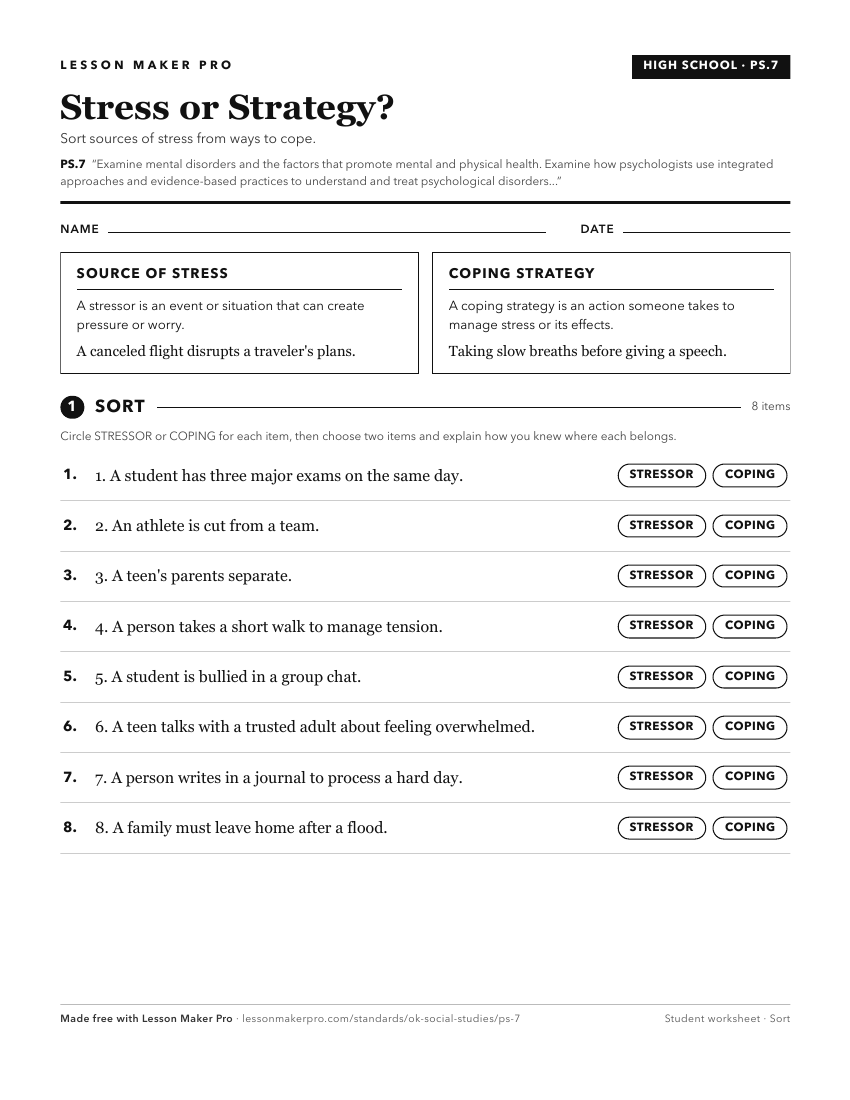
A ready-to-print activity worksheet aligned to PS.7, with an answer key for the teacher on its own page. No account needed.
PDF, US Letter, prints cleanly in black and white.
Download the worksheetKeep exploring
Related Standards
Turn this cluster into a lesson
Grade, subject, topic, and the complete cluster are prefilled. Create one free, no account needed.
Also for this cluster:Make a WorksheetMake a QuizMake a Sub Lesson