Oklahoma Social Studies 8.C.4.5
Standard Cluster
- 8.C.4
- Examine the key principles and structure of the United States of America’s government as established by the Constitution of the United States of America.
Analyze the rights and liberties guaranteed to all citizens in the Bill of Rights. Explain the Constitutional amendment process, using the Bill of Rights as an example. Describe the influence of James Madison and the Virginia Declaration of Rights to the development of the Bill of Rights, including the significance of the Virginia Statute for Religious Freedom as a forerunner of the First Amendment. Examine individual rights, liberties, and protections of due process guaranteed by the Bill of Rights. Explain how the Bill of Rights protects individuals from abuse by the national government with most of its provisions being applied to the states through the 14th Amendment. Describe how the Bill of Rights and the United States of America’s judicial system uphold the rule of law guaranteeing fair and equal application of the law and the accountability of all persons under it. Explain the importance of an independent judicial system to the interpretation and defense of citizens’ rights and liberties.
Oklahoma Academic Standards for Social Studies (2026) · 8.C.4
Cluster contents
Standards in This Cluster
8.C.4.5 is a cluster heading. These are the individual standards under it.
- 8.C.4.5.A
Explain the Constitutional amendment process, using the Bill of Rights as an example.
- 8.C.4.5.B
Describe the influence of James Madison and the Virginia Declaration of Rights to the development of the Bill of Rights, including the significance of the Virgi...
- 8.C.4.5.C
Examine individual rights, liberties, and protections of due process guaranteed by the Bill of Rights.
- 8.C.4.5.D
Explain how the Bill of Rights protects individuals from abuse by the national government with most of its provisions being applied to the states through the 14...
- 8.C.4.5.E
Describe how the Bill of Rights and the United States of America’s judicial system uphold the rule of law guaranteeing fair and equal application of the law and...
- 8.C.4.5.F
Explain the importance of an independent judicial system to the interpretation and defense of citizens’ rights and liberties.
Teacher's field guide
What This Cluster Means
What Students Need to Do
- Students match government actions to rights such as religious freedom, search protections, and due process. They trace Madison's Virginia influences and the steps for adding an amendment. They explain how courts enforce rights against federal and state officials.
What Mastery Looks Like
- Given a police search or arrest, a student names the relevant protection and explains what officials may do. They connect Madison's proposals to Virginia's rights documents, including the religious freedom statute. They explain the usual amendment process and why independent courts can hold officials to the same law as everyone else.
Common Misconceptions
- Students may think the Bill of Rights restricted states from the start, or that every protection now applies to states in the same way. Some mistake a proposed amendment for a ratified one. Others assume judges must follow a president's orders.
How to Assess It
- Exit ticket: A state law bans all religious services. Name the protection involved, its Virginia forerunner, how it applies to states, and what an independent judge could do; then give the usual congressional proposal and state ratification thresholds.
Lesson moves
Ways to Teach It
Give pairs cards labeled Virginia Declaration of Rights, Virginia Statute for Religious Freedom, Madison, and Bill of Rights; draw arrows showing influence.
Ask: Can a state ban a peaceful religious meeting? Name the protection, explain the Fourteenth Amendment's role, and defend a judge's response.
Run an amendment relay: teams order cards for two-thirds in each chamber and ratification by three-fourths of the states, then check each other's sequence.
Use a city council public-comment agenda; students test a rule banning criticism of the mayor against free speech and equal treatment.
Free download
Printable 8.C.4.5 Worksheet
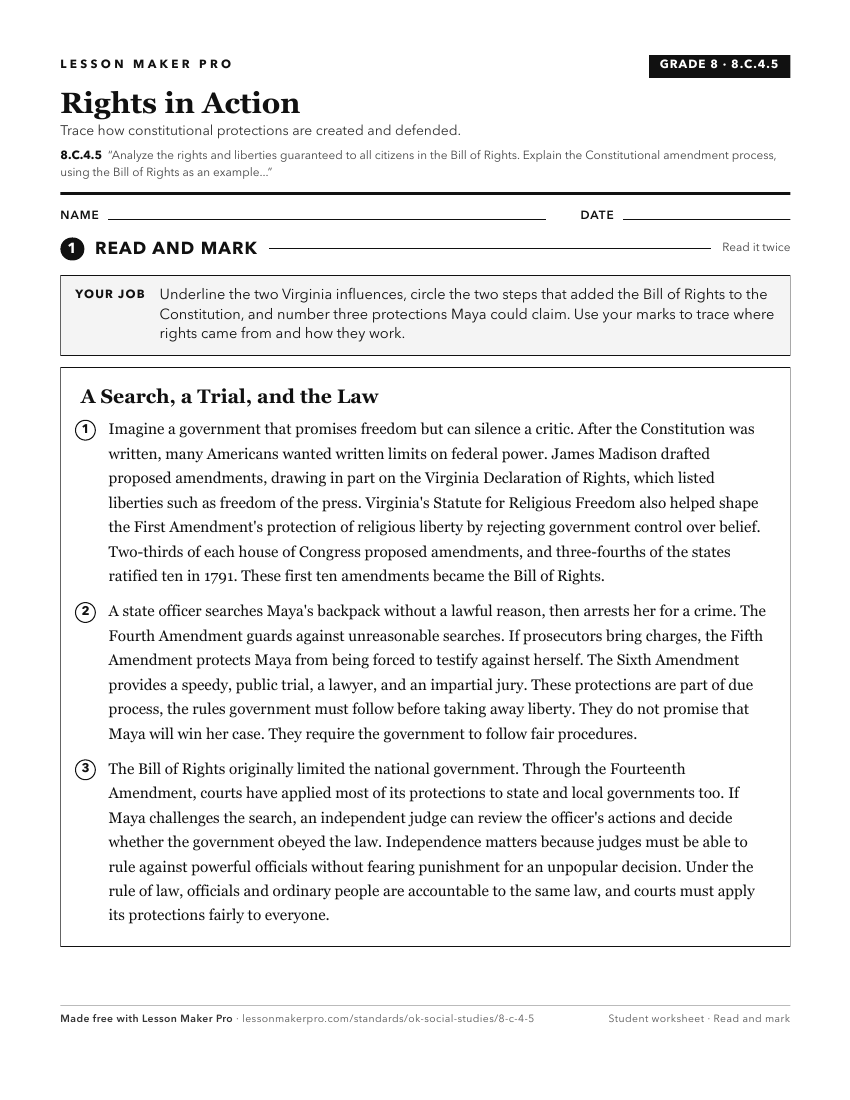
A ready-to-print activity worksheet aligned to 8.C.4.5, with an answer key for the teacher on its own page. No account needed.
PDF, US Letter, prints cleanly in black and white.
Download the worksheetKeep exploring
Related Standards
- USG.C.6.4
Analyze the civil rights and civil liberties affirmed and guaranteed by the Bill of Rights.
- USG.C.6.4.C
Identify basic rights, liberties, and protections of due process protected by the Bill of Rights and subsequent constitutional amendments.
- 5.C.6.2
Summarize the rights and liberties protected by the Bill of Rights.
Turn this cluster into a lesson
Grade, subject, topic, and the complete cluster are prefilled. Create one free, no account needed.
Also for this cluster:Make a WorksheetMake a QuizMake a Sub Lesson