Oklahoma Math 1.N.1.4
The Standard
- 1.N.1
- Count, compare, and represent whole numbers up to 100, with an emphasis on grouping in terms of tens and ones.
Count forward, with objects, from any given number up to 100 by 1s, 2s, 5s and 10s.
Oklahoma Academic Standards for Mathematics (2022)
Teacher's field guide
What This Standard Means
What Students Need to Do
- Students start with a given number of objects and add groups of 1, 2, 5, or 10. They say the new total after each group, stopping at or before 100.
What Mastery Looks Like
- Starting with 13 counters, a student adds five at a time and says 18, 23, 28, 33. They can also count on with groups of 1, 2, and 10 without losing track.
Common Misconceptions
- Some students restart at 1 instead of counting on from the given number. Others switch to familiar multiples, saying 13, 15, 20 when adding groups of five.
How to Assess It
- Give students 13 counters. Ask them to use more counters to write the next three totals when adding groups of 1, 2, 5, and 10.
Lesson moves
Ways to Teach It
Place 17 cubes on a mat, add cubes in groups of two, and have partners say and record each total through 31.
Show 13 counters, add ten three times, and ask, “Why do the ones stay the same in 13, 23, 33, 43?”
Draw a starting card and a step card marked 1, 2, 5, or 10; add counters and name totals without passing 100.
Start with 23 crayons in a bin, add bundles of five crayons, and count the new total after each bundle.
Free download
Printable 1.N.1.4 Worksheet
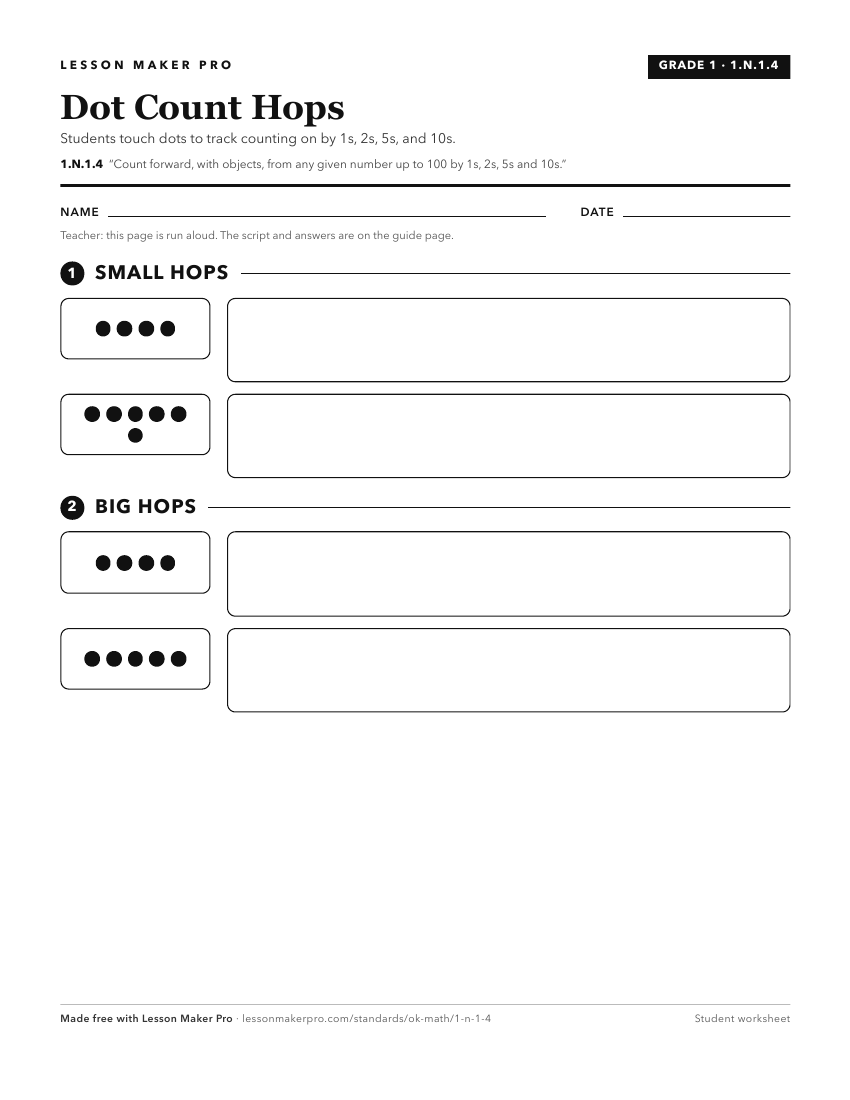
A ready-to-print activity worksheet aligned to 1.N.1.4, with an answer key for the teacher on its own page. No account needed.
PDF, US Letter, prints cleanly in black and white.
Download the worksheetKeep exploring
Related Standards
Turn this exact standard into a lesson
Grade, subject, topic, and the complete standard are prefilled. Create one free, no account needed.
Also for this standard:Make a WorksheetMake a QuizMake a Sub Lesson