NY Social Studies 8.4e
The Standard
After World War I, the United States entered a period of economic prosperity and cultural change. This period is known as the Roaring Twenties. During this time, new opportunities for women were gained, and African Americans engaged in various efforts to distinguish themselves and celebrate their culture.
New York State K–12 Social Studies Framework
Key Idea 8.4
WORLD WAR I AND THE ROARING TWENTIES: Various diplomatic, economic, and ideological factors contributed to the United States decision to enter World War I. Involvement in the war significantly altered the lives of Americans. Postwar America was characterized by economic prosperity, technological innovations, and changes in the workplace.
Teacher's field guide
What This Standard Means
What Students Need to Do
- Students use primary and secondary sources to explain how voting rights, Prohibition, racial violence, and Black cultural expression shaped the 1920s. They connect causes, events, and effects while noting that new rights and prosperity were not shared equally.
What Mastery Looks Like
- Students can explain the significance and limits of the 19th Amendment. They can compare Prohibition, racial conflict, and the Harlem Renaissance using accurate evidence from events such as the Silent March and Tulsa massacre.
Common Misconceptions
- Students may think the 19th Amendment gave every woman equal access to voting or that Prohibition ended alcohol use. They may also treat the 1920s as prosperous and carefree for everyone, overlooking racism, violence, and unequal opportunities.
How to Assess It
- Give students four event cards: the 19th Amendment, Prohibition, the Tulsa massacre, and the Harlem Renaissance. Ask them to choose two and explain each event's cause, effect, and larger significance.
Lesson moves
Ways to Teach It
Have groups sort photographs, laws, advertisements, and newspaper excerpts into voting rights, Prohibition, racial conflict, and cultural change.
Ask students to write: Who benefited from changes during the 1920s, who faced barriers, and what evidence supports your answer?
Run a timeline relay using cards for suffrage campaigns, the Silent March, Prohibition, the Tulsa massacre, and Harlem Renaissance works.
Compare a 1920s voting rights or Prohibition campaign poster with a current public campaign, focusing on audience, message, and persuasive methods.
Free download
Printable 8.4e Worksheet
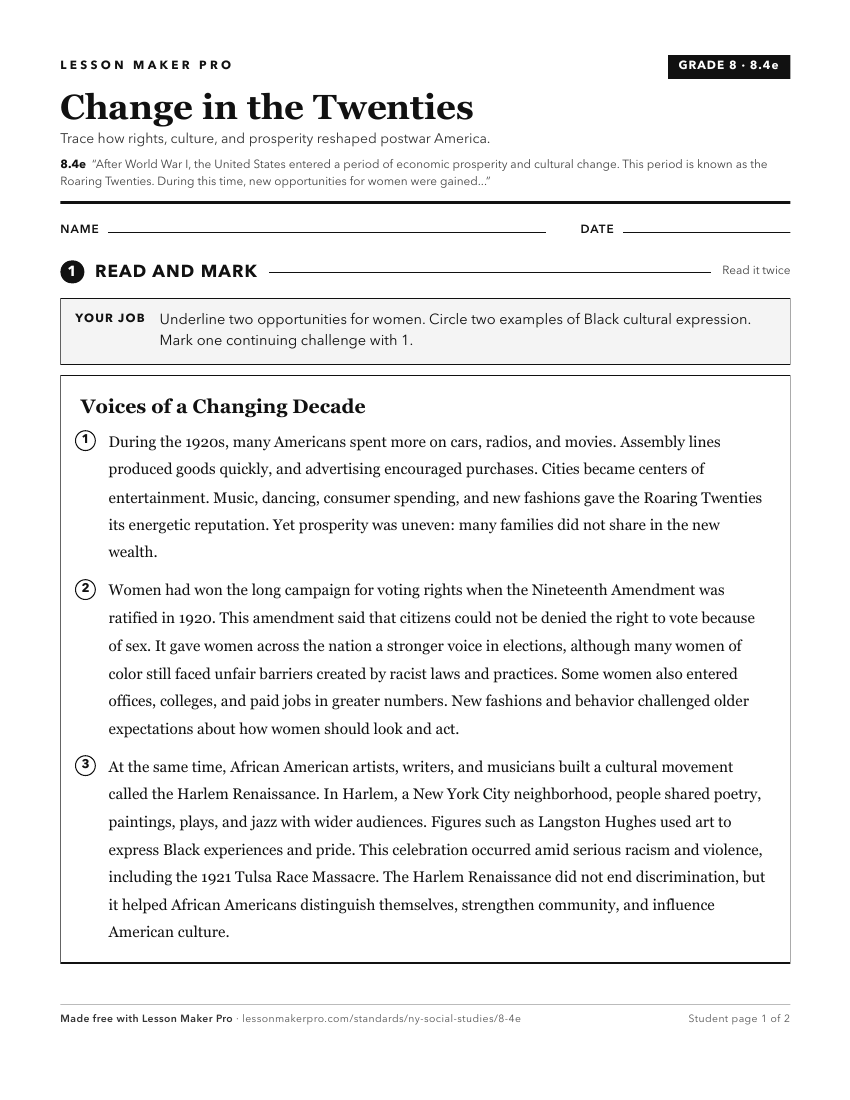
A ready-to-print activity worksheet aligned to 8.4e, with an answer key for the teacher on its own page. No account needed.
PDF, US Letter, prints cleanly in black and white.
Download the worksheetTurn this exact standard into a lesson
Grade, subject, topic, and the complete standard are prefilled. Create one free, no account needed.
Also for this standard:Make a WorksheetMake a QuizMake a Sub Lesson