NY Social Studies 6.3a
The Standard
Humans living together in settlements develop shared customs, beliefs, ideas, and languages that give identity to the group.
New York State K–12 Social Studies Framework
Key Idea 6.3
EARLY RIVER VALLEY CIVILIZATIONS IN THE EASTERN HEMISPHERE (ca. 3500 B.C.E. – ca. 500 B.C.E.): Complex societies and civilizations developed in the Eastern Hemisphere. Although these complex societies and civilizations have certain defining characteristics in common, each is also known for unique cultural achievements and contributions. Early human communities in the Eastern Hemisphere adapted to and modified the physical environment.
Teacher's field guide
What This Standard Means
What Students Need to Do
- Students identify cultural traits in early settlements, such as religious practices, laws, writing, stories, art, and language. They explain how those traits helped people see themselves as members of one community.
What Mastery Looks Like
- Students use evidence from artifacts or texts to describe a settlement’s culture. They explain how a shared practice, belief, or language created belonging and distinguished one group from another.
Common Misconceptions
- Students may treat Egyptians or Mesopotamians as single groups with identical beliefs and customs. They may also list cultural traits without explaining how participation in them created group identity.
How to Assess It
- Exit ticket: Choose one cultural feature from an early river valley society. Name evidence for it, then explain how it strengthened group identity.
Lesson moves
Ways to Teach It
Give groups cards showing Egyptian writing, gods, clothing, and burial practices; students sort them and build a community identity poster.
Ask: Which builds stronger group identity, shared language or shared religious practice? Students make a claim, cite an example, and respond.
Play Culture Clue: teams match artifact cards to language, belief, custom, or idea, then explain each connection for a point.
Students list school words, routines, symbols, and traditions, then compare school identity with identity in an ancient settlement.
Free download
Printable 6.3a Worksheet
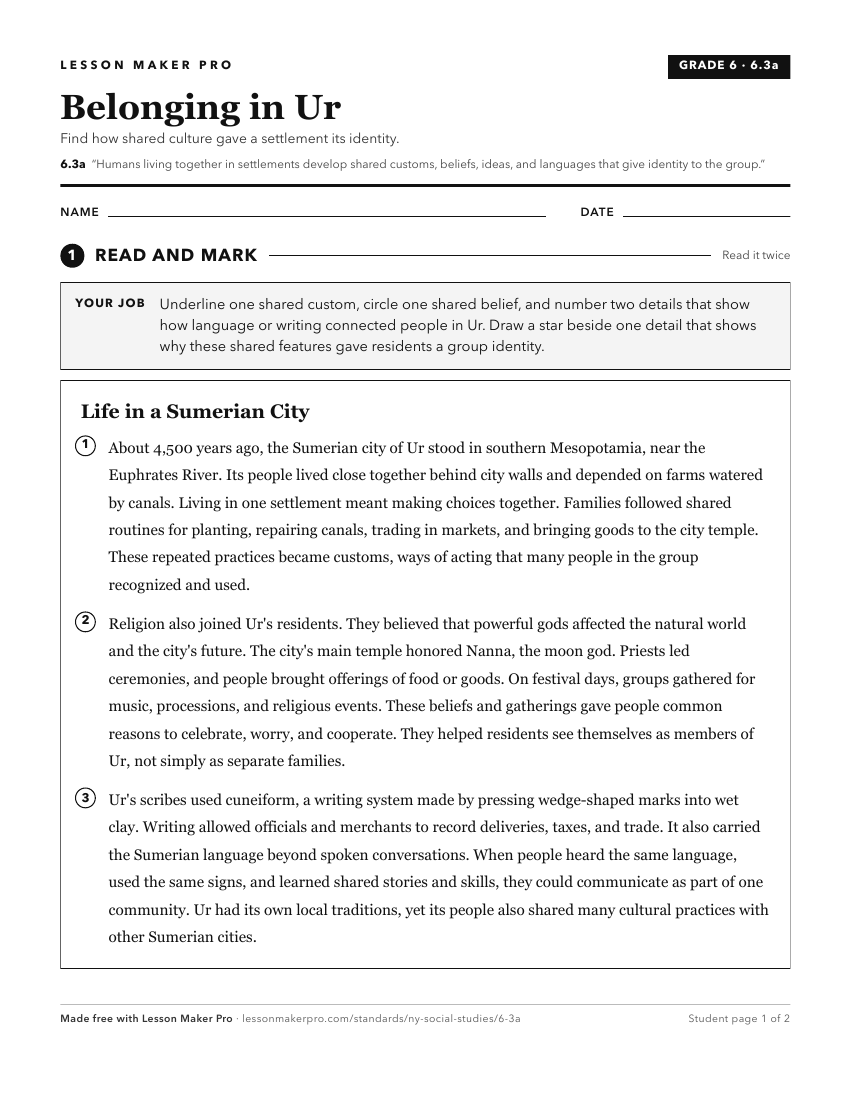
A ready-to-print activity worksheet aligned to 6.3a, with an answer key for the teacher on its own page. No account needed.
PDF, US Letter, prints cleanly in black and white.
Download the worksheetTurn this exact standard into a lesson
Grade, subject, topic, and the complete standard are prefilled. Create one free, no account needed.
Also for this standard:Make a WorksheetMake a QuizMake a Sub Lesson