NY Social Studies 12.G2f
The Standard
Freedom of the press is an essential element of a democratic system, and allows for a citizen to receive and interpret information representing different points of view. Freedom of the press has limits, which are intended to protect the rights of individuals and other entities. The degree to which the press is free and impartial in practice is a source of ongoing debate.
New York State K–12 Social Studies Framework
Key Idea 12.G2
CIVIL RIGHTS and CIVIL LIBERTIES: The United States Constitution aims to protect individual freedoms and rights that have been extended to more groups of people over time. These rights and freedoms continue to be debated, extended to additional people, and defined through judicial interpretation. In engaging in issues of civic debate, citizens act with an appreciation of differences and are able to participate in constructive dialogue with those who hold different perspectives.
Teacher's field guide
What This Standard Means
What Students Need to Do
- Students explain how press freedom supports informed public debate. They compare reporting from different viewpoints and judge credibility, bias, and fairness. They also apply legal limits such as defamation, privacy, and restrictions tied to national security.
What Mastery Looks Like
- Students can compare two reports on the same event and identify differences in evidence, framing, sourcing, and omissions. They can distinguish government censorship from editorial choices. They can support a claim about press rights or limits with case facts and constitutional reasoning.
Common Misconceptions
- Students may assume press freedom protects every published statement or prevents private platforms from setting rules. They may treat bias as proof that a report is false. They may also confuse opinion, inaccurate reporting, and legally actionable defamation.
How to Assess It
- Give students a short scenario in which a newspaper plans to publish leaked government documents. Ask whether publication may be stopped and require two facts or legal principles supporting the answer.
Lesson moves
Ways to Teach It
Give groups source cards with news reports, editorials, advertisements, and false accusations; have them sort each and defend their labels.
Ask students to write: When, if ever, should government stop publication before it occurs, and what evidence supports your rule?
Run a case match game pairing short fact patterns with prior restraint, defamation, privacy, or protected criticism.
Compare one local issue across two news outlets, then check headlines, sourcing, corrections, and omitted perspectives.
Free download
Printable 12.G2f Worksheet
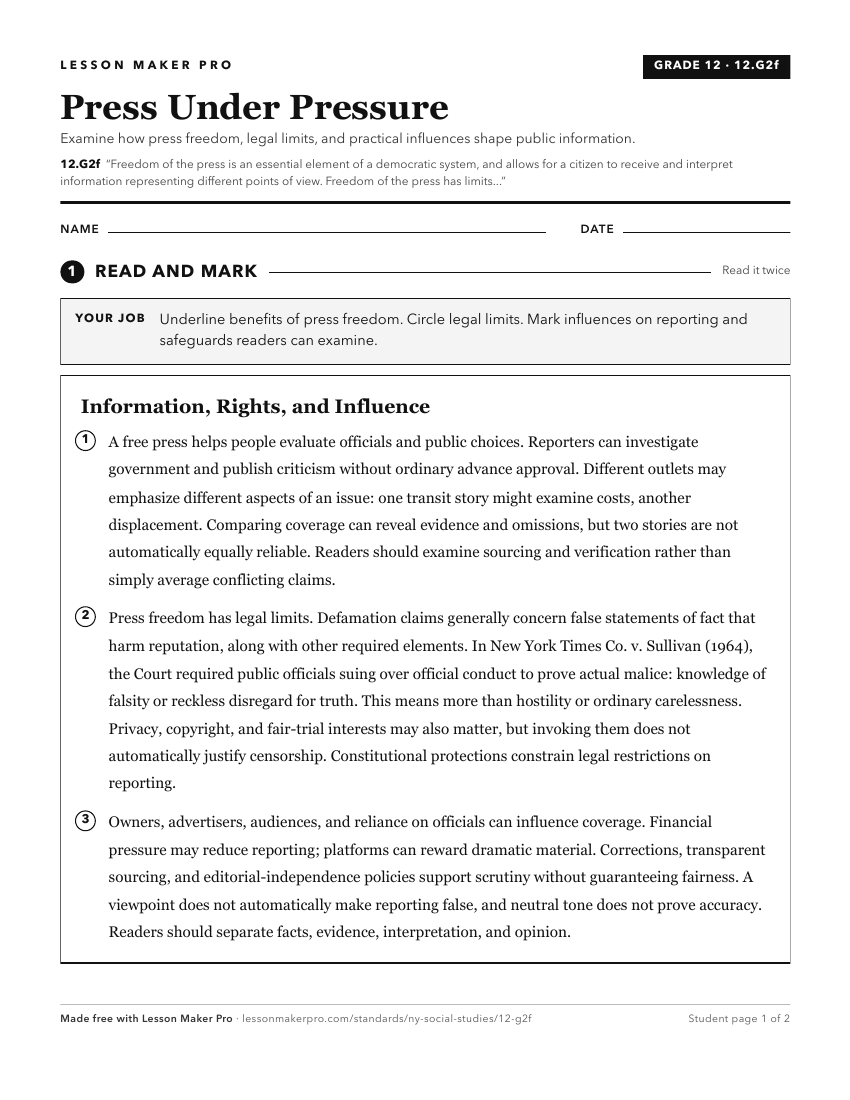
A ready-to-print activity worksheet aligned to 12.G2f, with an answer key for the teacher on its own page. No account needed.
PDF, US Letter, prints cleanly in black and white.
Download the worksheetTurn this exact standard into a lesson
Grade, subject, topic, and the complete standard are prefilled. Create one free, no account needed.
Also for this standard:Make a WorksheetMake a QuizMake a Sub Lesson