NY Social Studies 12.G2e
The Standard
Rights are not absolute; they vary with legal status, with location (as in schools and workplaces), and with circumstance. The different statuses of United States residency bring with them specific protections, rights, and responsibilities. Minors have specific rights in school, in the workplace, in the community, and in the family. The extension of rights across location, circumstance, age, and legal status is a subject of civic discourse.
New York State K–12 Social Studies Framework
Key Idea 12.G2
CIVIL RIGHTS and CIVIL LIBERTIES: The United States Constitution aims to protect individual freedoms and rights that have been extended to more groups of people over time. These rights and freedoms continue to be debated, extended to additional people, and defined through judicial interpretation. In engaging in issues of civic debate, citizens act with an appreciation of differences and are able to participate in constructive dialogue with those who hold different perspectives.
Teacher's field guide
What This Standard Means
What Students Need to Do
- Students compare how rights and responsibilities change by age, setting, circumstance, and residency status. They analyze scenarios, identify possible limits, and support conclusions with laws, policies, or court decisions. They also discuss disputed limits using claims, evidence, and counterclaims.
What Mastery Looks Like
- Given a scenario, a student identifies the people involved, the setting, the claimed right, and a possible lawful limit. The student distinguishes citizen-only civic rights from protections that apply more broadly. The student explains disagreements without making unsupported legal claims.
Common Misconceptions
- Students may assume free speech, privacy, and search protections work the same way at school, work, home, and in public. Some believe minors or noncitizens have no legal rights. Others treat school officials, police, parents, and private employers as if the same rules bind them.
How to Assess It
- Give students this exit ticket: “A public school searches a student’s backpack after receiving a specific safety report. Identify the competing rights and explain what facts matter.”
Lesson moves
Ways to Teach It
Sort scenario cards by school, workplace, family, and public settings, then match each with a likely right, limit, and legal question.
Discuss: “When should safety or order limit a minor’s freedom?” Require one claim, one counterclaim, and evidence from a case summary.
Play a rights challenge game where teams revise overbroad claims, such as “students have no free speech rights at school.”
Review a school handbook or youth work permit guide, then identify one protected right, one responsibility, and one disputed rule.
Free download
Printable 12.G2e Worksheet
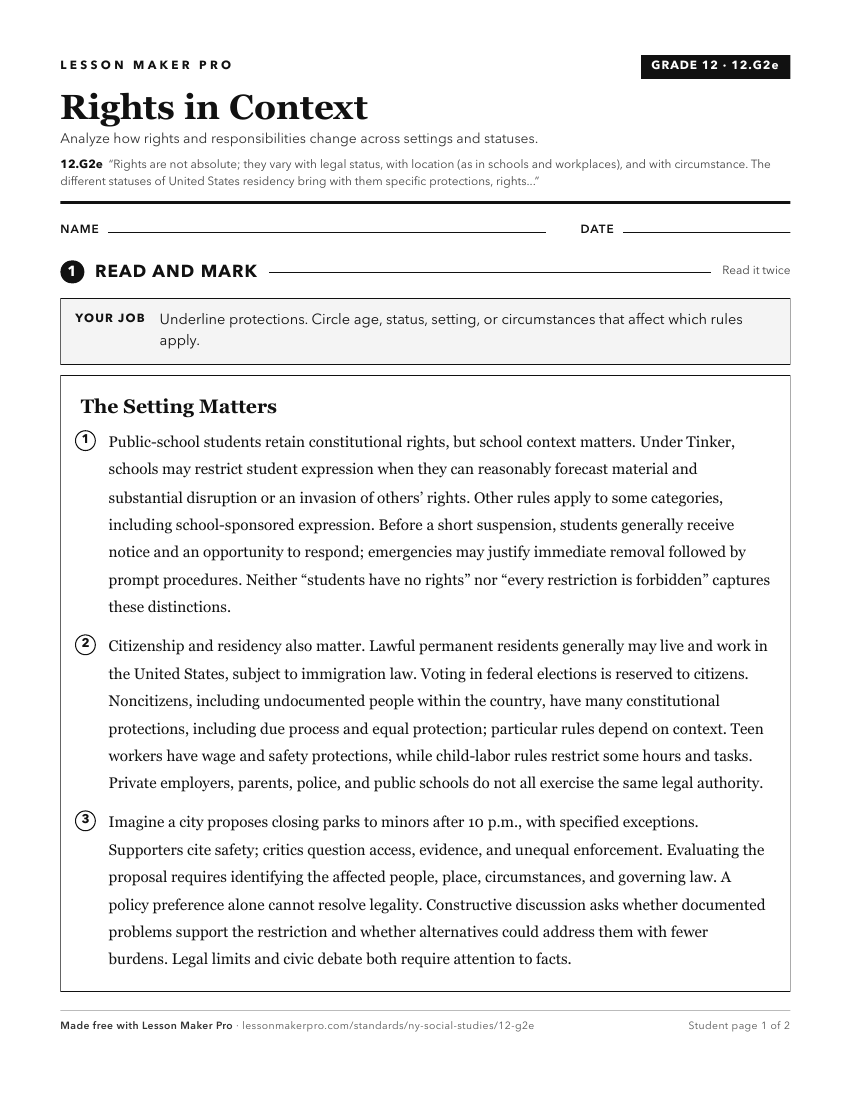
A ready-to-print activity worksheet aligned to 12.G2e, with an answer key for the teacher on its own page. No account needed.
PDF, US Letter, prints cleanly in black and white.
Download the worksheetTurn this exact standard into a lesson
Grade, subject, topic, and the complete standard are prefilled. Create one free, no account needed.
Also for this standard:Make a WorksheetMake a QuizMake a Sub Lesson