NY Social Studies 12.G2d
The Standard
The definition of civil rights has broadened over the course of United States history, and the number of people and groups legally ensured of these rights has also expanded. However, the degree to which rights extend equally and fairly to all (e.g., race, class, gender, sexual orientation) is a continued source of civic contention.
New York State K–12 Social Studies Framework
Key Idea 12.G2
CIVIL RIGHTS and CIVIL LIBERTIES: The United States Constitution aims to protect individual freedoms and rights that have been extended to more groups of people over time. These rights and freedoms continue to be debated, extended to additional people, and defined through judicial interpretation. In engaging in issues of civic debate, citizens act with an appreciation of differences and are able to participate in constructive dialogue with those who hold different perspectives.
Teacher's field guide
What This Standard Means
What Students Need to Do
- Students trace how legal protections expanded to include groups previously denied equal treatment. They use laws, court rulings, and evidence about lived outcomes to judge whether those protections are applied fairly.
What Mastery Looks Like
- Students can explain a change in civil rights over time and identify the law, amendment, or court ruling that produced it. They can compare legal equality with actual outcomes and support a claim using specific evidence.
Common Misconceptions
- Students may treat civil rights and civil liberties as identical, or assume a new law immediately ends unequal treatment. They may also describe progress as steady and overlook resistance, enforcement gaps, or conflicts among rights claims.
How to Assess It
- Give students the Civil Rights Act of 1964 and one current disparity statistic. Ask: “What legal change occurred, and what does the statistic suggest about equality in practice?”
Lesson moves
Ways to Teach It
Create a timeline with amendment, law, and court-case cards, then annotate which groups gained protections and what barriers remained.
Write a claim responding to: “Does equal treatment under law guarantee equal outcomes?” Use one historical and one current example.
Play a case-sorting game where teams match civil rights disputes to the Constitution, legislation, court rulings, and affected groups.
Examine a local housing, school, or workplace policy, then identify who benefits, who may face barriers, and what evidence would show fairness.
Free download
Printable 12.G2d Worksheet
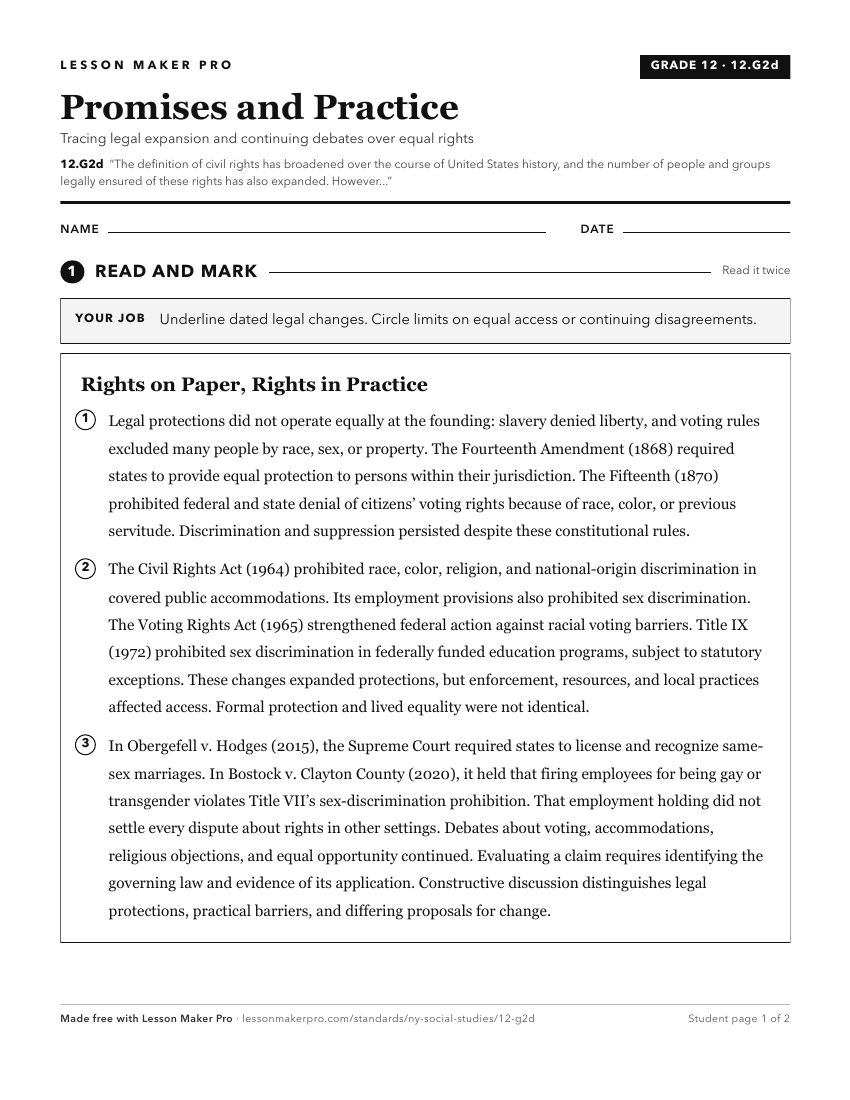
A ready-to-print activity worksheet aligned to 12.G2d, with an answer key for the teacher on its own page. No account needed.
PDF, US Letter, prints cleanly in black and white.
Download the worksheetTurn this exact standard into a lesson
Grade, subject, topic, and the complete standard are prefilled. Create one free, no account needed.
Also for this standard:Make a WorksheetMake a QuizMake a Sub Lesson