NY Social Studies 12.G2b
The Standard
The Constitution aims to protect, among other freedoms, individual and group rights to freedom of speech, freedom of the press, freedom of assembly, freedom of petition, and freedom of religion. The extent to which these ideals exist in practice and how these protections should be applied in a changing world continues to be an issue of ongoing civic debate.
New York State K–12 Social Studies Framework
Key Idea 12.G2
CIVIL RIGHTS and CIVIL LIBERTIES: The United States Constitution aims to protect individual freedoms and rights that have been extended to more groups of people over time. These rights and freedoms continue to be debated, extended to additional people, and defined through judicial interpretation. In engaging in issues of civic debate, citizens act with an appreciation of differences and are able to participate in constructive dialogue with those who hold different perspectives.
Teacher's field guide
What This Standard Means
What Students Need to Do
- Students identify which First Amendment freedom is involved in a civic dispute. They distinguish government restrictions from actions by private people or companies. They use constitutional principles, facts, and court precedents to argue how a protection should apply.
What Mastery Looks Like
- Given a new scenario, a student names the protected activity, identifies the government action, and explains whether the restriction is likely lawful. The explanation weighs individual rights against a specific public concern and cites relevant evidence. The student also responds fairly to a competing claim.
Common Misconceptions
- Students often treat every speech restriction as unconstitutional, or assume the First Amendment controls private employers and social media companies. They may confuse religious freedom with permission for government to endorse religion. They may also assume assembly and petition rights guarantee access to any place, time, or audience.
How to Assess It
- Exit ticket: A town allows rallies in its park but denies one permit because officials oppose the group's message. Identify the freedom involved, decide whether the denial is constitutional, and support your answer with one principle or precedent.
Lesson moves
Ways to Teach It
Have groups sort eight case cards by protected freedom, government or private action, and likely constitutional or unconstitutional restriction.
Write a two-column brief on whether public schools should restrict off-campus student posts, using facts from Mahanoy v. B.L.
Run a rights referee game: teams hear a scenario, raise a freedom card, then earn a point for a supported ruling.
Compare your school handbook's rules on protests, student publications, and religious clubs with one court ruling, then propose one revision.
Free download
Printable 12.G2b Worksheet
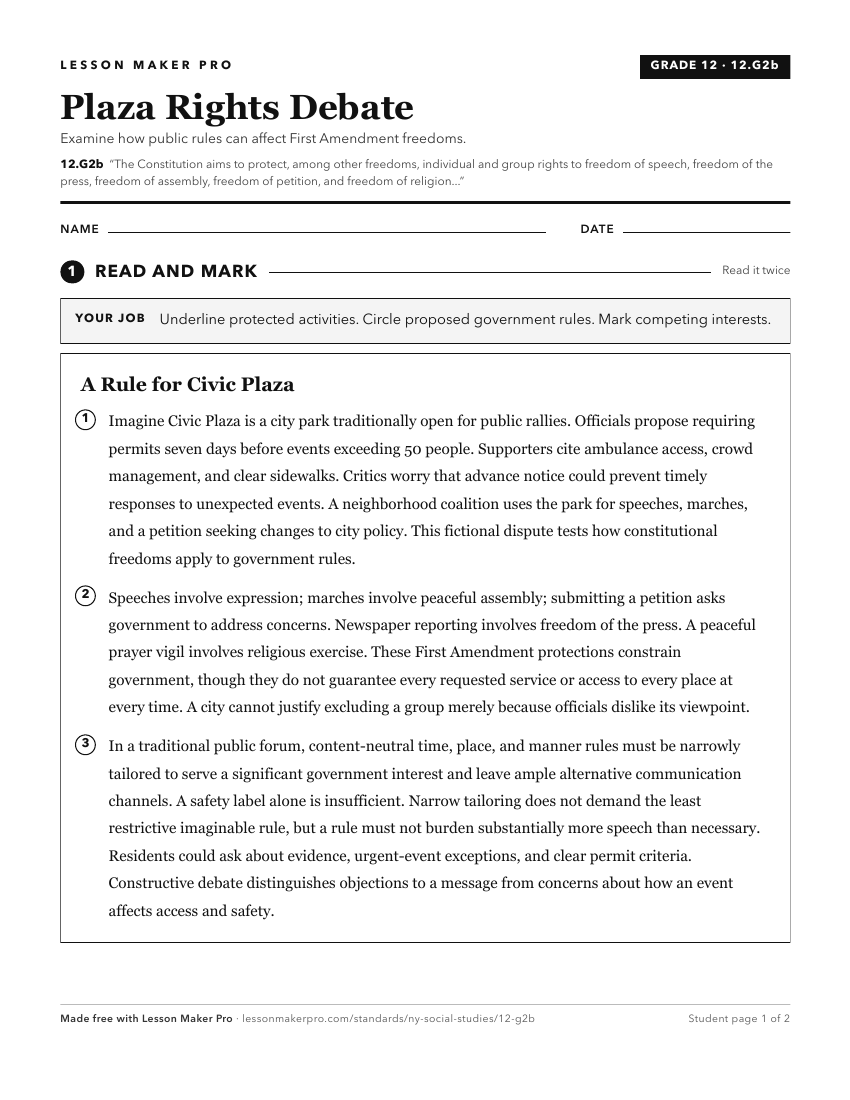
A ready-to-print activity worksheet aligned to 12.G2b, with an answer key for the teacher on its own page. No account needed.
PDF, US Letter, prints cleanly in black and white.
Download the worksheetTurn this exact standard into a lesson
Grade, subject, topic, and the complete standard are prefilled. Create one free, no account needed.
Also for this standard:Make a WorksheetMake a QuizMake a Sub Lesson