NY Social Studies 12.G2a
The Standard
Equality before the law and due process are two fundamental values that apply to all under the jurisdiction of the United States. While the United States legal system aims to uphold the values of equality before the law, due process, human dignity, freedom of conscience, inalienable rights, and civility, the extent to which the legal system upholds these values in practice is an issue of ongoing civic debate.
New York State K–12 Social Studies Framework
Key Idea 12.G2
CIVIL RIGHTS and CIVIL LIBERTIES: The United States Constitution aims to protect individual freedoms and rights that have been extended to more groups of people over time. These rights and freedoms continue to be debated, extended to additional people, and defined through judicial interpretation. In engaging in issues of civic debate, citizens act with an appreciation of differences and are able to participate in constructive dialogue with those who hold different perspectives.
Teacher's field guide
What This Standard Means
What Students Need to Do
- Students explain how equal protection and due process should limit government action. They use constitutional text, court decisions, and case facts to judge whether legal practices match democratic values.
What Mastery Looks Like
- A student can identify the protected right, the government action, and the process provided in a case. The student makes a defensible judgment, cites relevant evidence, and addresses a competing view.
Common Misconceptions
- Students may assume due process guarantees a favorable outcome, rather than fair procedures. They may think constitutional protections cover only citizens, or that equal treatment always means identical treatment. They may also treat a court ruling as proof that a practice is fair.
How to Assess It
- Exit ticket: A public school suspends a student without explaining the charge or allowing a response. Identify the legal value involved, judge whether it was upheld, and cite two facts.
Lesson moves
Ways to Teach It
Give groups case cards about arrests, school discipline, and voting, then have them sort each as likely upheld, violated, or unclear.
Ask students to write: When can different legal treatment be fair, and what evidence should courts require?
Run a Four Corners game with scenarios labeled due process, equal treatment, both, or neither, then require an evidence-based defense.
Compare local public defender caseload data with recommended limits, then discuss how workload may affect fair hearings and equal access to counsel.
Free download
Printable 12.G2a Worksheet
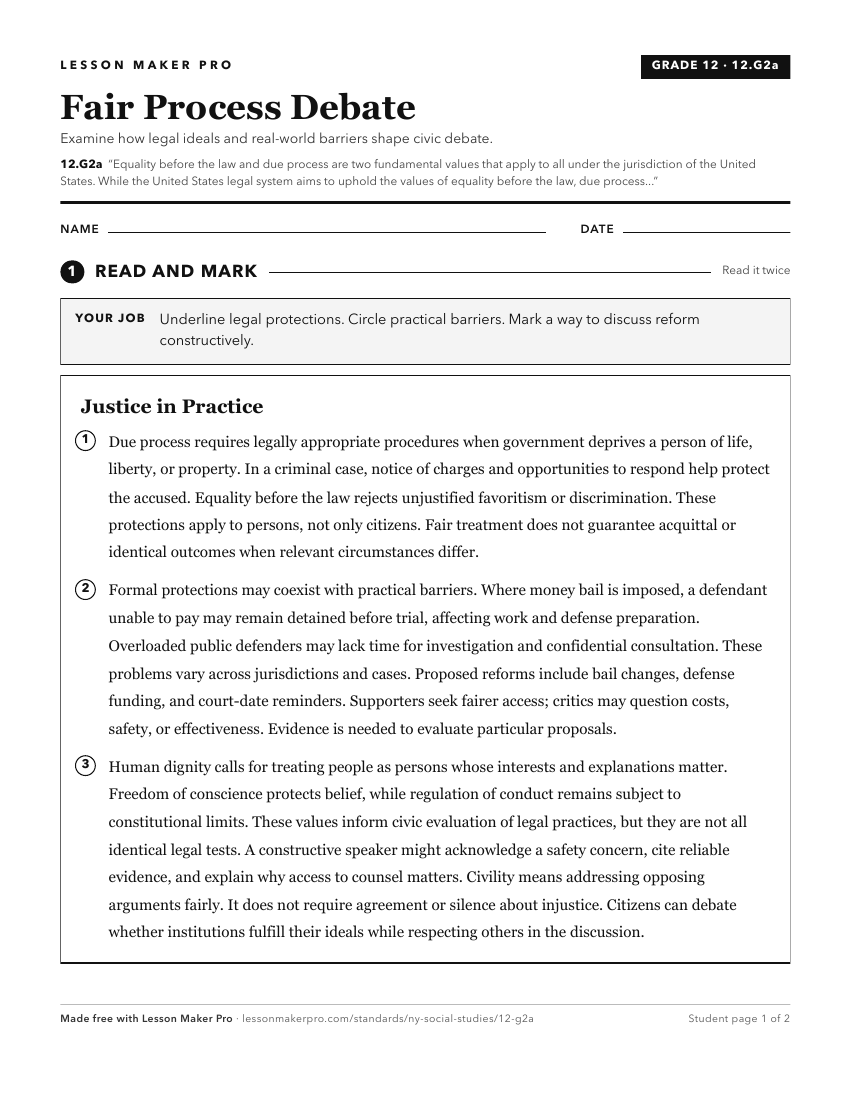
A ready-to-print activity worksheet aligned to 12.G2a, with an answer key for the teacher on its own page. No account needed.
PDF, US Letter, prints cleanly in black and white.
Download the worksheetTurn this exact standard into a lesson
Grade, subject, topic, and the complete standard are prefilled. Create one free, no account needed.
Also for this standard:Make a WorksheetMake a QuizMake a Sub Lesson