NY Social Studies 11.6b
The Standard
While the United States attempted to follow its traditional policy of neutrality at the beginning of World War I, the nation eventually became involved in the war. President Woodrow Wilson led the nation into war with the hope of reforming the international order through his Fourteen Points.
New York State K–12 Social Studies Framework
Key Idea 11.6
THE RISE OF AMERICAN POWER (1890 – 1920): Numerous factors contributed to the rise of the United States as a world power. Debates over the United States’ role in world affairs increased in response to overseas expansion and involvement in World War I. United States participation in the war had important effects on American society.
Teacher's field guide
What This Standard Means
What Students Need to Do
- Students explain why Wilson moved from neutrality to war, using evidence such as submarine warfare, the Zimmermann Telegram, trade, and public opinion. They analyze his peace goals, the Versailles negotiations, and the Senate fight over ratification.
What Mastery Looks Like
- Students build a clear causal argument about American entry into the war and support it with specific evidence. They compare the Fourteen Points with the final treaty and explain why Wilson could not secure Senate approval.
Common Misconceptions
- Students may treat the Lusitania as the immediate cause of war, even though the United States entered nearly two years later. They may blame Senate rejection only on isolationism, overlooking concerns about the League, partisan conflict, and Wilson's refusal to compromise.
How to Assess It
- Use an exit ticket: Identify one cause of American entry, one Wilson goal changed at Versailles, and one reason the Senate rejected the treaty. Require one sentence of evidence for each answer.
Lesson moves
Ways to Teach It
Give groups event cards from 1914 to 1917, then have them build a timeline and rank each event's effect on American entry.
Ask students to write: Was Wilson's decision to enter the war driven more by security, economics, or ideals? Defend one choice.
Run a card sort matching Fourteen Points goals with Versailles outcomes, then award points for each accurate match and explanation.
Compare the League of Nations debate with a current debate about American participation in an international alliance or organization.
Free download
Printable 11.6b Worksheet
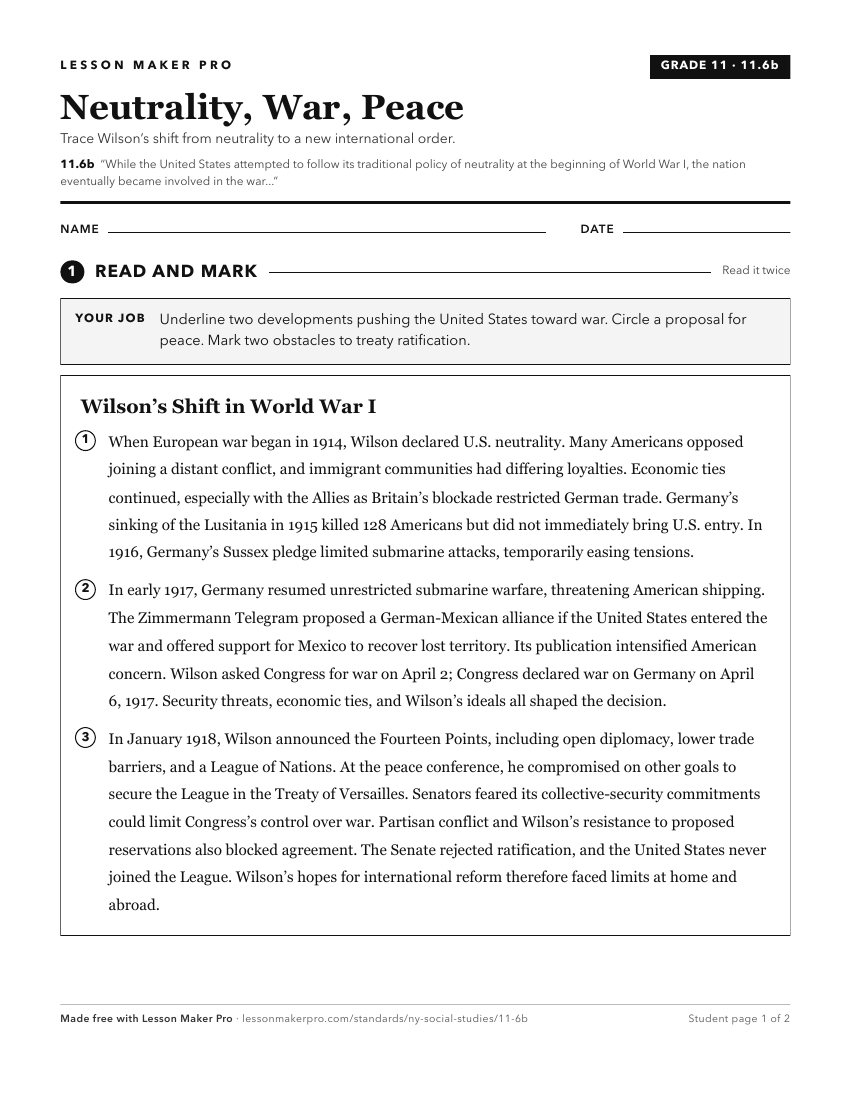
A ready-to-print activity worksheet aligned to 11.6b, with an answer key for the teacher on its own page. No account needed.
PDF, US Letter, prints cleanly in black and white.
Download the worksheetTurn this exact standard into a lesson
Grade, subject, topic, and the complete standard are prefilled. Create one free, no account needed.
Also for this standard:Make a WorksheetMake a QuizMake a Sub Lesson