NY Social Studies 1.6b
The Standard
Roads, dams, bridges, farms, parks, and dwellings are all examples of how people modify the physical environment to meet needs and wants.
New York State K–12 Social Studies Framework
Key Idea 1.6
People and communities depend on and modify their physical environment in order to meet basic needs.
Teacher's field guide
What This Standard Means
What Students Need to Do
- Students identify ways people have changed land or water in their community. They explain how each change helps people meet a need or want.
What Mastery Looks Like
- Students can name a local human-made change, such as a road or park. They can tell what was changed and why people made the change.
Common Misconceptions
- Students may call every outdoor feature natural, including sidewalks and playgrounds. They may also confuse the change itself with its purpose, such as saying a bridge exists only to look nice.
How to Assess It
- Show a picture of a bridge crossing a river. Ask students to name the change and explain how it helps people.
Lesson moves
Ways to Teach It
Give pairs clay, blocks, and toy figures to change a model landscape so people can travel, live, or play there.
Show a local street photo and ask, "What did people change here, and what need or want does the change meet?"
Play a picture sort where students match roads, homes, farms, and parks with travel, shelter, food, or recreation.
Take a short neighborhood walk and have students sketch one human-made change, then label how it helps the community.
Free download
Printable 1.6b Worksheet
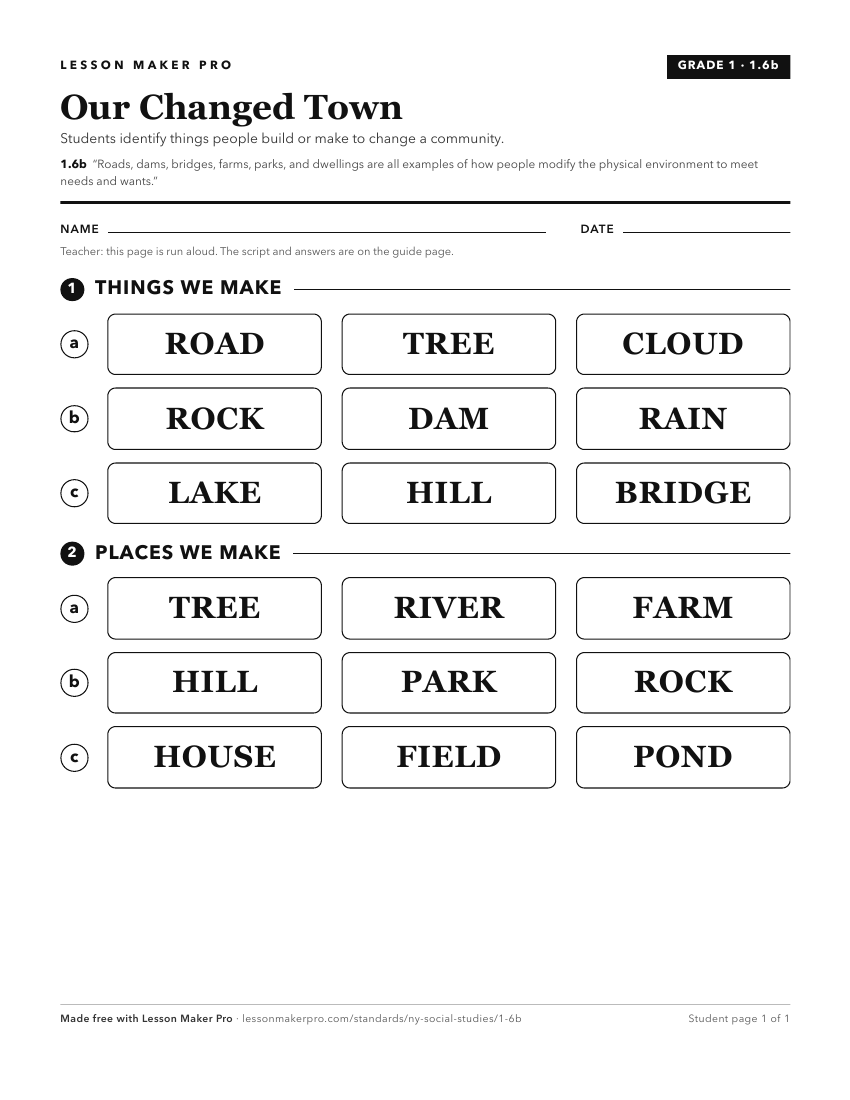
A ready-to-print activity worksheet aligned to 1.6b, with an answer key for the teacher on its own page. No account needed.
PDF, US Letter, prints cleanly in black and white.
Download the worksheetTurn this exact standard into a lesson
Grade, subject, topic, and the complete standard are prefilled. Create one free, no account needed.
Also for this standard:Make a WorksheetMake a QuizMake a Sub Lesson