Montana Math MT.1.NBT.3
The Standard
Compare two two-digit numbers using comparison symbols >, =, and <.
2026 Montana Mathematics Content Standards
Teacher's field guide
What This Standard Means
What Students Need to Do
- Students compare two-digit numbers by looking at the tens first. If the tens match, they compare the ones. They write >, <, or = between the numbers.
What Mastery Looks Like
- A student writes 29 < 31 and explains that 31 has more tens. They compare the ones to write 46 > 42. They write 57 = 57 when both numbers match.
Common Misconceptions
- Students may say 29 is greater than 31 because 9 is greater than 1. They may reverse < and > when the larger number is on the right.
How to Assess It
- Exit ticket: Fill in the symbols for 29 __ 31, 46 __ 42, and 57 __ 57. Circle the digits you used to decide.
Lesson moves
Ways to Teach It
Build 29 and 31 with ten-sticks and cubes, then place a comparison symbol card between them.
Ask, "Which is greater, 48 or 52? Why doesn't the 8 make 48 greater?"
Deal two number cards to each pair; players place the correct symbol between them and explain their choice.
Put $24 and $27 price tags on two toy photos; have students choose the cheaper toy and write 24 < 27.
Free download
Printable MT.1.NBT.3 Worksheet
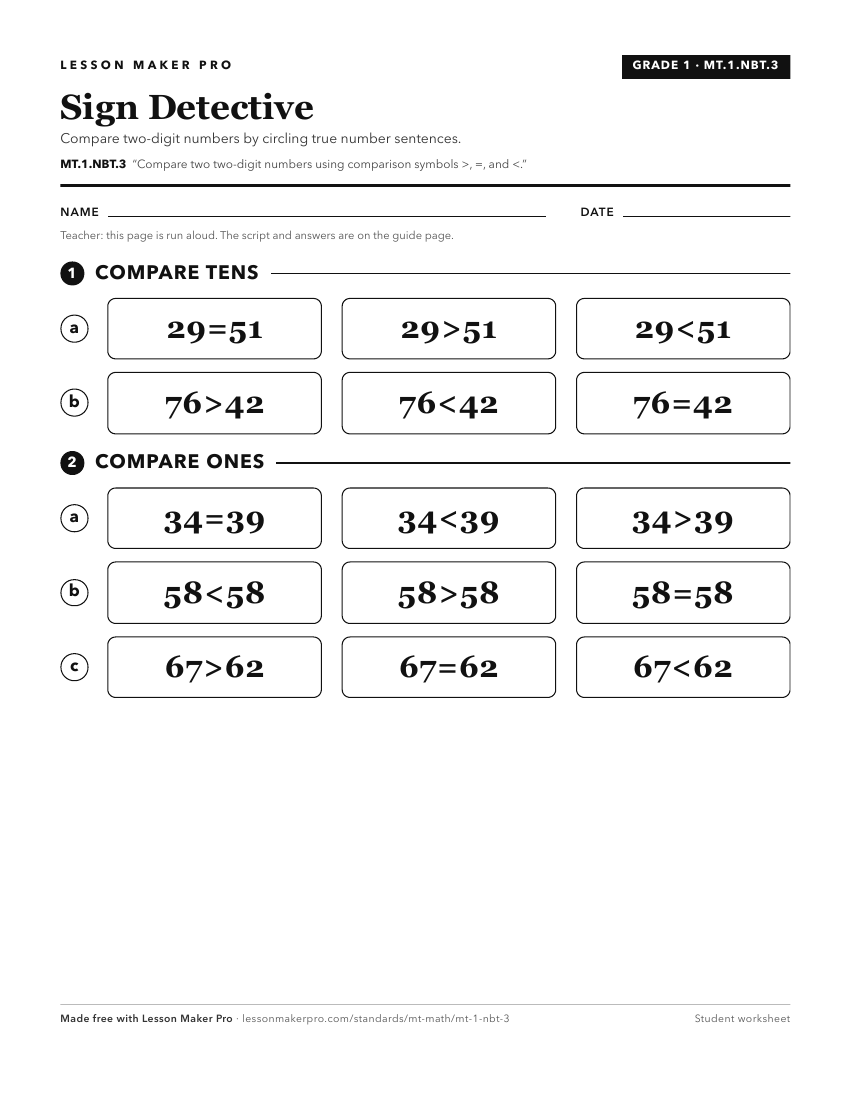
A ready-to-print activity worksheet aligned to MT.1.NBT.3, with an answer key for the teacher on its own page. No account needed.
PDF, US Letter, prints cleanly in black and white.
Download the worksheetKeep exploring
Related Standards
Turn this exact standard into a lesson
Grade, subject, topic, and the complete standard are prefilled. Create one free, no account needed.
Also for this standard:Make a WorksheetMake a QuizMake a Sub Lesson