Mississippi Science L.8.2B.1
The Standard
- L.8.2B
- Students will demonstrate an understanding of the differences in inherited and acquired characteristics and how environmental factors (natural selection) and the use of technologies (selective breeding, genetic engineering) influence the transfer of genetic information.
Construct an argument based on evidence for how environmental and genetic factors influence the growth of organisms.
2026 Mississippi College- and Career-Readiness Standards for Science · Reproduction and Heredity
Teacher's field guide
What This Standard Means
What Students Need to Do
- Students compare growth measurements from organisms with different inherited traits or growing conditions. They use the measurements to argue how each factor affects growth.
What Mastery Looks Like
- A student compares plants that differ in only one factor at a time. They cite measurements to explain what water and inherited differences each suggest about growth.
Common Misconceptions
- Students may assume every size difference is inherited, even when plants got different amounts of water. They may claim genes caused a difference when the plants also grew in different conditions.
How to Assess It
- Exit ticket: Same-age bean varieties A and B grow in the same soil and light. With 30 mL of water weekly, they average 8 and 6 leaves; with 10 mL, they average 4 and 2 leaves. Ask, "Which numbers support an effect of variety, and which support an effect of water? Explain each comparison."
Lesson moves
Ways to Teach It
Plant two bean varieties in four labeled cups with the same soil and light, change water amounts, and count leaves over two weeks.
Put a four-row bean growth table on the board and ask, "Which comparison tests water, and which tests inherited differences?"
Give pairs four cards listing bean variety, weekly water, and leaf count; have them sort cards into valid same-variety and same-water comparisons.
Compare two tomato seed packets and a gardener's watering log, then predict which differences in plant size might come from variety or water.
Free download
Printable L.8.2B.1 Worksheet
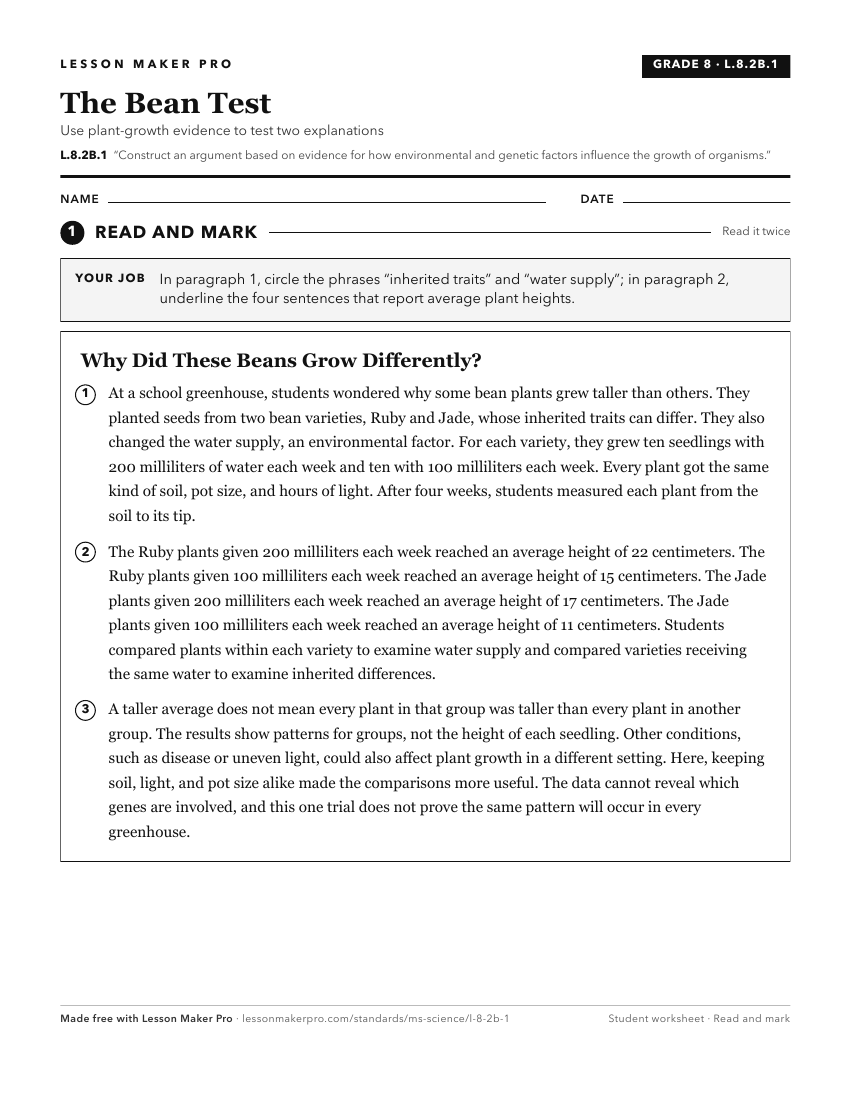
A ready-to-print activity worksheet aligned to L.8.2B.1, with an answer key for the teacher on its own page. No account needed.
PDF, US Letter, prints cleanly in black and white.
Download the worksheetKeep exploring
Related Standards
- FB.6.6
Engage in scientific argument from evidence to distinguish organisms that exist in symbiotic (mutualism, parasitism, commensalism) or co-evolutionary (predator-...
- L.3.4.5
Construct scientific arguments using evidence from fossils of plants and animals that lived long ago to infer the characteristics of early environments (e.g., m...
- L.8.2C.2
Construct scientific arguments from evidence to support claims about the potentially harmful, beneficial, or neutral effects of genetic mutations on organisms.
- L.8.4A.2
Construct explanations about how genetic factors and environmental factors (e.g., food intake, interactions with other organisms, etc.) lead to the growth, surv...
Turn this exact standard into a lesson
Grade, subject, topic, and the complete standard are prefilled. Create one free, no account needed.
Also for this standard:Make a WorksheetMake a QuizMake a Sub Lesson