Mississippi Science L.7.3.5
The Standard
- L.7.3
- Students will demonstrate an understanding of the importance that matter cycles between living and non-living parts of the ecosystem to sustain life on Earth.
Design solutions for sustaining the health of ecosystems to maintain biodiversity and the resources needed by humans for survival (e.g., water purification, nutrient recycling, prevention of soil erosion, and prevention or management of invasive species). *
2026 Mississippi College- and Career-Readiness Standards for Science · Ecology and Interdependence
Teacher's field guide
What This Standard Means
What Students Need to Do
- Students identify a problem in an ecosystem and design a practical fix. They explain how the fix protects different species and resources people need, such as clean water or healthy soil. They use observations or data to support their plan.
What Mastery Looks Like
- Given a muddy stream, a student proposes planting native grasses along its banks. They explain how roots hold soil in place, helping stream life and keeping the water cleaner. They name a way to measure whether the plan works.
Common Misconceptions
- Students may think any new plant helps, even if it spreads and crowds out native plants. They may assume a fix that helps people cannot harm other species. Some think muddy water is only a problem for drinking, not for stream animals.
How to Assess It
- Exit ticket: A bare slope washes soil into a stream used for drinking water. Propose one fix, explain how it helps stream life and water quality, and name one measurement to test it.
Lesson moves
Ways to Teach It
Tilt two trays of soil, cover one with mulch, pour equal water over both, and compare the runoff in clear cups.
Ask whether hand-pulling invasive vines or spraying them would better protect a creek bank, and have students explain effects on native plants and water.
Have pairs match problem cards to solution cards, including bare soil to mulch and invasive vines to careful removal, then defend one match.
Walk to a school storm drain, trace where rain carries litter, and sketch a rain garden that could filter runoff.
Free download
Printable L.7.3.5 Worksheet
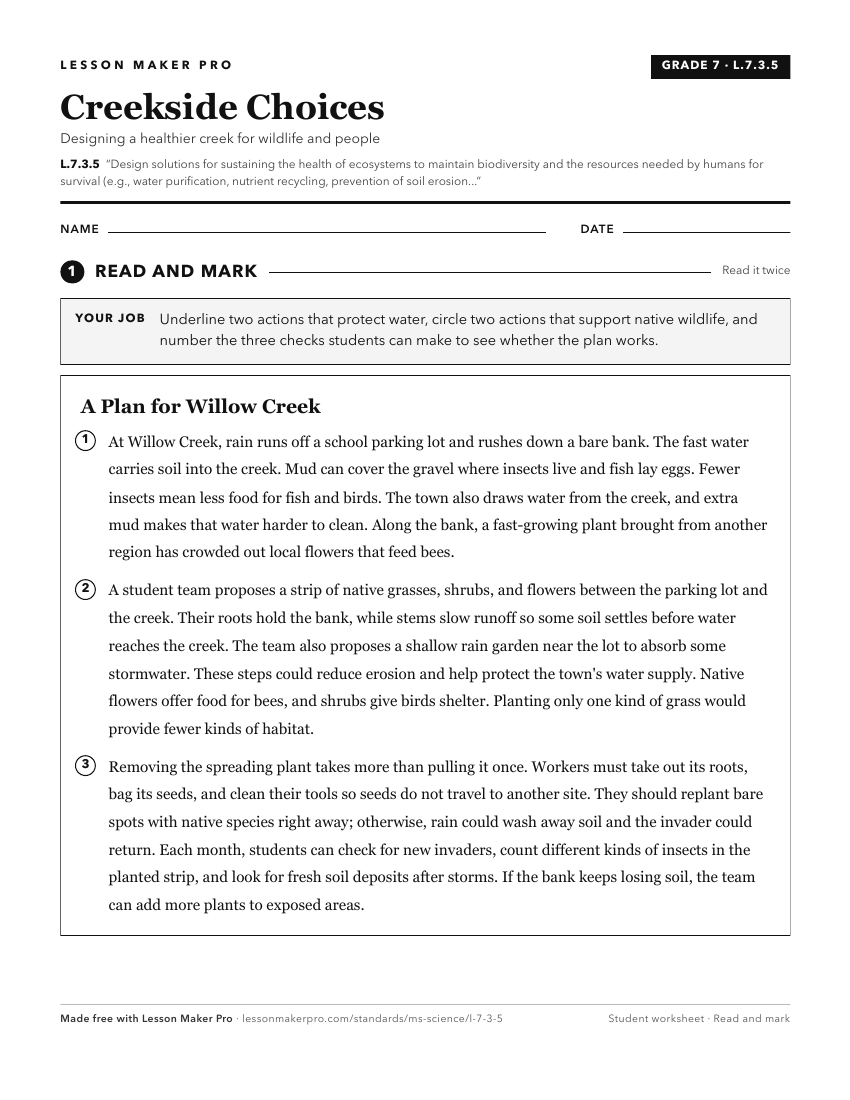
A ready-to-print activity worksheet aligned to L.7.3.5, with an answer key for the teacher on its own page. No account needed.
PDF, US Letter, prints cleanly in black and white.
Download the worksheetKeep exploring
Related Standards
- BIO.5.8
Enrichment: Use an engineering design process to create a solution that addresses changing ecological conditions (e.g., climate change, invasive species, loss o...
- E.1.10.2
Communicate solutions that will reduce the impact of humans on the use and quality of water in the local environment.
- L.3.4.4
Define and improve a solution to a problem created by environmental changes and any resulting impacts on the types of density and distribution of plant and anim...
- FB.6.7
Enrichment: Design solutions to reduce the impact of human activity on the ecosystem.
Turn this exact standard into a lesson
Grade, subject, topic, and the complete standard are prefilled. Create one free, no account needed.
Also for this standard:Make a WorksheetMake a QuizMake a Sub Lesson