Kentucky Reading and Writing RL.3.7
The Standard
Explain how the specific aspects of a text’s illustrations contribute to an effect, including but not limited to creating mood, character and setting.
Kentucky Academic Standards for Reading and Writing (2025) · Integration of Knowledge and Ideas
Teacher's field guide
What This Standard Means
What Students Need to Do
- Students look closely at illustrations in a story. They point to details such as color, facial expression, and background, then explain how those details shape the mood or show a character or place.
What Mastery Looks Like
- A student points to a dark sky and empty street and explains why the scene feels lonely. They can also explain what a character's slumped shoulders show about that character.
Common Misconceptions
- Students may call a scene scary without naming the drawn detail that creates that feeling. Some retell what happens in the story instead of explaining what the picture adds.
How to Assess It
- Show one illustration from a read-aloud. Ask: “Point to one drawn detail. How does it make the character seem or the scene feel?”
Lesson moves
Ways to Teach It
Have students draw the same playground in sunshine and rain, then trade drawings and label details that change the mood.
Show an illustration from a read-aloud and ask: “Which drawn detail tells you how the character feels? Explain your choice.”
Place three story illustrations at stations; pairs add sticky notes naming a detail and explaining its effect on mood, character, or setting.
At the classroom library, compare two picture-book covers and name a visual detail that suggests a cozy or spooky story.
Free download
Printable RL.3.7 Worksheet
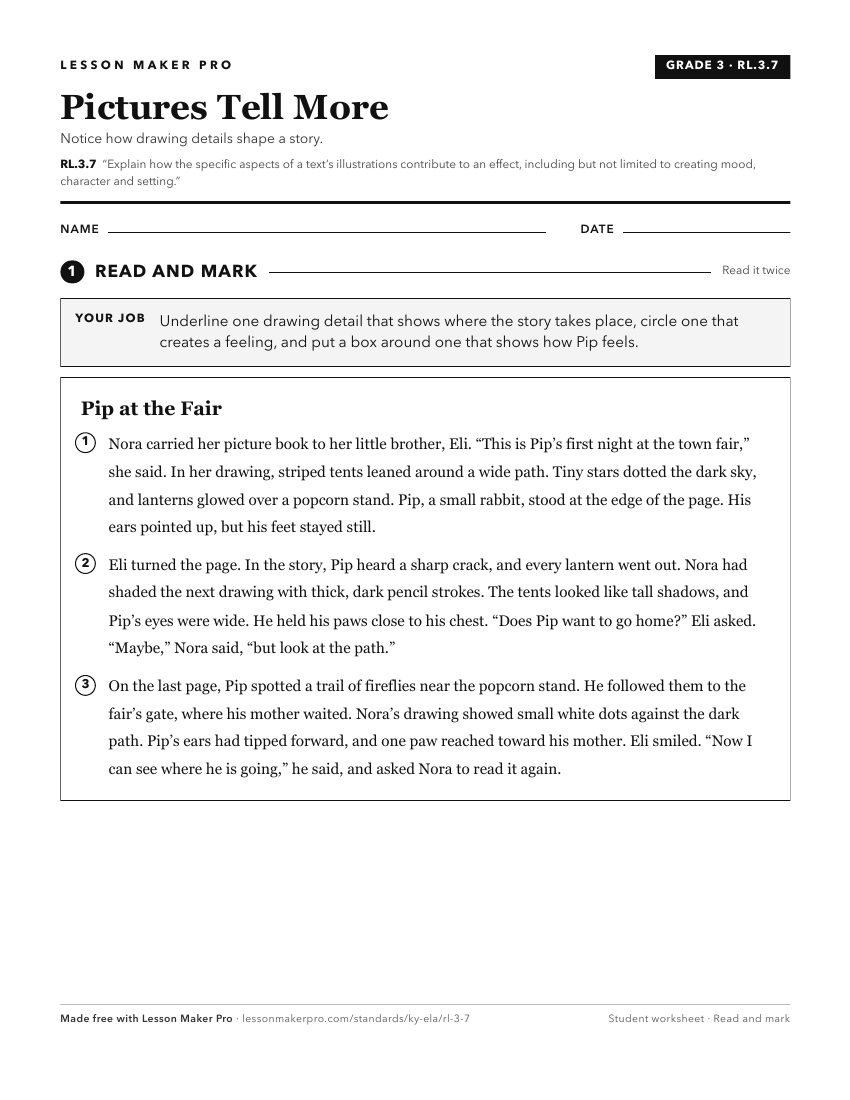
A ready-to-print activity worksheet aligned to RL.3.7, with an answer key for the teacher on its own page. No account needed.
PDF, US Letter, prints cleanly in black and white.
Download the worksheetKeep exploring
Related Standards
- RI.3.7
Identify and explain how specific visuals, including but not limited to diagrams, graphs, photographs and side bars, contribute to the meaning and clarity of a ...
- RL.2.7
Use a story's illustrations and words in print/non-print texts to demonstrate understanding of characters, setting and plot.
- RL.1.7
Use a story's illustrations and details to describe its characters, setting and events.
Turn this exact standard into a lesson
Grade, subject, topic, and the complete standard are prefilled. Create one free, no account needed.
Also for this standard:Make a WorksheetMake a QuizMake a Sub Lesson