Indiana Social Studies K.E.3
The Standard
Explain why people in a community volunteer or have different jobs.
2026 Indiana Academic Standards: K-12 Social Studies
Teacher's field guide
What This Standard Means
What Students Need to Do
- Students name different jobs in a community and tell how each helps. They explain that people work to earn money and may volunteer to help without pay. They give reasons people might choose different kinds of work.
What Mastery Looks Like
- A student can explain that a bus driver earns money by helping people travel. They can explain that a park volunteer picks up litter without pay because they want a clean park. They can name another job and say how it helps.
Common Misconceptions
- Some children think a volunteer is paid for picking up litter. Others think only people with paid jobs help the community. They may call every helper a volunteer, including a paid bus driver.
How to Assess It
- Show a picture of a paid bus driver and a neighbor cleaning a park without pay. Ask, “Who volunteers, and why might each person do that work?”
Lesson moves
Ways to Teach It
Give pairs picture cards of a paid bus driver and an unpaid park cleaner; have them sort by pay and tell how each helps.
Ask, “Why might someone drive a bus for pay while a neighbor picks up park litter for free?”
Play a match game: pair picture cards of a mail carrier, nurse, and food pantry volunteer with letters, patients, and food boxes.
Show a photo of a local park; ask who might be paid to mow it and who might pick up litter without pay.
Free download
Printable K.E.3 Worksheet
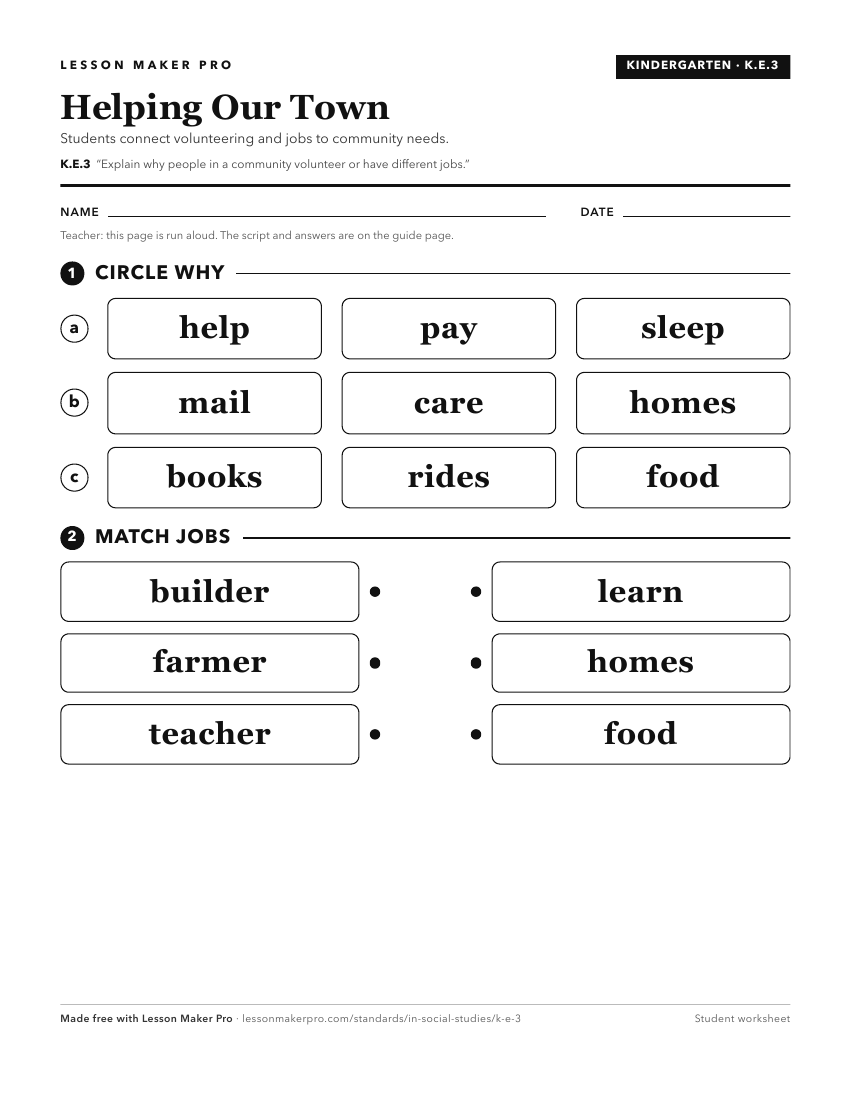
A ready-to-print activity worksheet aligned to K.E.3, with an answer key for the teacher on its own page. No account needed.
PDF, US Letter, prints cleanly in black and white.
Download the worksheetKeep exploring
Related Standards
- USG.5.7
Describe opportunities available to individuals to contribute to the well-being of their communities and participate responsibly in the political process at loc...
- 8.C.5
Explain the importance of responsible participation by citizens in voluntary civil organizations to bring about social reform.
- 3.C.5
Explain the role citizens have in making decisions and rules within the community, state, and nation, such as participating in local and regional activities, vo...
- 2.C.3
Describe how people of different ages, cultural backgrounds, and traditions contribute to the community and how all citizens can respect these differences.
Turn this exact standard into a lesson
Grade, subject, topic, and the complete standard are prefilled. Create one free, no account needed.
Also for this standard:Make a WorksheetMake a QuizMake a Sub Lesson