Indiana Science MS-ESS3-5
The Standard
Ask questions to clarify evidence of the factors that have caused the rise in global temperatures over time. [Clarification Statement: Examples of factors include human activities (such as fossil fuel combustion, cement production, and agricultural activity) and natural processes (such as changes in incoming solar radiation or volcanic activity). Examples of evidence can include tables, graphs, and maps of global and regional temperatures, atmospheric levels of gases such as carbon dioxide and methane, and the rates of human activities. Emphasis is on the major role that human activities play in causing the rise in global temperatures.]
Indiana Academic Standards for Science (2023) · Earth and Human Activity
Teacher's field guide
What This Standard Means
What Students Need to Do
- Students examine records of global temperature, greenhouse gases, and possible causes over time. They ask questions about when changes happened, how the data were collected, and which factors best fit the pattern.
What Mastery Looks Like
- A student can ask what evidence would separate the effects of fuel use from changes in sunlight. They can use temperature, CO2, fuel-use, and sunlight records to explain why human activity is the main driver of recent warming.
Common Misconceptions
- Students may think one hot summer proves global warming or one cold winter disproves it. They may blame volcanoes or a brighter Sun for the long-term rise without checking those records.
How to Assess It
- Exit ticket: “CO2, fossil fuel use, and temperature rose from 1960 to 2020, while solar energy stayed fairly flat. Which cause best fits the pattern, and what question would help you check the evidence?”
Lesson moves
Ways to Teach It
Give students printed temperature, CO2, and solar energy graphs; have them align years on tracing paper and circle trends that differ.
Show temperature, CO2, and solar energy graphs; ask, “What question would help you tell whether burning fuels or sunlight caused the warming?”
Play a claim-check game: teams match fuel-use, methane, sunlight, and eruption cards to data graphs, then challenge one match with a question.
Compare a sample electric bill with the local utility’s fuel mix chart; trace how electricity made with coal or gas adds CO2.
Free download
Printable MS-ESS3-5 Worksheet
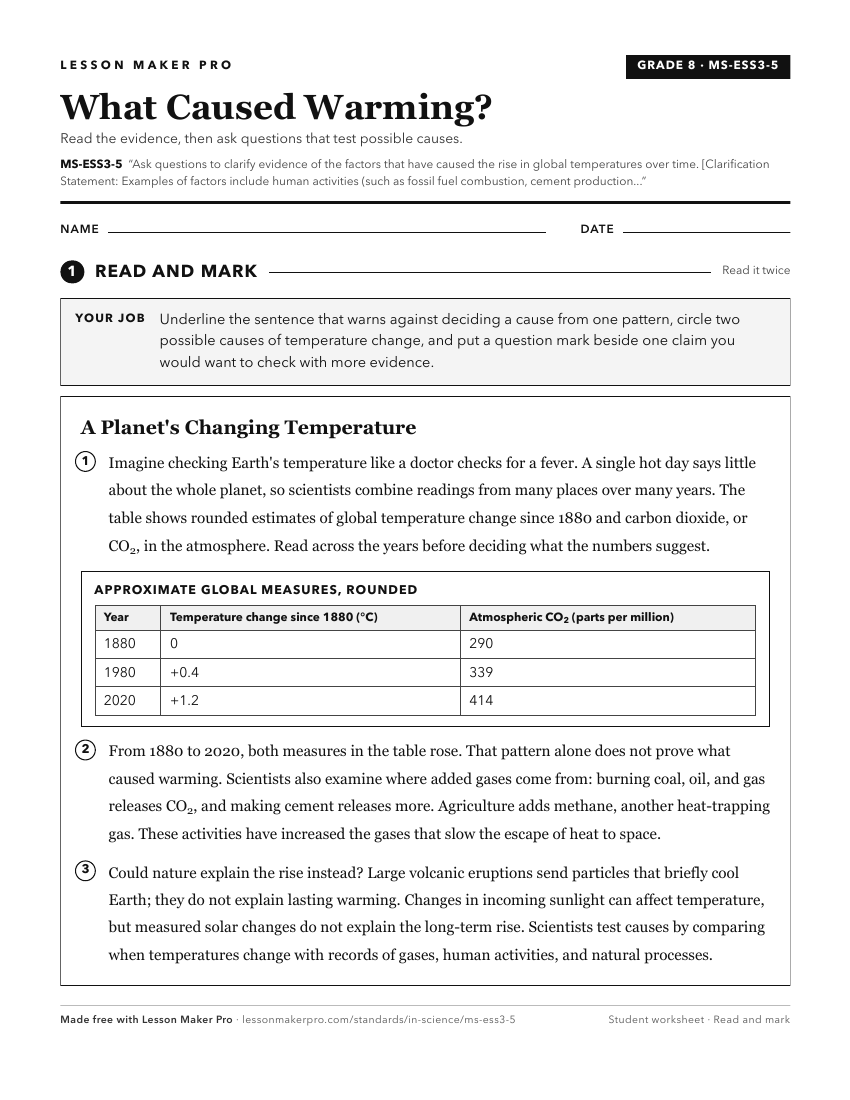
A ready-to-print activity worksheet aligned to MS-ESS3-5, with an answer key for the teacher on its own page. No account needed.
PDF, US Letter, prints cleanly in black and white.
Download the worksheetTurn this exact standard into a lesson
Grade, subject, topic, and the complete standard are prefilled. Create one free, no account needed.
Also for this standard:Make a WorksheetMake a QuizMake a Sub Lesson