Indiana Science HS-ENV6-2
The Standard
Construct an argument to explain that environmental policies/decisions have negative and positive impacts on people, societies, and the environment.
Indiana Academic Standards for Science (2023) · Environmental Policy
Teacher's field guide
What This Standard Means
What Students Need to Do
- Students explain how an environmental policy can help some people and harm others. They use evidence to describe effects on residents, communities, and the environment.
What Mastery Looks Like
- A student can argue for or against a bag fee using data about litter and costs. They can explain who benefits, who pays more, and why the tradeoff matters.
Common Misconceptions
- Students may assume a policy that cuts pollution has no costs. They may name only effects on wildlife and overlook costs to shoppers or businesses.
How to Assess It
- Give students this prompt: A town charges 10 cents per disposable bag and records 30% less bag litter. Should it keep the fee? Use both numbers and explain one benefit and one cost.
Lesson moves
Ways to Teach It
Give pairs paper, plastic, and reusable bags with price and litter cards; have them sort the gains and costs of a bag fee.
Ask: Should our town charge for disposable bags? Write a claim naming one resident who benefits and one who pays more.
Run a card game where teams match bag-fee evidence to effects on shoppers, stores, and waterways, then challenge one match.
Show a store sign with a 10-cent bag fee and a $2 reusable bag; calculate the cost of each choice over 30 trips.
Free download
Printable HS-ENV6-2 Worksheet
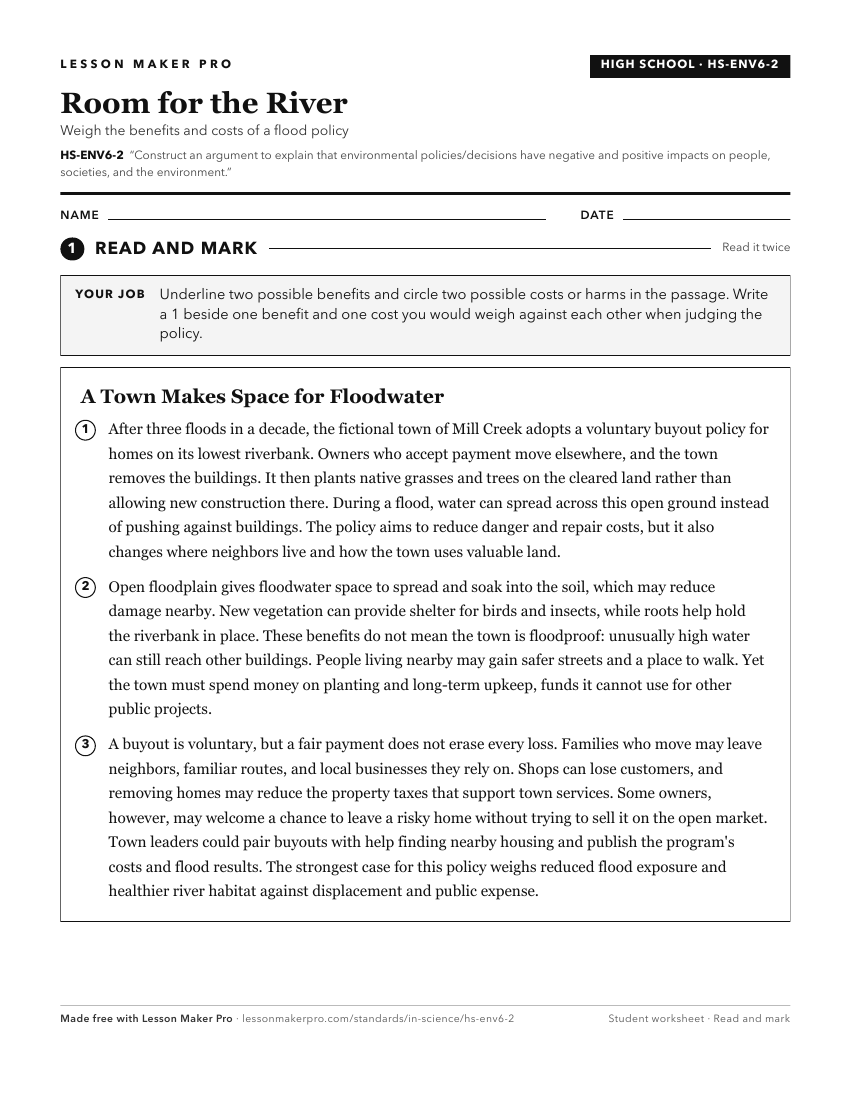
A ready-to-print activity worksheet aligned to HS-ENV6-2, with an answer key for the teacher on its own page. No account needed.
PDF, US Letter, prints cleanly in black and white.
Download the worksheetTurn this exact standard into a lesson
Grade, subject, topic, and the complete standard are prefilled. Create one free, no account needed.
Also for this standard:Make a WorksheetMake a QuizMake a Sub Lesson