Indiana Science HS-ENV2-5
The Standard
Use a model or simulation to analyze how layers of energy-rich organic material have been gradually turned into great coal beds and oil pools by the pressure of the overlying earth. Observe that by burning these fossil fuels, people are passing stored energy back into the environment as heat and releasing large amounts of matter such as carbon dioxide and other air pollutants.
Indiana Academic Standards for Science (2023) · Flow of Matter and Energy
Teacher's field guide
What This Standard Means
What Students Need to Do
- Students use a model to show how buried swamp plants form coal and buried marine organisms form oil over millions of years. They show how oil moves through rock and becomes trapped. They trace stored energy into heat and identify the gases and pollutants released when the fuels burn.
What Mastery Looks Like
- A student labels the sources of coal and oil on a rock-layer diagram. They explain that heat, pressure, and time change the buried material, and that oil collects beneath a sealing rock layer. They show fuel carbon combining with oxygen to form carbon dioxide when the fuel burns.
Common Misconceptions
- Students may think coal and oil come from dinosaurs, or that pressure can make fuel in a few days. Some picture oil in open underground lakes rather than in spaces within rock. Others think burning destroys carbon instead of releasing it into the air.
How to Assess It
- Ask students to sketch how buried swamp plants become coal and buried marine organisms become trapped oil. Have them add arrows showing where stored energy and carbon go when either fuel burns.
Lesson moves
Ways to Teach It
Layer damp leaves, sand, and clay in a clear cup, press with a book, then label the heat and long time the model cannot show.
Ask students to write why buried swamp plants can form coal while buried marine organisms can form oil.
Give pairs source, rock, heat, pressure, oxygen, and carbon dioxide cards; have them race to build and explain two accurate fuel paths.
Use a coal power plant diagram to trace stored energy into electricity and waste heat, and fuel carbon into exhaust gases.
Free download
Printable HS-ENV2-5 Worksheet
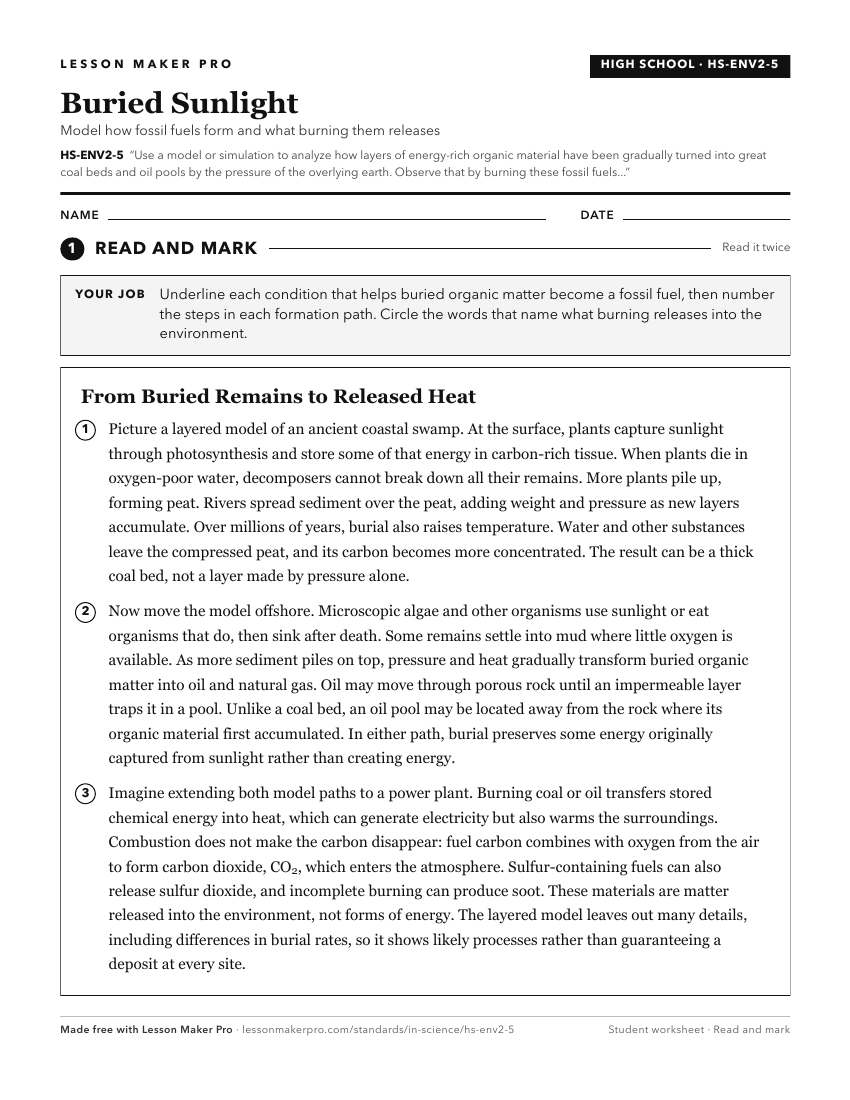
A ready-to-print activity worksheet aligned to HS-ENV2-5, with an answer key for the teacher on its own page. No account needed.
PDF, US Letter, prints cleanly in black and white.
Download the worksheetTurn this exact standard into a lesson
Grade, subject, topic, and the complete standard are prefilled. Create one free, no account needed.
Also for this standard:Make a WorksheetMake a QuizMake a Sub Lesson