Idaho Social Studies 9-12.WC.42
The Standard
Identify the characteristics of Absolutism and Divine Right of Kings (e.g. Louis XIV, James I, Charles I).
Idaho Content Standards: K-12 Social Studies · The Enlightenment and the Age of Revolution (c. 1600 AD – 1815 AD)
Teacher's field guide
What This Standard Means
What Students Need to Do
- Students identify how kings concentrated power over laws, taxes, and the military. They explain divine right as the claim that a king's authority came from God, not from the people.
What Mastery Looks Like
- A student can use Louis XIV's court at Versailles to explain how a king kept nobles close and built power. They can connect James I's claims about divine right and Charles I's tax disputes with Parliament to arguments over who held authority.
Common Misconceptions
- Students may think absolute kings faced no limits or resistance. They may also mistake divine right for a right granted by Parliament or a vote by the people.
How to Assess It
- Give students this prompt: “A king says he answers to God and collects taxes without Parliament's approval. Name the belief and the form of rule shown. Give one clue for each.”
Lesson moves
Ways to Teach It
Have pairs sort cards about Versailles, James I's claims, and Charles I's taxes into royal power, divine right, or both.
Ask students to write two sentences explaining why Parliament might reject James I's claim that kings answer only to God.
Give teams six ruler-action cards to label as absolute rule, divine right, or both, then have them defend one choice.
Show a school handbook and ask who can change its rules, then compare that limit with Charles I's attempts to rule without Parliament.
Free download
Printable 9-12.WC.42 Worksheet
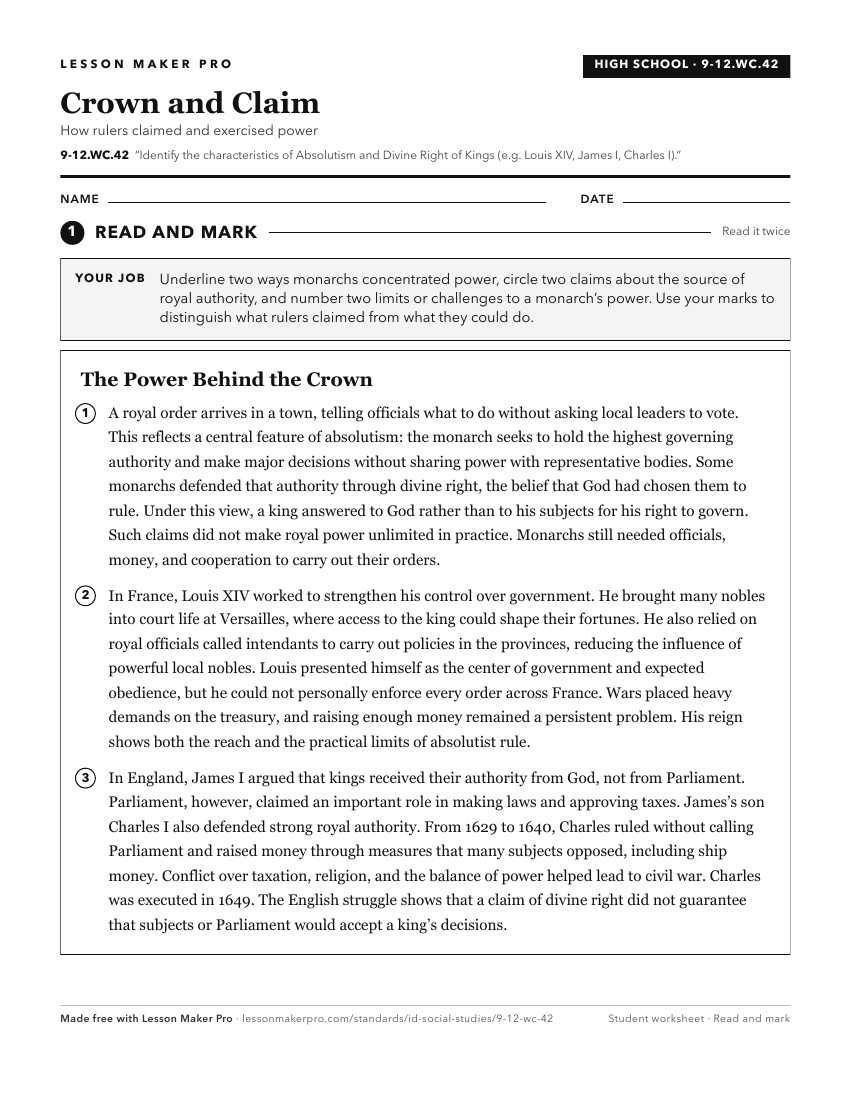
A ready-to-print activity worksheet aligned to 9-12.WC.42, with an answer key for the teacher on its own page. No account needed.
PDF, US Letter, prints cleanly in black and white.
Download the worksheetKeep exploring
Related Standards
- 9-12.WC.41
Analyze the causes and consequences of the English Civil War and the Glorious Revolution.
- 9-12.WC.30
Explain key developments in medieval English legal and constitutional history, including the impact of the Magna Carta on limiting the monarch’s power, the deve...
- 9-12.WC.46
Analyze the major events of the French Revolution (e.g., storming of the Bastille, execution of Louis XVI, reign of terror), and trace the evolution of France’s...
- 6-12.US1.9
Identify the impact of multiple intellectual traditions on the American Revolution and the Declaration of Independence, including early modern and Enlightenment...
Turn this exact standard into a lesson
Grade, subject, topic, and the complete standard are prefilled. Create one free, no account needed.
Also for this standard:Make a WorksheetMake a QuizMake a Sub Lesson