Idaho Social Studies 9-12.EC.23
The Standard
Build a monthly budget for an individual or a family given their income, savings goals, taxes, and list of fixed and variable expenses.
Idaho Content Standards: K-12 Social Studies · Personal Finance
Teacher's field guide
What This Standard Means
What Students Need to Do
- Subtract taxes from monthly income to find take-home pay. Set a savings goal, list fixed and variable expenses, and adjust the plan to fit the money available.
What Mastery Looks Like
- A student calculates take-home pay correctly and gives savings its own line. Their savings and expenses total no more than take-home pay, and they can explain any spending change they made.
Common Misconceptions
- Students often budget from pay before taxes. They may call groceries a fixed expense because they buy them every month, or forget to include savings in the total.
How to Assess It
- Exit ticket: Monthly pay is $3,000 before $400 in taxes. Savings are $300, fixed costs are $1,450, and variable costs are $900. Is the plan affordable? Show the math and change one cost if needed.
Lesson moves
Ways to Teach It
Sort expense cards into fixed and variable piles, then use a sample pay stub to build a monthly budget on paper.
Ask: A renter is $75 short after setting aside savings. Which variable expense would you change, and by how much?
Play budget repair: draw a surprise expense card, then move amounts between spending lines until the budget balances.
Use a local apartment listing and grocery flyer to estimate rent and food costs for a first-job budget.
Free download
Printable 9-12.EC.23 Worksheet
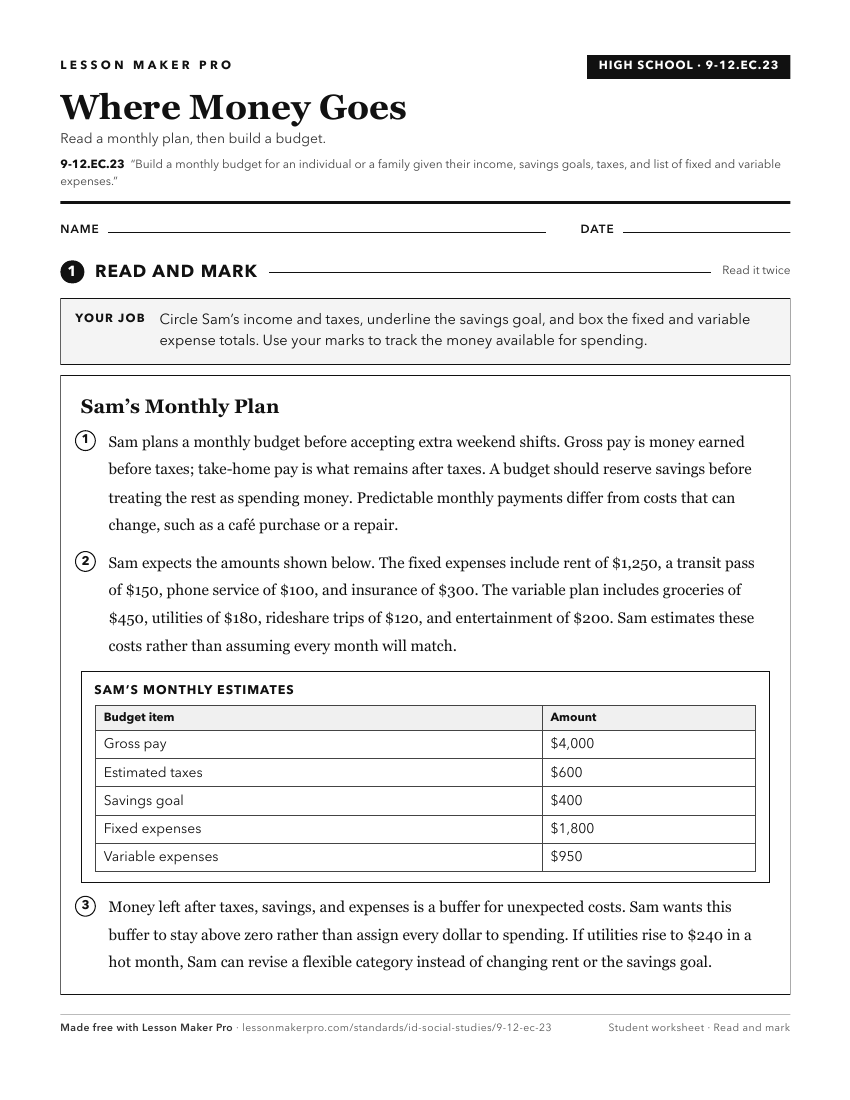
A ready-to-print activity worksheet aligned to 9-12.EC.23, with an answer key for the teacher on its own page. No account needed.
PDF, US Letter, prints cleanly in black and white.
Download the worksheetKeep exploring
Related Standards
- 9-12.EC.14
Demonstrate how to set financial goals and analyze the costs and benefits of spending decisions.
- 1.SS.3.3
Identify ways to save money for future needs and wants
- 3.SS.3.4
Identify different examples of making an economic choice, including consumption of goods and services, using a bank, investing, and budgeting.
- 2.SS.3.1
Differentiate between the wants and needs of families and understand the purpose of a budget.
Turn this exact standard into a lesson
Grade, subject, topic, and the complete standard are prefilled. Create one free, no account needed.
Also for this standard:Make a WorksheetMake a QuizMake a Sub Lesson