Idaho Social Studies 5.SS.1.6
The Standard
Analyze the causes and effects of various compromises and conflicts in American history, including the various events leading to the American Revolution.
Idaho Content Standards: K-12 Social Studies
Teacher's field guide
What This Standard Means
What Students Need to Do
- Students put protests and British responses before the Revolution in order. They explain how one event led to another. They also explain what later compromises changed and who was affected.
What Mastery Looks Like
- Students can explain how the Tea Act led to the Boston Tea Party and how Britain responded with the Coercive Acts. They can explain how the Great Compromise settled a dispute over representation. They can describe where the Missouri Compromise allowed and restricted slavery.
Common Misconceptions
- Some students think the Tea Act created a new tax, rather than keeping an existing one. Some place the Great Compromise before independence. Others think the Missouri Compromise ended slavery.
How to Assess It
- On an exit ticket, ask: "How did the Boston Tea Party change Britain's actions, and what dispute did the Great Compromise later settle?"
Lesson moves
Ways to Teach It
Give pairs Tea Act, Boston Tea Party, Coercive Acts, and First Continental Congress cards to order and connect with cause arrows.
Ask: "Why did large and small states disagree over representation, and which part of Congress addressed each concern?"
Race to match the Missouri Compromise to two cards: slavery allowed in Missouri and banned in much of the Louisiana Territory.
Show current House seat totals and two Senate seats per state; ask which part of the Great Compromise each reflects.
Free download
Printable 5.SS.1.6 Worksheet
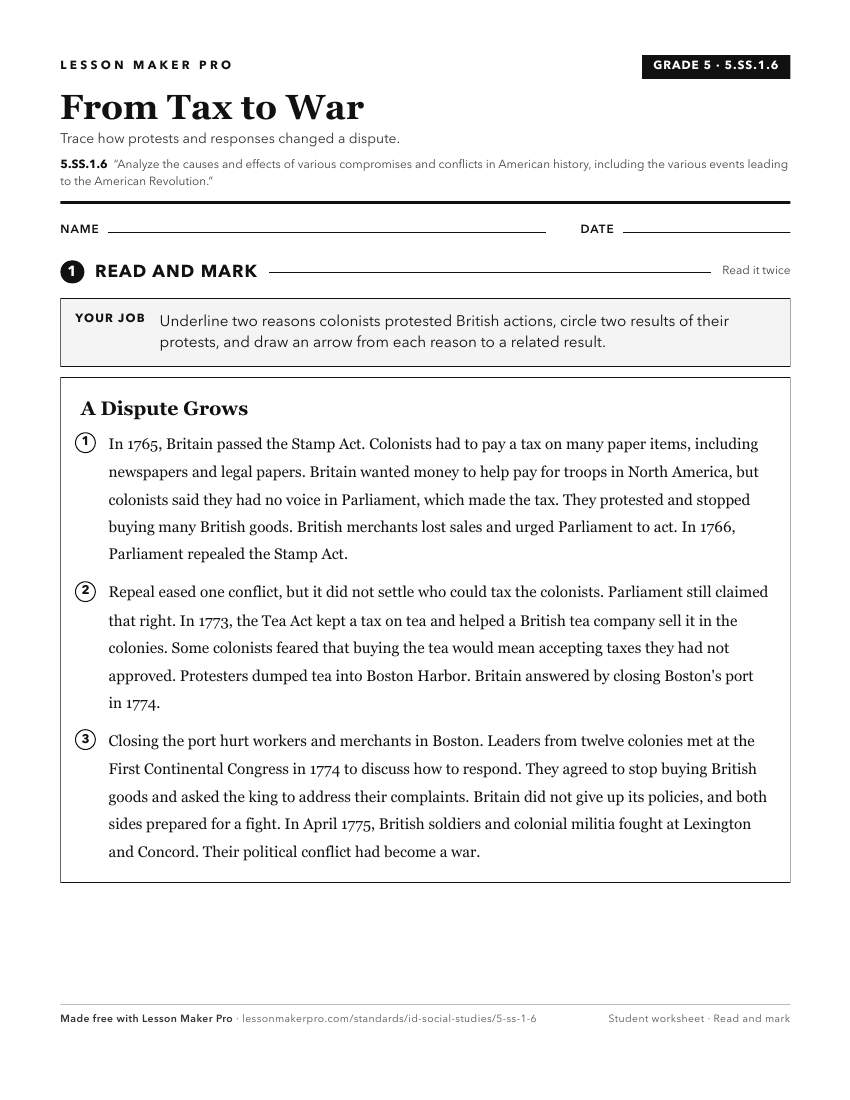
A ready-to-print activity worksheet aligned to 5.SS.1.6, with an answer key for the teacher on its own page. No account needed.
PDF, US Letter, prints cleanly in black and white.
Download the worksheetKeep exploring
Related Standards
- 9-12.WC.41
Analyze the causes and consequences of the English Civil War and the Glorious Revolution.
- 6-12.US1.7
Trace and analyze the colonial social, religious, political, and economic developments that provided context for the American Revolution, including, but not lim...
- 6-12.US1.9
Identify the impact of multiple intellectual traditions on the American Revolution and the Declaration of Independence, including early modern and Enlightenment...
- 6-12.US1.10
Analyze the impact of major military events on the American Revolution, including but not limited to Lexington and Concord, Bunker Hill, Saratoga, Trenton, and ...
Turn this exact standard into a lesson
Grade, subject, topic, and the complete standard are prefilled. Create one free, no account needed.
Also for this standard:Make a WorksheetMake a QuizMake a Sub Lesson