Georgia 9.T.T.3.b
The Standard
Recognize and analyze the use of rhetorical appeals (ethos, logos, and pathos) in a variety of texts. (I)
Georgia's K-12 English Language Arts Standards · Texts (T) · Techniques
Teacher's field guide
What This Standard Means
What Students Need to Do
- Students mark places where a writer builds trust, uses reasons or evidence, or targets feelings. They explain how each choice may affect a particular audience and support the writer’s purpose.
What Mastery Looks Like
- Students accurately label evidence as ethos, logos, or pathos, even when appeals overlap. They cite a specific phrase or detail and explain how it supports the writer’s purpose for a particular audience.
Common Misconceptions
- Students may label any statistic as logos without checking whether it supports the claim. They may confuse a speaker’s confidence with ethos or treat any strong feeling as pathos. They also may identify an appeal but not explain its effect.
How to Assess It
- Give students a short advertisement containing two appeals. Ask them to label each appeal, copy the evidence, and explain how it may influence the audience.
Lesson moves
Ways to Teach It
Give groups three colored highlighters to mark ethos, logos, and pathos in a printed advertisement, then require a note explaining each choice.
Ask students which appeal would best persuade classmates to support a later school start time, then write one example using that appeal.
Play Appeal Sort with quotation cards from speeches, reviews, and ads, awarding points only when teams defend each label with textual evidence.
Compare two public service announcements on the same issue and decide which appeal would most influence each announcement’s intended audience.
Free download
Printable 9.T.T.3.b Worksheet
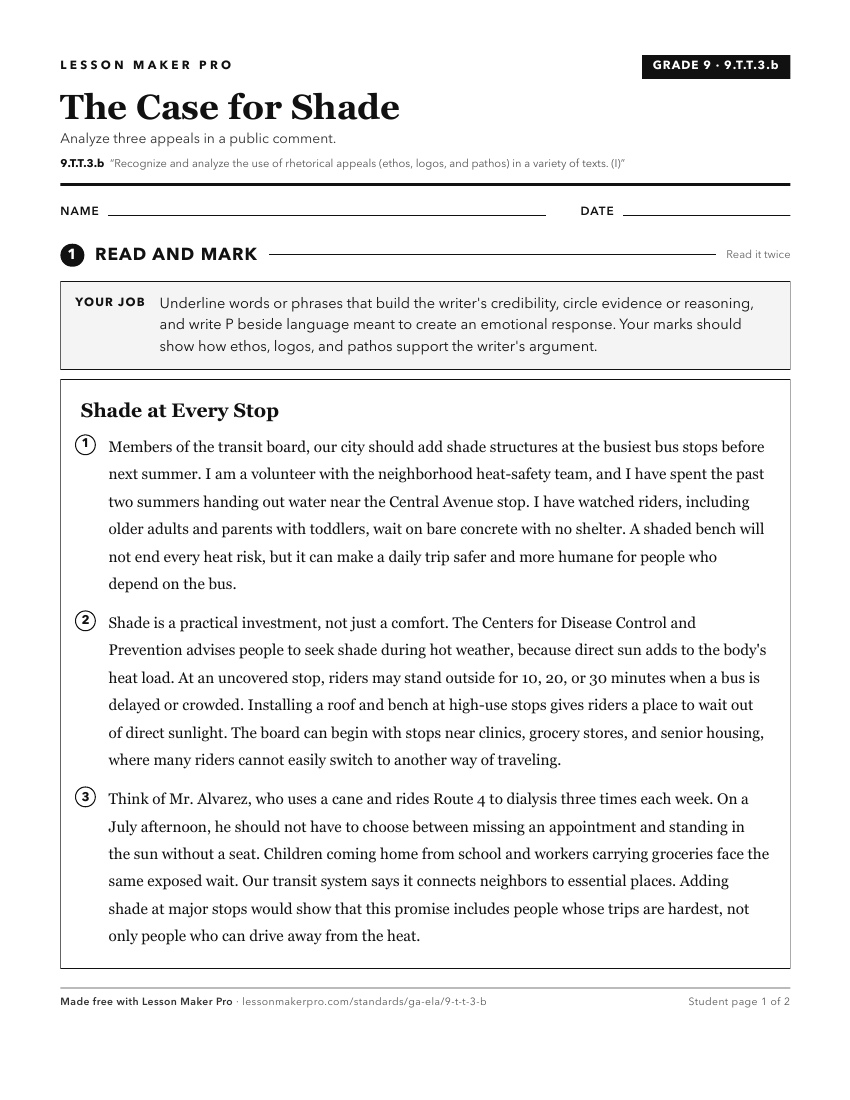
A ready-to-print activity worksheet aligned to 9.T.T.3.b, with an answer key for the teacher on its own page. No account needed.
PDF, US Letter, prints cleanly in black and white.
Download the worksheetKeep exploring
Related Standards
- 12.T.T.3.b
Evaluate and critique the use of rhetorical language in a variety of texts. (I)
- 10.T.T.3.b
Analyze the use of rhetorical appeals; identify fallacies in a text. (I)
- 10.T.SS.2.a
Analyze how the use of figurative, connotative, and/or rhetorical language contributes to the development of meaning, tone, or mood in a wide variety of texts. ...
- 9.T.SS.2.a
Analyze how the use of figurative, connotative, and/or rhetorical language contributes to the development of meaning, tone, or mood in a wide variety of texts. ...
Turn this exact standard into a lesson
Grade, subject, topic, and the complete standard are prefilled. Create one free, no account needed.
Also for this standard:Make a WorksheetMake a QuizMake a Sub Lesson