Georgia 4.T.T.1.b
The Standard
Describe how the text’s protagonist and antagonist function in the plot, drive the conflict, and contribute to the development of other characters. (I)
Georgia's K-12 English Language Arts Standards · Texts (T) · Techniques
Teacher's field guide
What This Standard Means
What Students Need to Do
- Students identify who pursues the main goal and who or what stands in the way. They explain how those opposing roles cause events and influence other characters.
What Mastery Looks Like
- Students correctly identify the central character and the person or force creating opposition. They use story details to explain how each one shapes events, conflict, and another character’s choices or growth.
Common Misconceptions
- Students may assume the protagonist is always good and the antagonist is always evil. They may also overlook an antagonist that is a group, force, fear, or difficult situation.
How to Assess It
- Give students a short narrative and ask: “Who is working toward the main goal, what opposes that goal, and how does their struggle change another character?”
Lesson moves
Ways to Teach It
Give groups character, goal, obstacle, and event cards, then have them arrange the cards to show how conflict moves a plot.
Ask students to write: “How would the story change if the antagonist stopped opposing the protagonist halfway through?”
Play Conflict Detective by reading short plot summaries and awarding points for naming each opposing force and citing supporting clues.
Compare a story conflict with a team rivalry, weather emergency, or personal fear that affects people’s choices and relationships.
Free download
Printable 4.T.T.1.b Worksheet
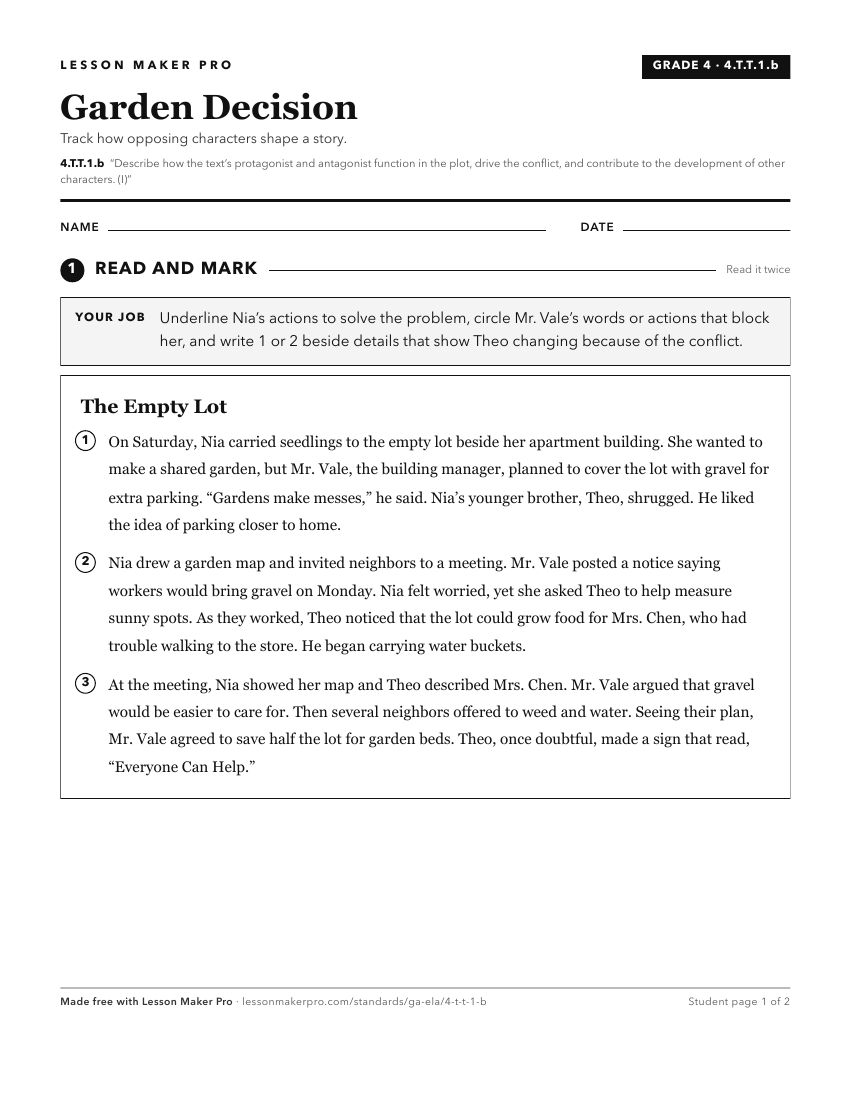
A ready-to-print activity worksheet aligned to 4.T.T.1.b, with an answer key for the teacher on its own page. No account needed.
PDF, US Letter, prints cleanly in black and white.
Download the worksheetKeep exploring
Related Standards
- 1.T.T.1.c
Describe traits of the main characters and explain how their words and actions support the central message, lesson, or moral of the story. (I)
- 7.T.T.1.a
Analyze how narrative techniques are used across the text to develop plot, characters, and setting. (I)
- 3.T.T.1.b
Explain how characters, setting, problem, and solution function in the plot. (I)
- 5.T.T.1.b
Analyze how setting, events, conflict, and characterization contribute to the plot. (I)
Turn this exact standard into a lesson
Grade, subject, topic, and the complete standard are prefilled. Create one free, no account needed.
Also for this standard:Make a WorksheetMake a QuizMake a Sub Lesson