Georgia 3.T.T.1.c
The Standard
Describe characters’ traits, motivations, actions, thoughts, and feelings and explain their connection to the central message, lesson, or moral of the story. (I)
Georgia's K-12 English Language Arts Standards · Texts (T) · Techniques
Teacher's field guide
What This Standard Means
What Students Need to Do
- Students describe a character using evidence about traits, motives, actions, thoughts, and feelings. They connect those details to the story’s central message, lesson, or moral.
What Mastery Looks Like
- Students name a character trait and support it with specific details from the story. They explain how the character’s motivations, choices, thoughts, or feelings help reveal a clear lesson or moral.
Common Misconceptions
- Students may list a trait without citing the character’s actions, thoughts, or feelings. They may confuse the central message with a plot summary or name a lesson that does not fit the character’s choices.
How to Assess It
- Give students a short fable and ask: “What trait describes the main character, and how do the character’s choices reveal the story’s lesson?”
Lesson moves
Ways to Teach It
Give groups trait cards and story excerpts, then have them match each character to a trait and underline supporting evidence.
Ask students to write: “What lesson does the character learn, and which action best shows that lesson?”
Play Character Clue Challenge by reading actions, thoughts, and feelings while teams identify a trait and justify their answer.
Use a familiar playground conflict and discuss how each person’s motives and choices could teach a lesson about fairness or friendship.
Free download
Printable 3.T.T.1.c Worksheet
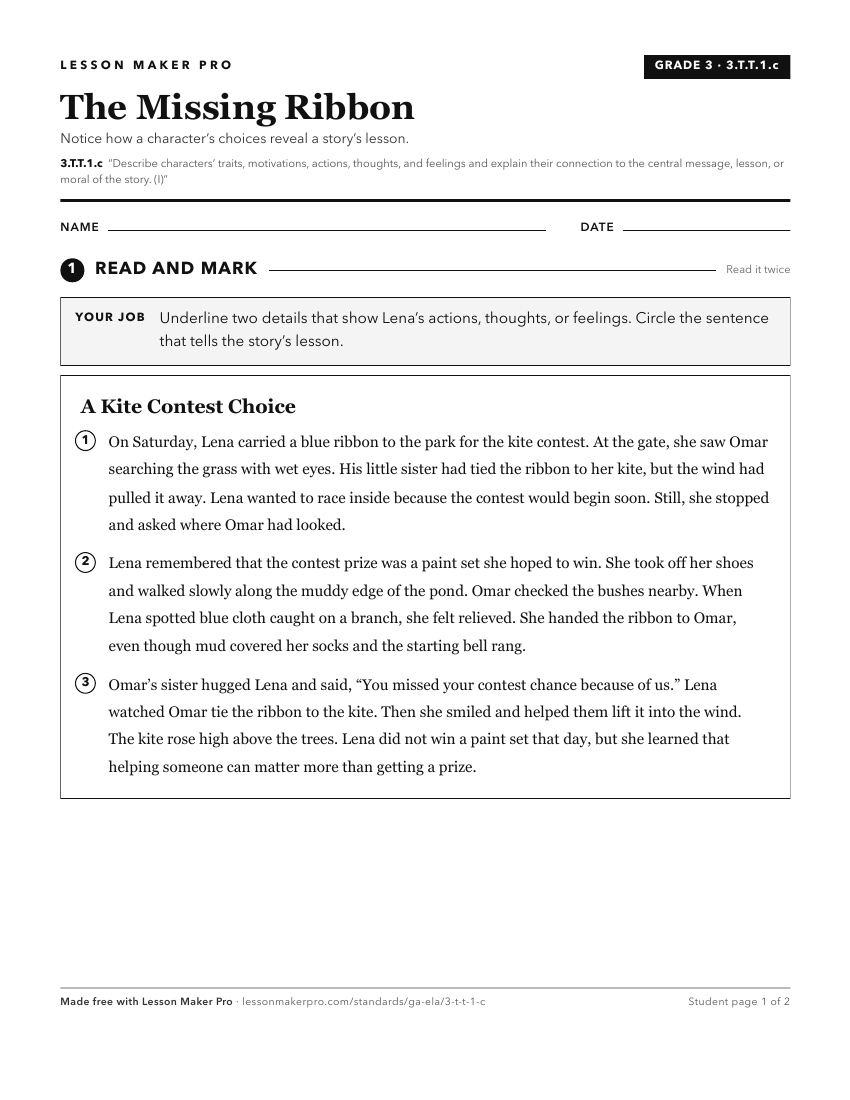
A ready-to-print activity worksheet aligned to 3.T.T.1.c, with an answer key for the teacher on its own page. No account needed.
PDF, US Letter, prints cleanly in black and white.
Download the worksheetKeep exploring
Related Standards
- K.T.T.1.c
With adult support, demonstrate an understanding of the central message, lesson, or moral of the story based on the words and actions of the main characters. (I...
- 1.T.T.1.c
Describe traits of the main characters and explain how their words and actions support the central message, lesson, or moral of the story. (I)
- 4.T.T.1.c
Identify and describe common themes in texts (e.g., good vs. evil) that are revealed through details about characters. (I)
- 2.T.T.1.c
Identify and describe how characters’ responses to major challenges or events support the central message, lesson, or moral of the story. (I)
Turn this exact standard into a lesson
Grade, subject, topic, and the complete standard are prefilled. Create one free, no account needed.
Also for this standard:Make a WorksheetMake a QuizMake a Sub Lesson