Georgia 3.T.C.1.b
The Standard
Determine common text features of print, digital, auditory, spoken, and visual modes and describe how they contribute to the overall purpose and effect. (I)
Georgia's K-12 English Language Arts Standards · Texts (T) · Context
Teacher's field guide
What This Standard Means
What Students Need to Do
- Students identify features used in print, websites, recordings, speeches, and images. They explain how each feature supports the creator’s purpose and shapes the audience’s response.
What Mastery Looks Like
- Students can point out features such as headings, links, captions, images, music, pauses, and speaker volume. They can explain how a feature helps inform, persuade, entertain, guide attention, or create a feeling.
Common Misconceptions
- Students may name the topic instead of a feature. They may say a picture is decorative without considering how it guides attention or creates a feeling. They may also overlook audio features such as music, pauses, volume, and sound effects.
How to Assess It
- Show a weather webpage screenshot and play a short forecast recording. Ask students to name one feature in each and explain how each feature helps the audience.
Lesson moves
Ways to Teach It
Give pairs a picture book, tablet article, podcast clip, and poster, then have students tag one feature in each with sticky notes.
Ask, “Which feature most helps the audience understand this message, and what would change if the feature were removed?”
Play Feature Match by having teams pair cards naming features with cards describing purposes or audience effects.
Compare a school lunch menu, morning announcement, and event poster, then identify how each format helps students find or remember information.
Free download
Printable 3.T.C.1.b Worksheet
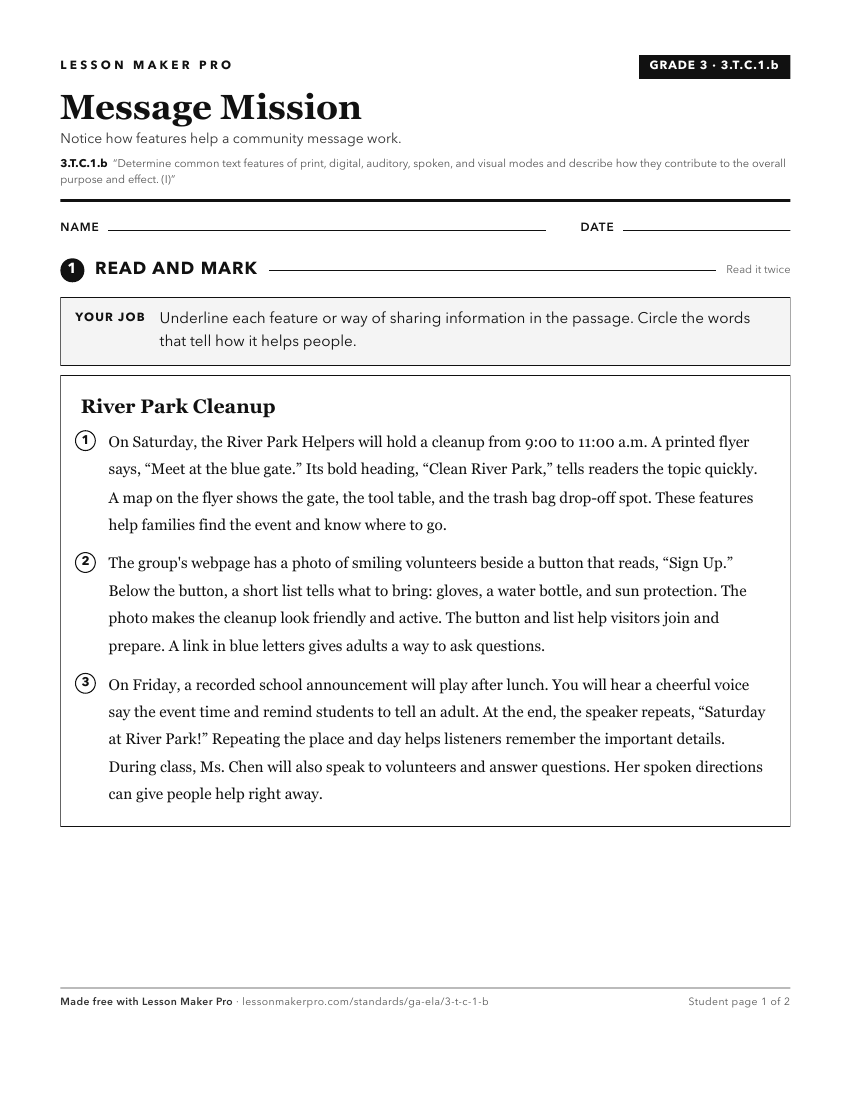
A ready-to-print activity worksheet aligned to 3.T.C.1.b, with an answer key for the teacher on its own page. No account needed.
PDF, US Letter, prints cleanly in black and white.
Download the worksheetKeep exploring
Related Standards
- 4.T.C.1.b
Classify various texts by mode and describe how the author's choice of mode influences audiences and contributes to the overall purpose and effect. (I)
- 2.T.C.1.b
Recognize different modes of communication: print, digital, auditory, spoken, visual, and multimodal. (I)
- 5.T.C.1.b
Classify various texts by mode and describe how the author's choice of mode influences audiences and contributes to the overall purpose and effect. (I)
- 1.T.C.1.b
Identify different modes of communication: print, digital, auditory, and visual. (I)
Turn this exact standard into a lesson
Grade, subject, topic, and the complete standard are prefilled. Create one free, no account needed.
Also for this standard:Make a WorksheetMake a QuizMake a Sub Lesson