Georgia 12.T.T.4.b
The Standard
Apply knowledge of various poetic techniques and conventions to create poetic text for an intended purpose. (C)
Georgia's K-12 English Language Arts Standards · Texts (T) · Techniques
Teacher's field guide
What This Standard Means
What Students Need to Do
- Students choose poetic forms and techniques that fit a specific purpose and audience. They draft and revise imagery, sound, figurative language, line breaks, and stanza structure.
What Mastery Looks Like
- The student creates a poem with a clear purpose and uses form, sound, imagery, or figurative language to support it. The student can explain and revise those choices.
Common Misconceptions
- Students may think every poem must rhyme or follow a fixed form. They may add figurative language without considering its effect. They may also treat line breaks as random spacing.
How to Assess It
- Ask students to write an eight-line poem that creates tension through imagery and one sound technique. Have them label two choices and explain their intended effect.
Lesson moves
Ways to Teach It
Cut a short prose description into strips, arrange it as lines and stanzas, then compare how line breaks change pace and emphasis.
Compare two poems on the same subject, then write which craft choices make one feel more urgent, reflective, or intimate.
Draw a purpose card and two technique cards, then write four lines that meet all three and let classmates guess the purpose.
Create a 12-line spoken-word poem for a school event, using repetition and imagery to shape how listeners respond.
Free download
Printable 12.T.T.4.b Worksheet
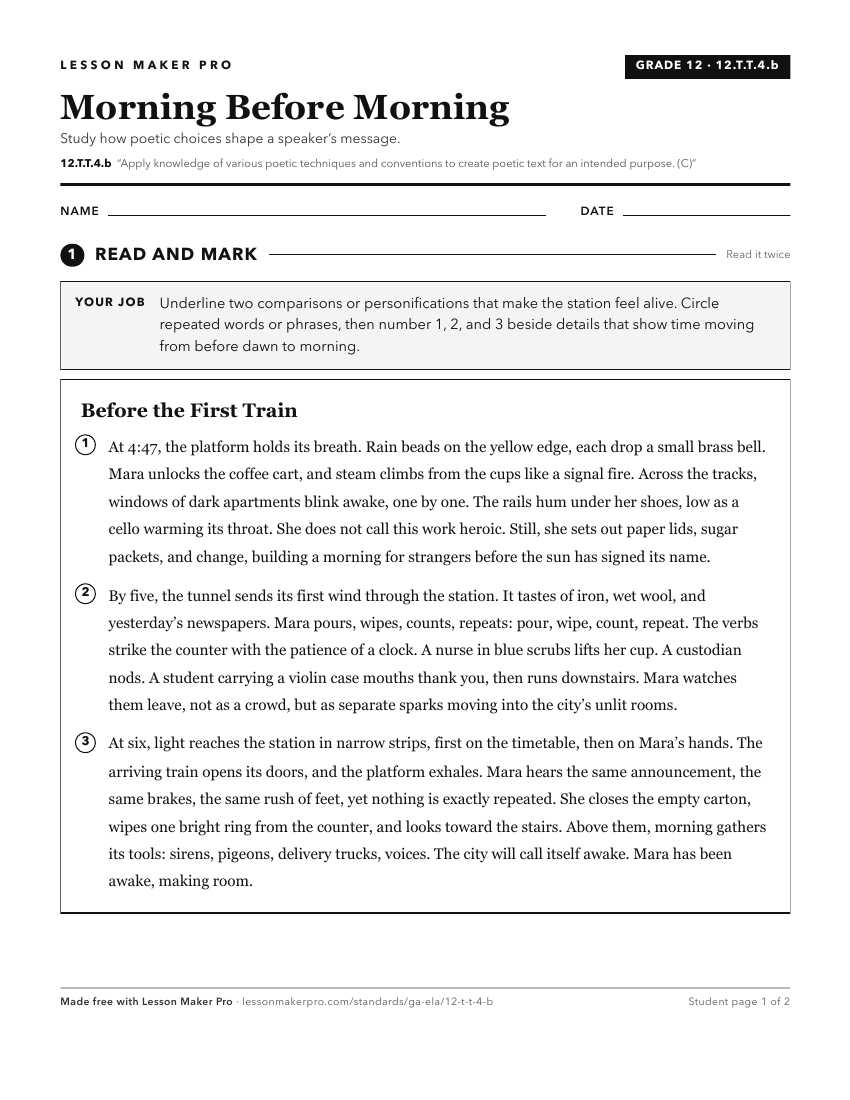
A ready-to-print activity worksheet aligned to 12.T.T.4.b, with an answer key for the teacher on its own page. No account needed.
PDF, US Letter, prints cleanly in black and white.
Download the worksheetKeep exploring
Related Standards
Turn this exact standard into a lesson
Grade, subject, topic, and the complete standard are prefilled. Create one free, no account needed.
Also for this standard:Make a WorksheetMake a QuizMake a Sub Lesson