Georgia 1.P.ST.1.c
The Standard
Explore how context shapes the author’s decisions and the audience’s responses during the interpretation and construction of texts. (I/C)
Georgia's K-12 English Language Arts Standards · Practices (P) · Situating Texts
Teacher's field guide
What This Standard Means
What Students Need to Do
- Students notice how the audience and situation affect an author’s words, pictures, and details. They explain likely reader responses and make similar choices in their own texts.
What Mastery Looks Like
- Students can compare two messages about the same topic and explain why the words or pictures differ. They can create a message suited to a named audience and predict how that audience might respond.
Common Misconceptions
- Students may think context only means where a story happens. They may also assume every reader reacts the same way or that authors choose words and pictures without a reason.
How to Assess It
- Show two signs about keeping the room quiet, one for classmates and one for visitors. Ask students to explain one different choice and its effect.
Lesson moves
Ways to Teach It
Have pairs make two paper invitations for the same event, one for a friend and one for the principal.
Ask students, “How would this message change if it were written for a younger child?” and record their ideas.
Play Audience Match by pairing message cards with audience cards, then have students explain each match.
Compare a playground sign and a classroom sign, noting how words, pictures, and expected responses fit each location.
Free download
Printable 1.P.ST.1.c Worksheet
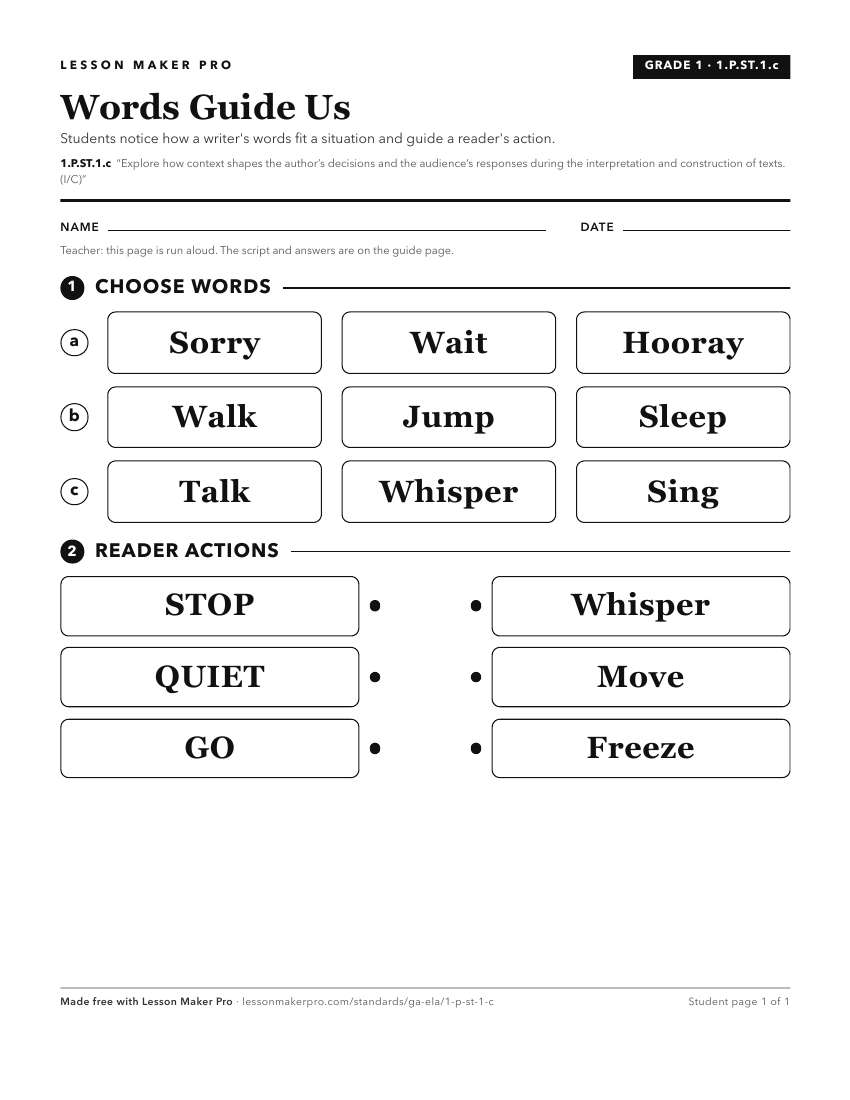
A ready-to-print activity worksheet aligned to 1.P.ST.1.c, with an answer key for the teacher on its own page. No account needed.
PDF, US Letter, prints cleanly in black and white.
Download the worksheetKeep exploring
Related Standards
Turn this exact standard into a lesson
Grade, subject, topic, and the complete standard are prefilled. Create one free, no account needed.
Also for this standard:Make a WorksheetMake a QuizMake a Sub Lesson