Georgia 1.P.AC.1.c
The Standard
Explain, analyze, and evaluate how the author’s use of sentence structure and syntax affects the target audience and supports the text’s purpose. (I/C)
Georgia's K-12 English Language Arts Standards · Practices (P) · Author’s Craft
Teacher's field guide
What This Standard Means
What Students Need to Do
- Students notice how an author builds and orders sentences for a reader. They explain how choices such as repetition, questions, commands, or short sentences support the author’s goal.
What Mastery Looks Like
- Students can point to short sentences, repeated words, questions, or exclamations in a text. They can explain how the choice gets attention, creates feeling, or makes directions clear.
Common Misconceptions
- Students may think punctuation alone tells the author’s purpose. They may name a sentence feature, such as repetition, without explaining how it affects the reader.
How to Assess It
- Give students: “Stop! Look both ways. Cross carefully.” Ask, “Why did the author use short sentences, and how do they help the reader?”
Lesson moves
Ways to Teach It
Give pairs sentence strips from a story to arrange, then discuss how changing the order changes meaning or feeling.
Read two versions of a message and ask, “Which version would best persuade a friend, and why?”
Play Sentence Detective by finding repetition, questions, commands, and short sentences in a shared text, then naming each effect.
Compare a playground safety sign with a page from a story, noting why each author builds sentences differently.
Free download
Printable 1.P.AC.1.c Worksheet
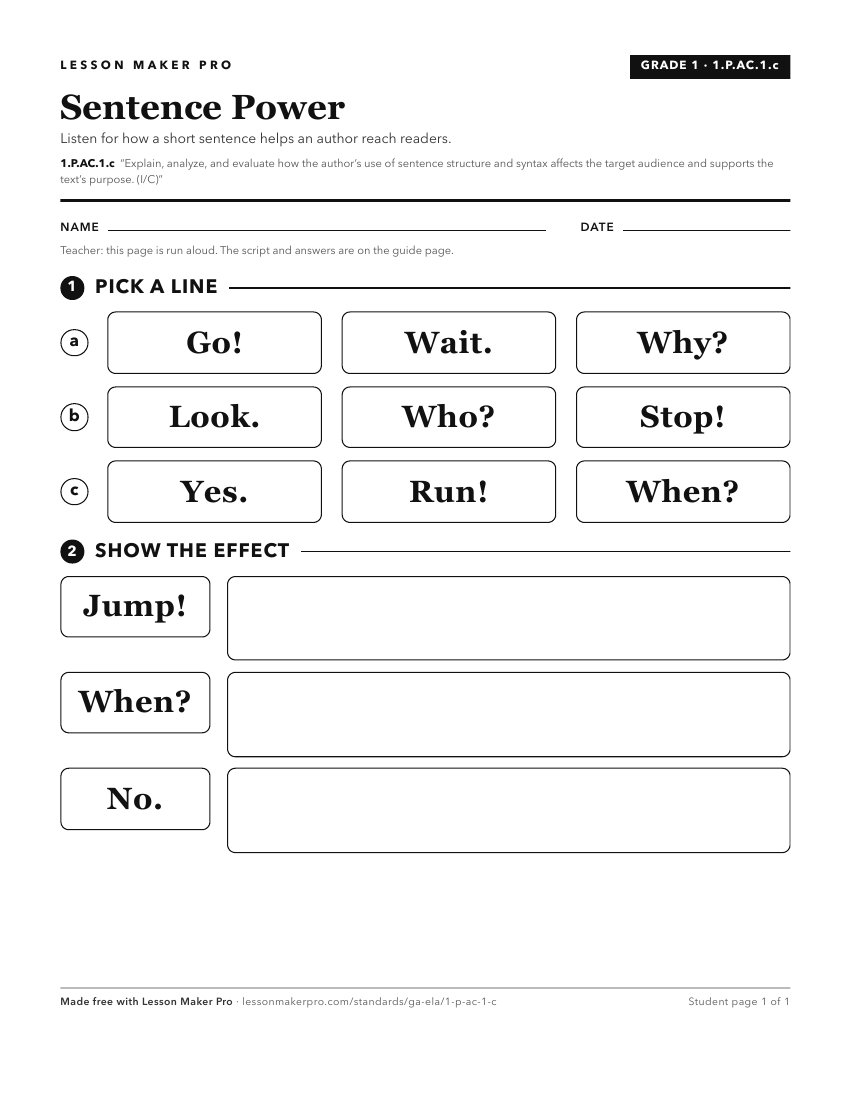
A ready-to-print activity worksheet aligned to 1.P.AC.1.c, with an answer key for the teacher on its own page. No account needed.
PDF, US Letter, prints cleanly in black and white.
Download the worksheetKeep exploring
Related Standards
Turn this exact standard into a lesson
Grade, subject, topic, and the complete standard are prefilled. Create one free, no account needed.
Also for this standard:Make a WorksheetMake a QuizMake a Sub Lesson