Alabama Science 7.13
Standard Cluster
Develop and use models to explain that meiosis results in new genetic combinations with increased variation. a. Construct an explanation of the advantages and disadvantages of asexual and sexual reproduction. b. Construct an explanation from evidence of how genetic variants may result in harmful, beneficial, or neutral effects on the structure and function of an organism.
2023 Alabama Course of Study: Science · Heredity: Inheritance and Variation of Traits
Cluster contents
Standards in This Cluster
7.13 is a cluster heading. These are the individual standards under it.
Teacher's field guide
What This Cluster Means
What Students Need to Do
- Students model how chromosomes swap sections and separate during meiosis, making gametes with new mixes of alleles. They compare the number of parents, time needed, and variation in sexual and asexual reproduction. They use evidence to explain how a genetic variant affects a body part and its job.
What Mastery Looks Like
- Students can draw different gametes from the same chromosome pairs and show how the combinations formed. They can name a benefit and a cost of both budding and mating. They can use trait evidence to explain whether a variant helps, harms, or has no clear effect on an organism.
Common Misconceptions
- Students may think meiosis makes copies identical to the parent, or that crossing over creates new genes instead of mixing existing versions. They may assume sexual reproduction is always better than asexual reproduction. They may call every variant harmful, even when its effect depends on the setting.
How to Assess It
- Give students chromosome pairs marked AB/ab and CD/cd. Ask them to draw two different gametes after a section swap, name one cost of mating compared with budding, and explain whether darker wings help moths hide on dark bark.
Lesson moves
Ways to Teach It
Give students two pairs of paper chromosomes labeled with alleles; have them swap matching sections, separate pairs randomly, and compare gametes.
Have pairs debate whether a yeast colony should reproduce by budding or mating after a temperature change, naming one benefit and one cost of each.
Deal allele cards from two chromosome pairs; students make gametes using different splits, then compare which combinations repeat.
Show light and dark moth photos on tree bark; ask how a wing-color variant affects survival when birds hunt and when they do not.
Free download
Printable 7.13 Worksheet
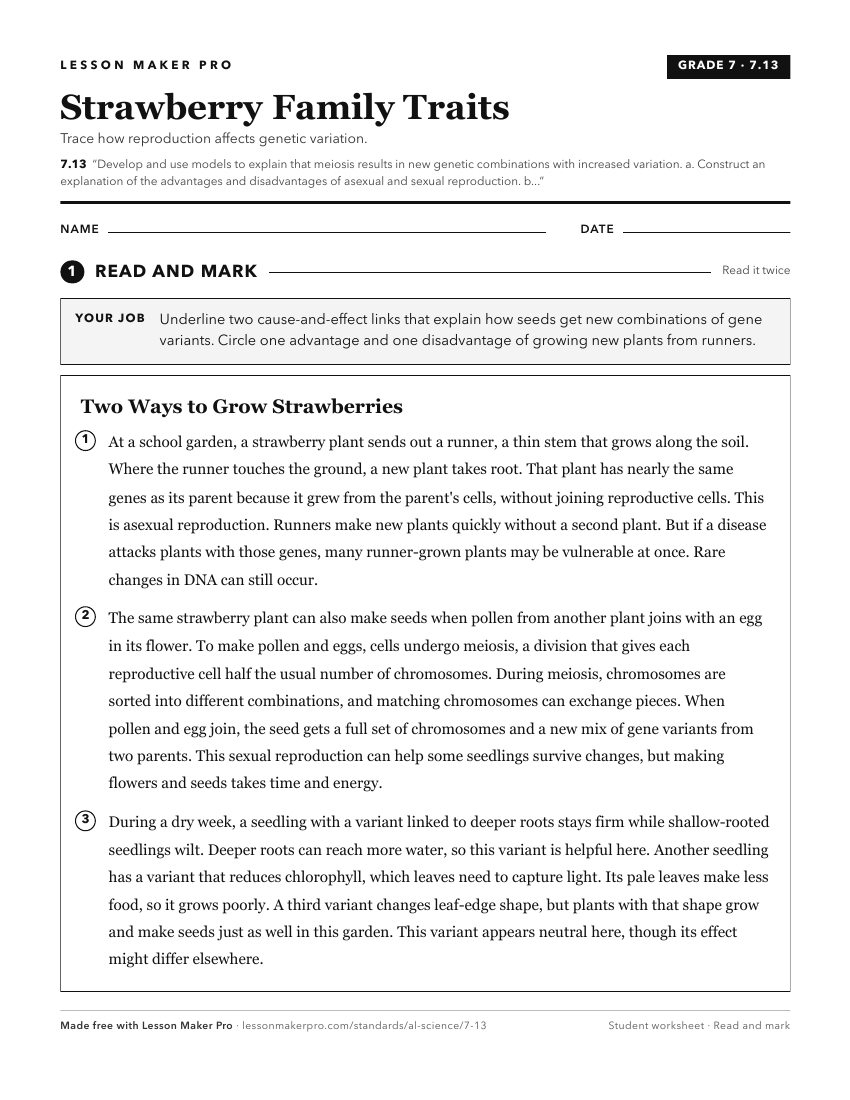
A ready-to-print activity worksheet aligned to 7.13, with an answer key for the teacher on its own page. No account needed.
PDF, US Letter, prints cleanly in black and white.
Download the worksheetKeep exploring
Related Standards
- 7.11
Develop and use models to demonstrate how genetic variations between parents and offspring result from differences in inherited genes located on chromosomes.
- BIO.12
Develop and use an evidence-based model to illustrate the formation of reproductive cells through the process of meiosis.
- BIO.3
Develop and use models to explain how events during the cell cycle lead to the formation of new cells and repair of multicellular organisms, including cell grow...
- BIO.11
Use probability and statistical models to explain the variation of expressed traits within a population.
Turn this cluster into a lesson
Grade, subject, topic, and the complete cluster are prefilled. Create one free, no account needed.
Also for this cluster:Make a WorksheetMake a QuizMake a Sub Lesson