Alabama Science 1.8
The Standard
Observe, describe, and predict patterns of the sun, moon, and stars as they appear in the sky.
2023 Alabama Course of Study: Science · Earth’s Place in the Universe
Teacher's field guide
What This Standard Means
What Students Need to Do
- Students observe the sky at different times and record where the sun, moon, and stars appear. They use what they notice to predict what they might see later.
What Mastery Looks Like
- A student can use morning and afternoon observations to predict where the sun will appear next. They know the moon can be seen during the day or at night, and stars are usually visible after dark.
Common Misconceptions
- Students may think the moon appears only at night or always looks the same. They may think stars vanish during the day instead of being hidden by bright sunlight.
How to Assess It
- Show a drawing of the sun low beside a tree in the morning. Ask students to draw where it might appear around lunchtime and explain their choice.
Lesson moves
Ways to Teach It
Set a stick upright outside and mark its shadow with chalk in the morning and afternoon; compare the marks.
Show morning and evening sky photos; ask, "What changed, and what might you see tomorrow morning?"
Give pairs sun, moon, and star picture cards to place on day and night mats; allow the moon on both.
Send home a two-night sky log: students sketch any moon or stars visible after dark, or note clouds.
Free download
Printable 1.8 Worksheet
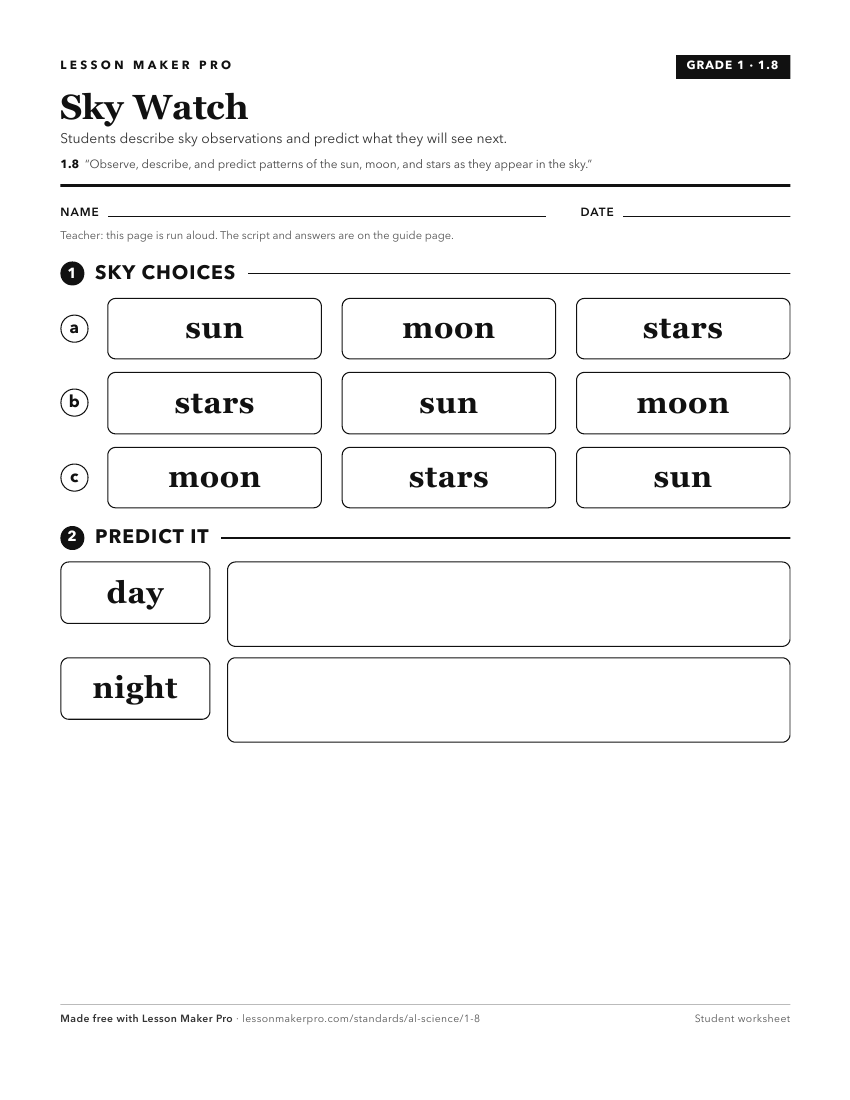
A ready-to-print activity worksheet aligned to 1.8, with an answer key for the teacher on its own page. No account needed.
PDF, US Letter, prints cleanly in black and white.
Download the worksheetKeep exploring
Related Standards
- 5.11
Analyze data that reveal patterns of daily changes in length and direction of shadows, day and night, phases of the moon, and seasonal appearance of some stars ...
- 6.1
Manipulate models to demonstrate the patterns of motion of the sun, Earth, and moon.
- 5.10
Obtain and communicate information to explain why the sun appears to be larger and brighter than other stars.
Turn this exact standard into a lesson
Grade, subject, topic, and the complete standard are prefilled. Create one free, no account needed.
Also for this standard:Make a WorksheetMake a QuizMake a Sub Lesson