Alabama ELA 4.LF.19.a
The Standard
- 4.LF.19
- Compare and contrast the treatment of similar themes in stories, myths, and traditional literature from different cultures.
Determine and state an implied theme, explicit theme, or life lesson from a myth, story, or other traditional literature.
2021 Alabama Course of Study: English Language Arts
Teacher's field guide
What This Standard Means
What Students Need to Do
- Students name what a tale teaches about how people act or live. They use characters’ choices and outcomes to figure out the lesson, then check whether the tale says it outright.
What Mastery Looks Like
- After reading The Tortoise and the Hare, a student says, “Steady effort can beat careless speed.” They point to the hare’s nap and the tortoise’s steady pace as proof. They can tell whether a printed moral states that lesson or the reader must work it out.
Common Misconceptions
- Students may name a topic, such as racing, instead of a lesson. They may retell who won without explaining what the characters’ choices teach. Some assume every tale states its lesson at the end.
How to Assess It
- Give students The Tortoise and the Hare without a printed moral. Ask: “What lesson does it teach? Which two details support your answer? Does the tale say the lesson outright?”
Lesson moves
Ways to Teach It
Give pairs cards showing the hare sleeping, the tortoise walking, and the finish line; have them order the cards and write a lesson.
After reading The Boy Who Cried Wolf, ask: “Which choice makes the villagers stop believing the boy, and what does that teach?”
Play “Topic or Lesson?” with cards reading “racing,” “honesty,” and “Repeated lies make people doubt you”; students sort and explain.
Have students write a note explaining how the boy’s lost trust connects to classmates who stop believing repeated false excuses.
Free download
Printable 4.LF.19.a Worksheet
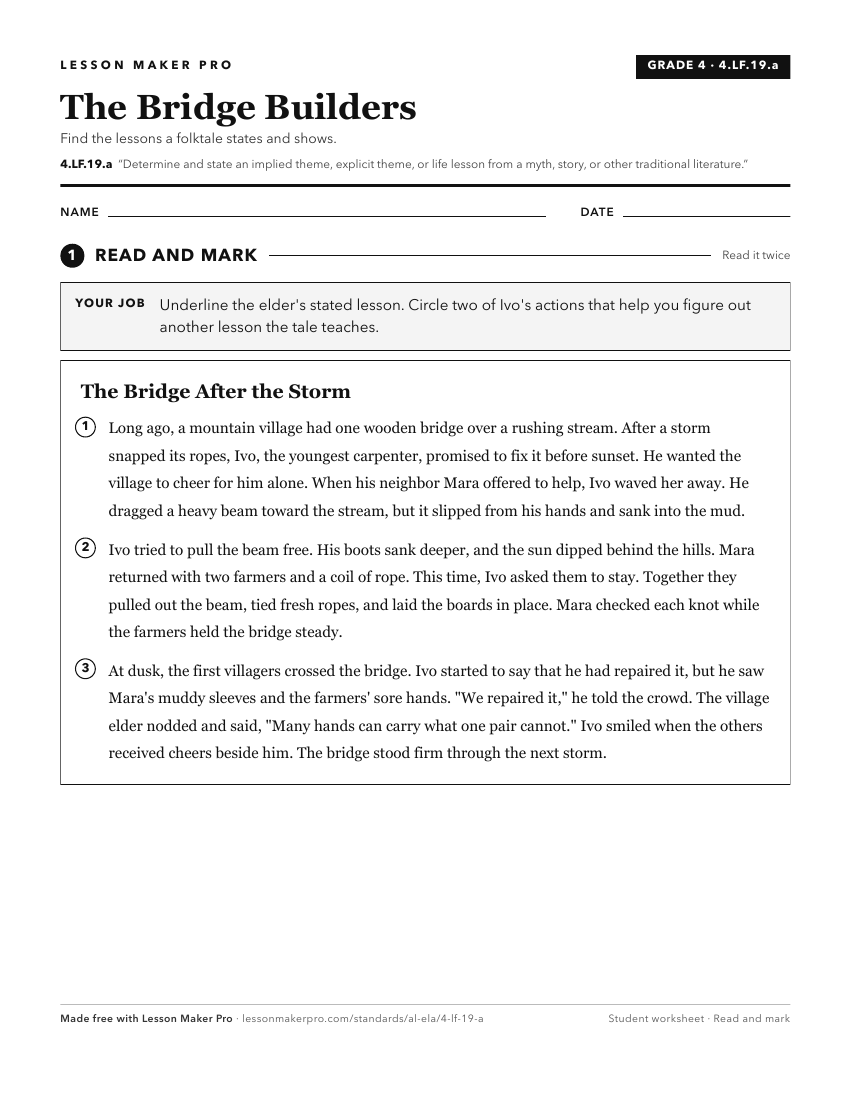
A ready-to-print activity worksheet aligned to 4.LF.19.a, with an answer key for the teacher on its own page. No account needed.
PDF, US Letter, prints cleanly in black and white.
Download the worksheetKeep exploring
Related Standards
- 2.LF.23.e
Identify the theme in myths, fables, and folktales.
- 4.LF.19.b
Analyze a common or shared theme and its development in stories, myths, and/or other traditional literature.
- 3.LF.22.c
Identify the central message, theme, or moral in a story, including myths, fables, and folktales, and explain the meaning conveyed in the passage.
- 5.LF.22
Determine the implied and/or explicit main idea in literary and informational texts.
Turn this exact standard into a lesson
Grade, subject, topic, and the complete standard are prefilled. Create one free, no account needed.
Also for this standard:Make a WorksheetMake a QuizMake a Sub Lesson