Wyoming Science MS-LS1-2
The Standard
Develop and use models to describe the parts, functions, and basic processes of cells.
2023 Wyoming Science Content and Performance Standards · LS1 From Molecules to Organisms: Structure and Processes
Teacher's field guide
What This Standard Means
What Students Need to Do
- Students build a cell model and use it to explain what its parts do. They show how materials move in and out, and how cells get and use energy.
What Mastery Looks Like
- A student can label a plant or animal cell and explain the job of each labeled part. Their model shows that chloroplasts make sugar using light, while mitochondria release usable energy from sugar.
Common Misconceptions
- Students may put chloroplasts in animal cells or think the cell membrane blocks everything. Some say mitochondria make energy from nothing, rather than releasing it from food.
How to Assess It
- Exit ticket: Sketch a plant cell with a membrane, chloroplast, and mitochondrion. Add arrows for light and sugar, then write one job for each part.
Lesson moves
Ways to Teach It
Give pairs colored paper and string to build a plant cell model, then add arrows for water, carbon dioxide, light, and sugar.
Ask: What would change in your cell model if the chloroplasts stopped working? Have students write two effects and explain why.
Hand out cell part cards and job cards; have teams match them, then place each pair on a blank cell diagram.
Show a photo of a wilted houseplant and have students draw water leaving the vacuole and crossing the cell membrane.
Free download
Printable MS-LS1-2 Worksheet
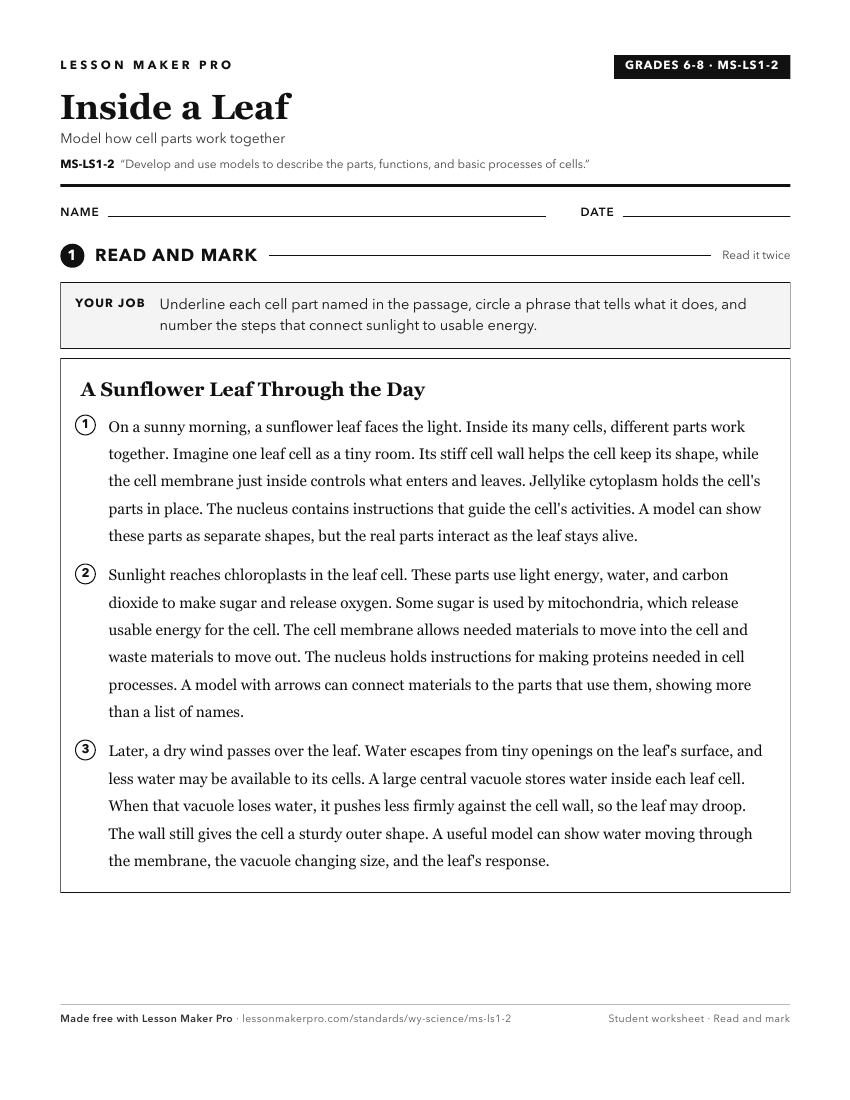
A ready-to-print activity worksheet aligned to MS-LS1-2, with an answer key for the teacher on its own page. No account needed.
PDF, US Letter, prints cleanly in black and white.
Download the worksheetTurn this exact standard into a lesson
Grade, subject, topic, and the complete standard are prefilled. Create one free, no account needed.
Also for this standard:Make a WorksheetMake a QuizMake a Sub Lesson