Virginia SOL 8.C.4.B
The Standard
Analyze how similar information is presented in diverse media formats by examining electronic, print, propaganda, and mass media.
Virginia Standards of Learning for English · Examining Media Messages
Teacher's field guide
What This Standard Means
What Students Need to Do
- Students compare how different media present the same topic or event. They examine wording, images, sound, layout, source choices, and persuasive techniques to explain each message's effect.
What Mastery Looks Like
- Students identify which facts, images, sounds, and words each source emphasizes or leaves out. They explain how those choices affect meaning, tone, credibility, and audience response.
Common Misconceptions
- Students may assume that presenting the same facts means two sources send the same message. They may label all biased content as propaganda or treat polished, popular media as reliable.
How to Assess It
- Show a print headline and a short social media post about the same event. Ask students to name one difference and explain how it shapes audience response.
Lesson moves
Ways to Teach It
Give groups printed news pages, ads, and video screenshots to sort by format, purpose, audience, and techniques.
Ask students to compare two reports of one event and write which feels more trustworthy, citing two specific media choices.
Play Media Match, where teams pair message cards with formats and defend which format would influence a named audience most.
Compare a local news article with a social media post about the same community issue, noting details each source includes or omits.
Free download
Printable 8.C.4.B Worksheet
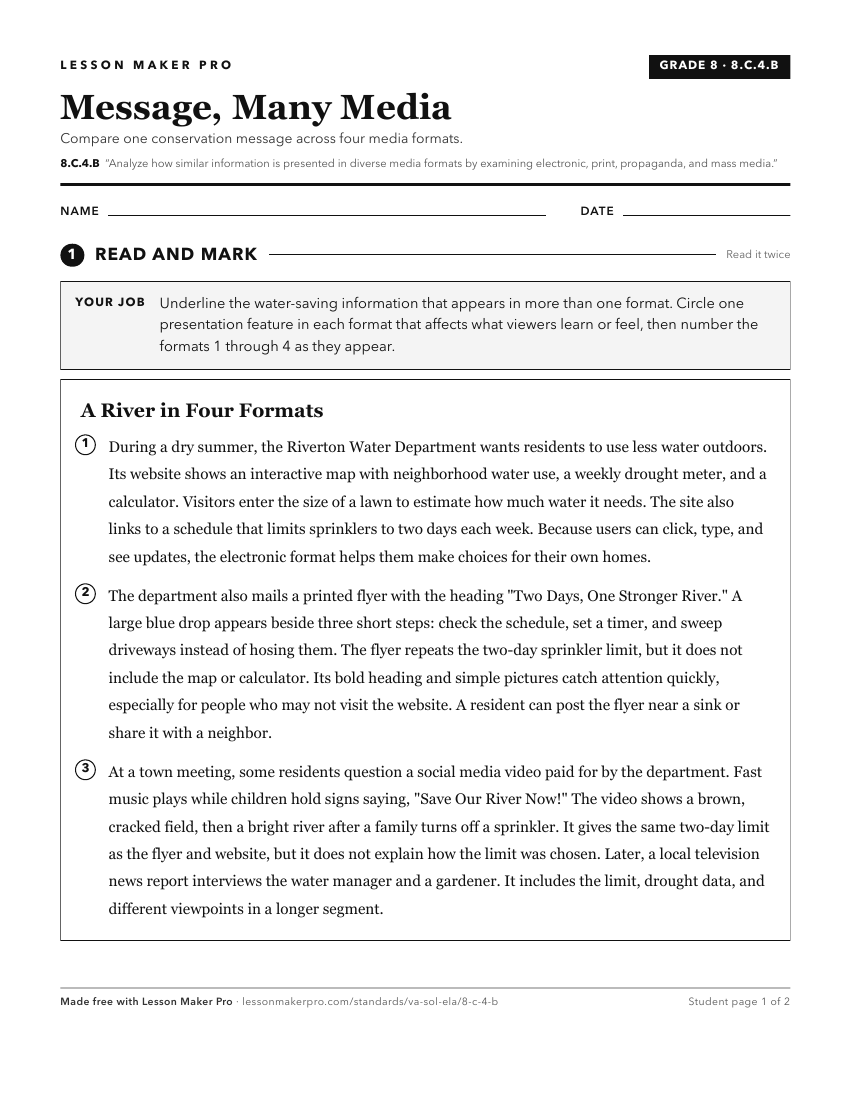
A ready-to-print activity worksheet aligned to 8.C.4.B, with an answer key for the teacher on its own page. No account needed.
PDF, US Letter, prints cleanly in black and white.
Download the worksheetKeep exploring
Related Standards
- 11.C.4.C
Analyze, compare, and contrast visual and verbal media messages for content (e.g., word choice and choice of information), intent (e.g., persuasive techniques),...
- 6.C.4.A
Interpret information presented in diverse media formats and explain how it contributes to the topic.
- 7.C.4.B
Analyze media messages for facts, opinions, persuasive messages, word choice, and viewpoint.
- 10.C.4.B
Analyze, compare, and contrast visual and verbal media messages for content (e.g., word choice and choice of information), intent (e.g., persuasive techniques, ...
Turn this exact standard into a lesson
Grade, subject, topic, and the complete standard are prefilled. Create one free, no account needed.
Also for this standard:Make a WorksheetMake a QuizMake a Sub Lesson