Virginia SOL 2.W.2.A.ii
The Standard
Identifying the audience and purpose of the writing.
Virginia Standards of Learning for English
Teacher's field guide
What This Standard Means
What Students Need to Do
- Students decide who will read a piece and what they want that reader to think, learn, feel, or do. They use those choices to plan suitable details and a fitting type of writing.
What Mastery Looks Like
- Students can name the intended reader and explain whether they want to inform, entertain, persuade, or share an experience. Their planned details and format fit that reader and goal.
Common Misconceptions
- Students may name the people in the story instead of the intended reader. They may confuse the topic with the reason for writing, such as saying “dogs” instead of “to teach how to care for a dog.”
How to Assess It
- Exit ticket: “You are writing to convince the principal to add a longer recess. Who is your reader, what is your goal, and what detail will help?”
Lesson moves
Ways to Teach It
Give pairs purpose, audience, and writing-situation cards to sort into matching sets, such as a thank-you note written to a coach.
Ask students, “How would a message about a lost lunchbox change if you wrote it to a friend or the principal?”
Play Audience Detective by reading short sample texts while teams identify the likely reader and goal, then point to one clue.
Have students plan a real note to a family member, school worker, or classmate, naming the reader, goal, and two fitting details.
Free download
Printable 2.W.2.A.ii Worksheet
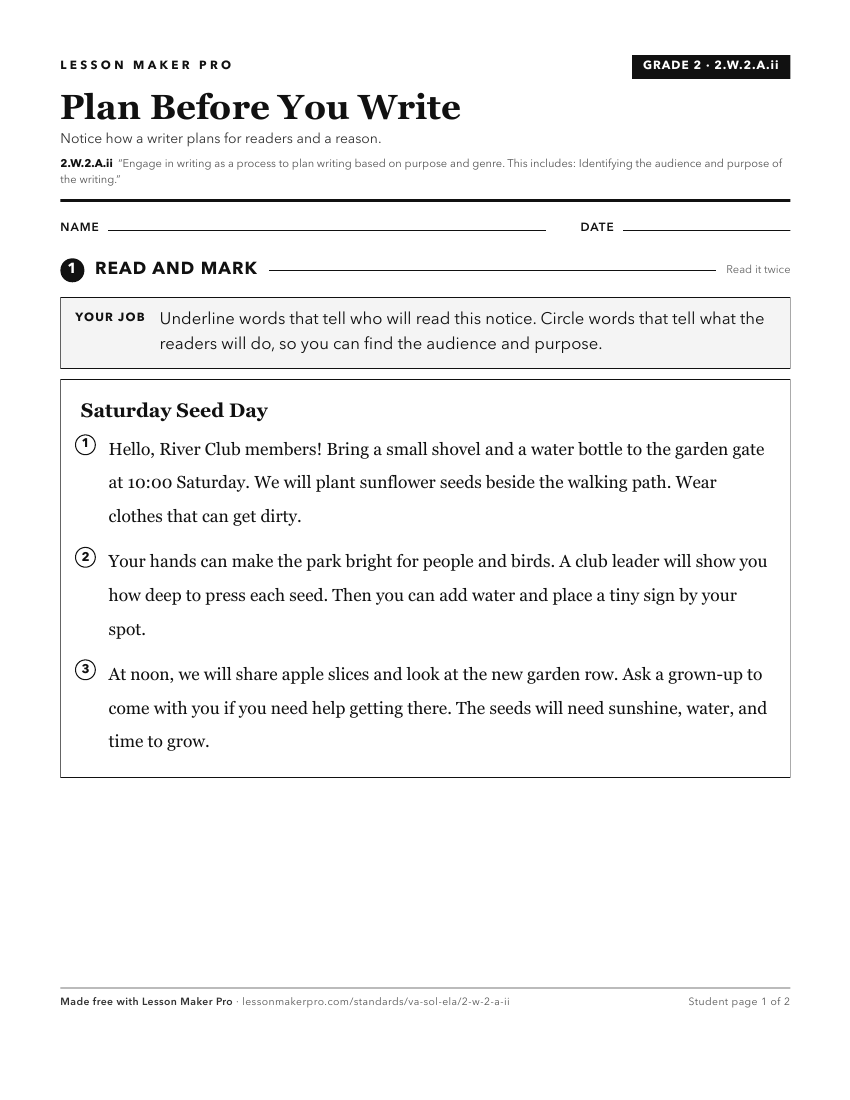
A ready-to-print activity worksheet aligned to 2.W.2.A.ii, with an answer key for the teacher on its own page. No account needed.
PDF, US Letter, prints cleanly in black and white.
Download the worksheetKeep exploring
Related Standards
- 3.RI.2.C
Identify the author’s purpose for writing, including what the author wants to answer, explain, or describe.
- 1.W.2.A.i
Identifying the audience and purpose of the writing (e.g., letters, stories, journals, etc.).
- K.W.2.A.i
Identifying the audience and purpose of the writing (e.g., letters, stories, “all about” book, etc)
- 9.C.4.A
Determine the purpose of the media message and its effect on the audience.
Turn this exact standard into a lesson
Grade, subject, topic, and the complete standard are prefilled. Create one free, no account needed.
Also for this standard:Make a WorksheetMake a QuizMake a Sub Lesson