Virginia SOL 2.DSR.C
The Standard
When responding to text through discussion and/or writing, draw several pieces of evidence from read-alouds and grade-level texts to support claims, conclusions, and inferences, including quoting or paraphrasing from texts accurately and tracing where relevant evidence is located (Textual Evidence, K-12).
Virginia Standards of Learning for English · The student will build knowledge and comprehension skills from reading and listening to a range of challenging, content-rich texts. This includes fluently reading and gathering evidence from grade-level complex texts and reading widely (through read alouds) on topics to gain purposeful knowledge and vocabulary.
Teacher's field guide
What This Standard Means
What Students Need to Do
- Students make a claim, conclusion, or inference about a text. They support it with two or more relevant details from reading or listening. They quote exact words or paraphrase accurately, then point to the page, paragraph, or part of the text.
What Mastery Looks Like
- A student gives a clear answer and chooses details that directly support it. The student uses quotation marks for exact words and keeps the meaning accurate when paraphrasing. They can show where each detail appears.
Common Misconceptions
- Students often give one detail, retell the whole story, or choose an interesting detail that does not support the answer. They may copy words inaccurately or treat a paraphrase as a quote. Some name a page without showing which words provide support.
How to Assess It
- After a familiar read-aloud, give this exit ticket. “Explain why the main character made an important choice, using two details and naming where each detail appears.”
Lesson moves
Ways to Teach It
Give pairs sentence strips from a shared text to sort under Supports the Claim or Does Not Support, then add page numbers.
Have students write whether the character’s decision was wise, then quote or paraphrase two supporting details and name each page.
Play Evidence Hunt by stating an inference while teams race to mark two supporting lines or pages with sticky notes.
Read a school lunch menu and nutrition note, then use two details to recommend one lunch and cite each source location.
Free download
Printable 2.DSR.C Worksheet
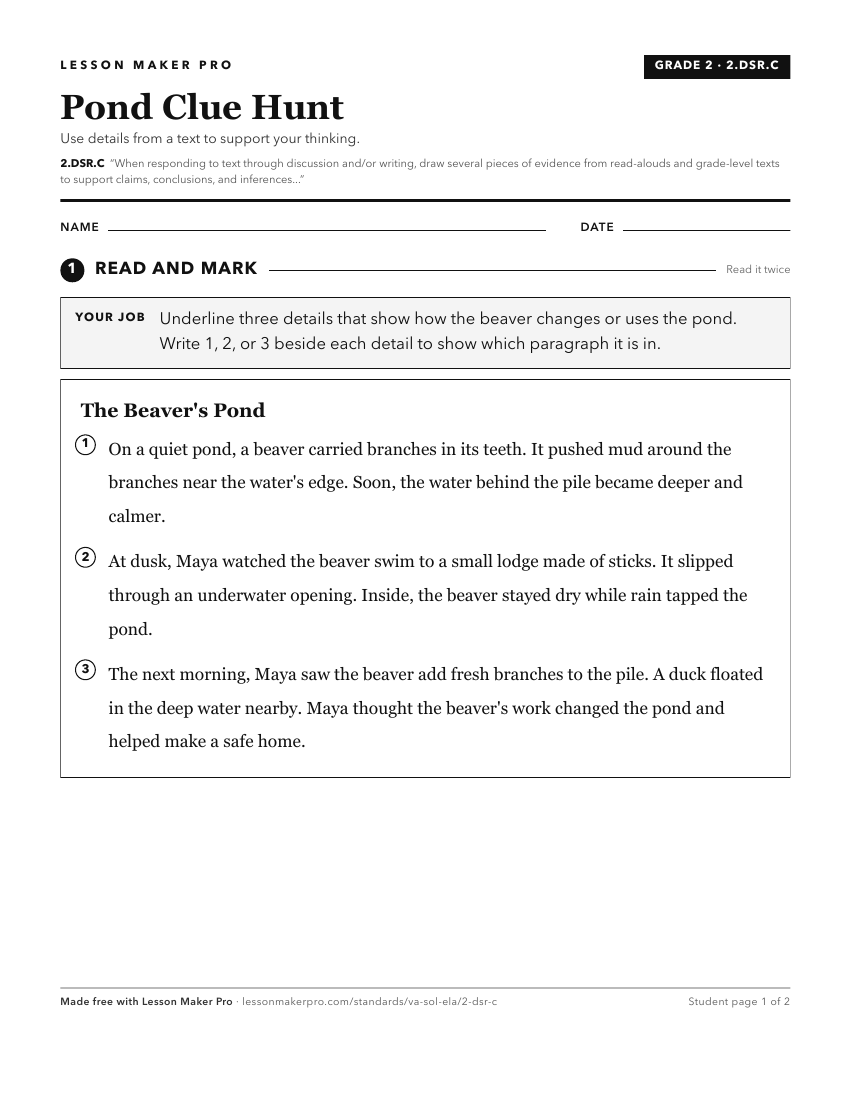
A ready-to-print activity worksheet aligned to 2.DSR.C, with an answer key for the teacher on its own page. No account needed.
PDF, US Letter, prints cleanly in black and white.
Download the worksheetKeep exploring
Related Standards
- 9.DSR.C
When responding to text through discussions and/or writing, draw several pieces of evidence from grade-level complex texts to support claims, conclusions, and i...
- 7.DSR.C
When responding to text through discussion and/or writing, draw several pieces of evidence from grade-level complex texts to support claims, conclusions, and in...
- 10.DSR.C
When responding to text through discussions and/or writing, draw several pieces of evidence from grade-level complex texts to support claims, conclusions, and i...
- 3.DSR.C
When responding to texts through discussions and/or writing, draw several pieces of evidence from read alouds and grade-level complex texts to support claims, c...
Turn this exact standard into a lesson
Grade, subject, topic, and the complete standard are prefilled. Create one free, no account needed.
Also for this standard:Make a WorksheetMake a QuizMake a Sub Lesson