TEKS ELAR 8.6.E
The Standard
interact with sources in meaningful ways such as notetaking, annotating, freewriting, or illustrating
Texas Essential Knowledge and Skills for English Language Arts and Reading
Teacher's field guide
What This Standard Means
What Students Need to Do
- Students record and organize their thinking as they read, listen, or watch. They choose notes, marks, quick writing, or sketches that help them understand and remember the source.
What Mastery Looks Like
- Students select key details and record questions, connections, or reactions while reading, listening, or viewing. Their notes, annotations, writing, or sketches clearly connect to the source and support later discussion.
Common Misconceptions
- Students may copy whole sentences instead of recording useful ideas. They may highlight too much, write notes unrelated to the source, or treat illustrations as decoration rather than evidence of understanding.
How to Assess It
- Give students a short article and ask them to mark three key details, write two margin notes, and add a one-sentence takeaway.
Lesson moves
Ways to Teach It
Post a short text on chart paper, then have groups add color-coded sticky notes for key ideas, questions, and connections.
After viewing a news clip, students write which detail changed or strengthened their thinking and explain why.
Play Annotation Relay, where teams rotate through paragraphs and add one useful question, summary, connection, or visual to each.
Students annotate a school announcement or public service poster, then explain how their notes would help someone make a decision.
Free download
Printable 8.6.E Worksheet
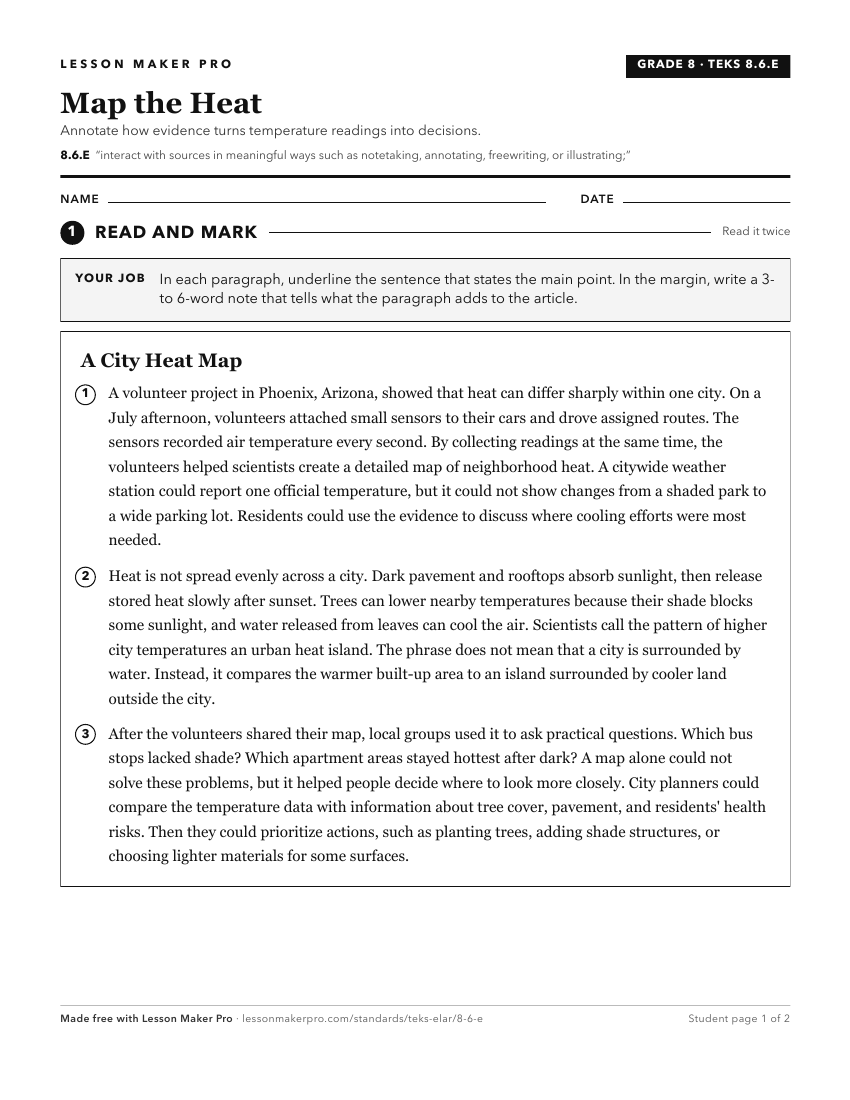
A ready-to-print activity worksheet aligned to 8.6.E, with an answer key for the teacher on its own page. No account needed.
PDF, US Letter, prints cleanly in black and white.
Download the worksheetKeep exploring
Related Standards
Turn this exact standard into a lesson
Grade, subject, topic, and the complete standard are prefilled. Create one free, no account needed.
Also for this standard:Make a WorksheetMake a QuizMake a Sub Lesson