TEKS ELAR 7.9.B
The Standard
analyze how the use of text structure contributes to the author's purpose
Texas Essential Knowledge and Skills for English Language Arts and Reading · Author's purpose and craft: listening, speaking, reading, writing, and thinking using multiple texts
Teacher's field guide
What This Standard Means
What Students Need to Do
- Students identify how a text is organized and determine what the author wants to accomplish. They explain how the organization helps the author reach that goal, using evidence from the text.
What Mastery Looks Like
- Students correctly identify structures such as cause and effect, comparison, chronology, and problem and solution. They cite details from the text and explain how the organization helps the author inform, persuade, explain, or entertain.
Common Misconceptions
- Students may name a structure from signal words alone without checking how the whole text is organized. They may also identify the author’s purpose but fail to explain why the chosen structure supports it.
How to Assess It
- After students read a short article, ask: “Name the main text structure, then explain in two sentences how it helps the author achieve a specific purpose.”
Lesson moves
Ways to Teach It
Cut an article into sections, have groups rebuild it, then explain how the order supports the author’s goal.
Ask students to write: “Why did the author choose this structure instead of chronological order?”
Play structure match, pairing short passages with structure cards and purpose cards, then require a one-sentence defense.
Compare a product review and instruction manual, noting how each structure fits what the writer wants readers to do or understand.
Free download
Printable 7.9.B Worksheet
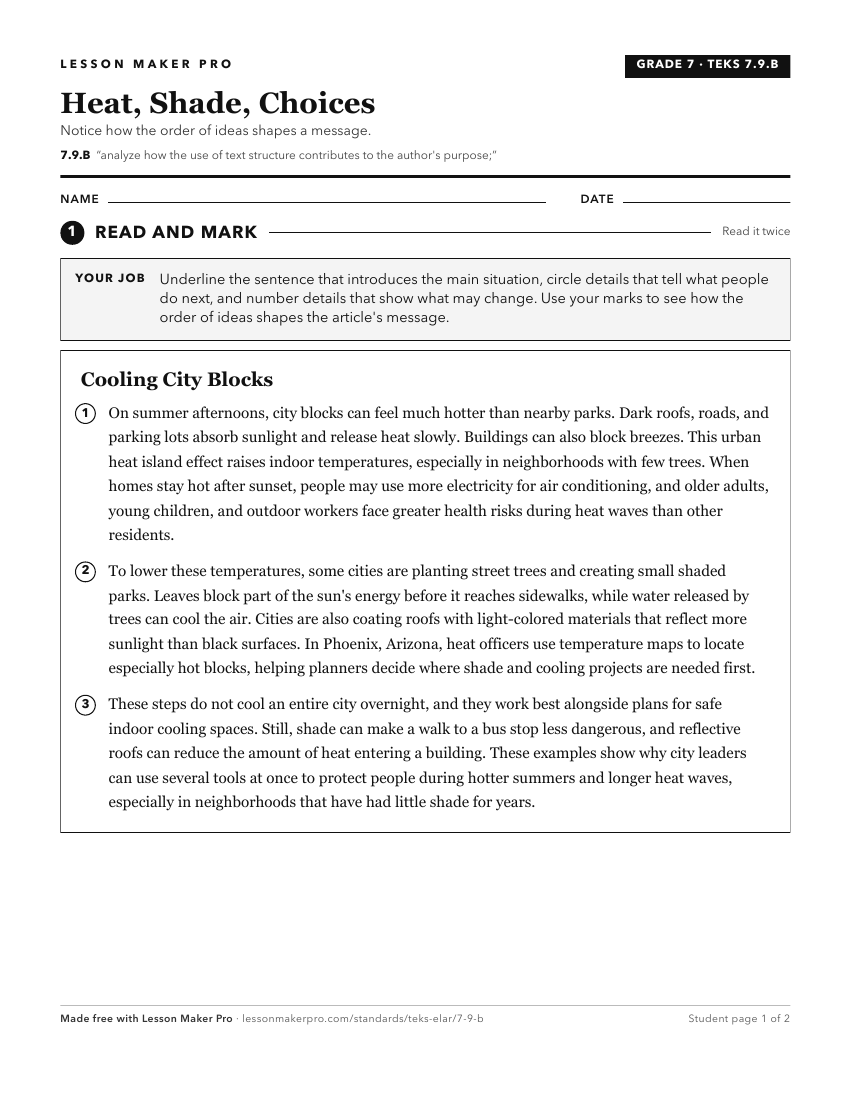
A ready-to-print activity worksheet aligned to 7.9.B, with an answer key for the teacher on its own page. No account needed.
PDF, US Letter, prints cleanly in black and white.
Download the worksheetKeep exploring
Related Standards
- 5.10.B
analyze how the use of text structure contributes to the author's purpose;
- 8.9.B
analyze how the use of text structure contributes to the author's purpose;
- 3.10.B
explain how the use of text structure contributes to the author's purpose;
- 6.9.B
analyze how the use of text structure contributes to the author's purpose;
Turn this exact standard into a lesson
Grade, subject, topic, and the complete standard are prefilled. Create one free, no account needed.
Also for this standard:Make a WorksheetMake a QuizMake a Sub Lesson